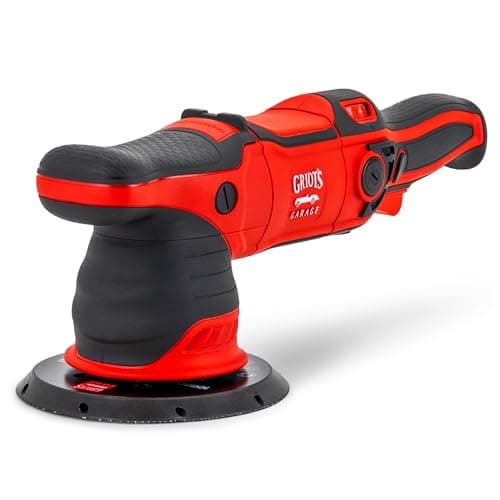
Our top pick: the Griot's Garage Griot's Garage G9 Random Orbital Polisher.
How this is funded: we earn an Amazon commission when you buy through our links, at no extra cost to you. We sell nothing and stock nothing, so a pick is never a product we are trying to move. Prices are pulled live from Amazon and were last checked October 5, 2026; where we cannot verify a price we say so rather than print an old one. Full disclosure.
Research-basedPicked from published specifications and the pattern across verified-purchase reports. We have not used these ourselves and do not pretend otherwise.How we pick
Tap any row for the full write-up. Prices come straight from Amazon and are never typed in by hand.
The verdict
Buy the Griot's Garage G9. A 9mm throw and a 1000W motor is the best general-purpose combination on the market, and the lifetime warranty means it is the last dual action most people buy. If this is your first machine and you are nervous near edges, the G8 is the better call for less money.
02
How we ranked these
Four things decide whether a dual action polisher is worth owning: the throw, whether the motor holds speed under pad pressure, how it feels after an hour, and whether you can still buy a backing plate for it in five years. We weighted them in that order.
We did not weight wattage on its own. A 1000W motor driving a 9mm throw and an 800W motor driving an 8mm throw are doing comparable work, and the headline number tells you very little in isolation. Where a manufacturer does not publish a figure, the table below says so rather than carrying an estimate — see how we pick for why that matters more in this category than most.
Throw against what it costs you
Throw
Covers a hood in
Edge forgiveness
Right for
8 to 9mm
Longest
Highest
A first machine, tight panels, spot work
12mm
Middle
Middle
A second machine when the first felt slow
15mm
Shortest
Lowest
Whole-car correction, several cars a year
Rotary
Shortest, and most dangerous
None
Defect removal a DA cannot reach
03
The ranked picks
Prices are live from Amazon and dated. Where a machine ships as a tool only, budget for pads and liquids on top — that is usually another third of the price.
No. 01Griot's GarageSpec-verified
Griot's Garage G9 Random Orbital Polisher
Best for: The default answer for a first serious machine
A 9mm throw and a 1000W motor put the G9 exactly where most home detailers should be: fast enough to finish a car in an afternoon, short enough in the throw to stay predictable near badges and body lines. It is the machine we would buy if we were buying one machine.
Who should skip it. If you already own a competent 8mm machine, this is not the upgrade you think it is — the extra millimeter of throw will not fix inconsistent results. Put the money into better pads and a second liquid instead. It is also heavier than the G8, and you notice that on vertical panels after an hour.
Correction speed
8.5
Control
9.0
Ergonomics
7.5
Build
9.0
Value
8.5
What works
9mm throw is the best general-purpose compromise on the market
1000W does not bog down under pressure on a cutting pad
Griot's lifetime warranty is the strongest in the category
Takes the same 5 in plate and 5.5 in pads as everything else
What does not
Heavier than the G8, which shows on doors and quarters
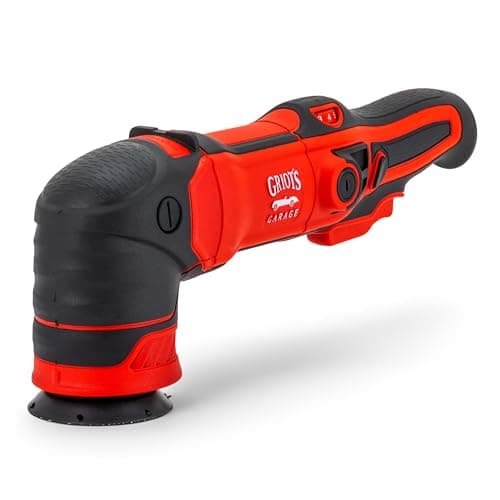
The G8 is the G9's shorter, lighter sibling, and for a lot of people it is the better buy. An 8mm throw is slower across a hood and considerably more forgiving within an inch of an edge, which is exactly where beginners do damage.
Who should skip it. Correcting a full-size truck with an 8mm throw is a long afternoon. If most of your work is big flat panels, the extra throw of the G9 genuinely saves time rather than just sounding better.
Correction speed
7.0
Control
9.5
Ergonomics
8.5
Build
9.0
Value
8.5
What works
Lighter than the G9 and easier to hold against a door for an hour
8mm throw is the most forgiving option near edges and badges
Same lifetime warranty as the rest of the Griot's line
What does not
Slower on large flat panels — this is the real trade-off
Griot's does not publish a wattage figure we could verify
Priced close enough to the G9 that the decision is genuinely about throw
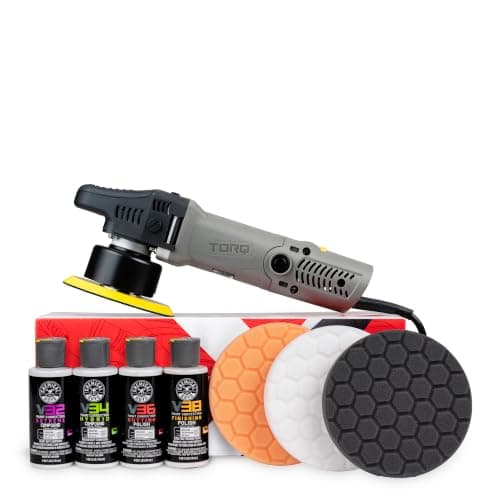
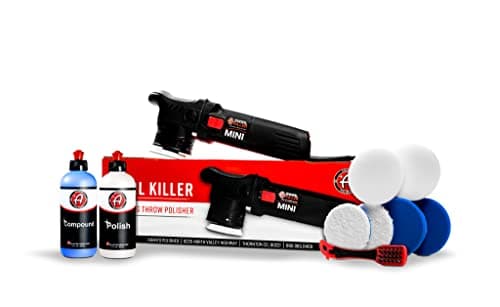
The TORQX is a competent 800W short-throw machine, and the reason to buy it is the kit: it arrives with pads and liquids, so you are correcting the same day rather than placing a second order. For a first-time buyer that convenience is worth real money.
Who should skip it. If you already own pads and compounds, you are paying for a bundle you do not need, and the bare machine is not better than a G8 or G9. The included pads are serviceable rather than good — most people replace them within a year.
Correction speed
7.0
Control
9.0
Ergonomics
8.0
Build
7.5
Value
8.5
What works
Genuinely complete out of the box — pads, liquids, machine
800W is adequate for the short throw it drives
The least intimidating entry point of the serious machines
What does not
Included pads are the weakest part of the package
Worse value than a bare machine if you already have consumables
Chemical Guys does not publish a backing plate size we could verify
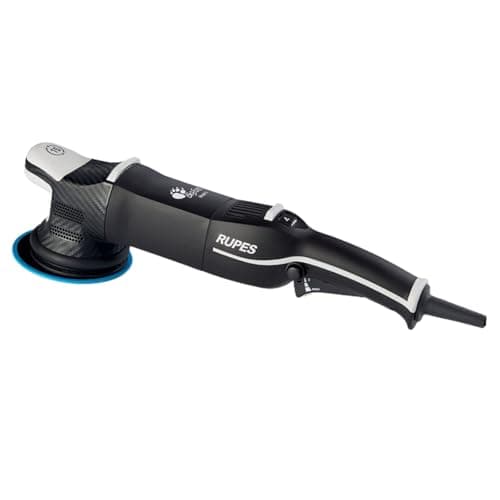
A 15mm throw machine from the company that popularized long-throw polishing. It corrects a full car in meaningfully less time than a 9mm machine, and the balance is the best in the category. Sold here as a tool only.
Who should skip it. Almost anyone buying a first machine. It costs several times a G9, the 15mm throw is less forgiving near edges, and the tool-only listing means pads and liquids are extra. If you are not correcting multiple cars a year the money is better spent elsewhere.
Correction speed
9.5
Control
7.5
Ergonomics
9.5
Build
9.5
Value
6.0
What works
15mm throw genuinely halves the time on large flat panels
Best-balanced machine in this roundup by a clear margin
The long-throw design RUPES is known for, from the originator
What does not
Several times the price of machines that do 80% of the job
Tool only — budget for pads and liquids on top
15mm throw is less forgiving around edges and badges
12mm sits deliberately between the two established throws, and in practice it behaves much closer to a 15mm machine than a 9mm one — faster across a panel, and wanting more attention near an edge. A reasonable pick if you have used a short-throw machine and want more speed.
Who should skip it. A first machine. The in-between throw means it is neither the most forgiving nor the fastest, which is a fine place to be on your second polisher and a confusing one on your first.
Correction speed
8.0
Control
8.0
Ergonomics
8.0
Build
8.0
Value
7.5
What works
12mm throw is a genuine step up in speed from 8 to 9mm
Better balanced than most machines near this price
Adam's support and parts availability are good
What does not
The in-between throw suits a second machine, not a first
Adam's does not publish a wattage figure we could verify
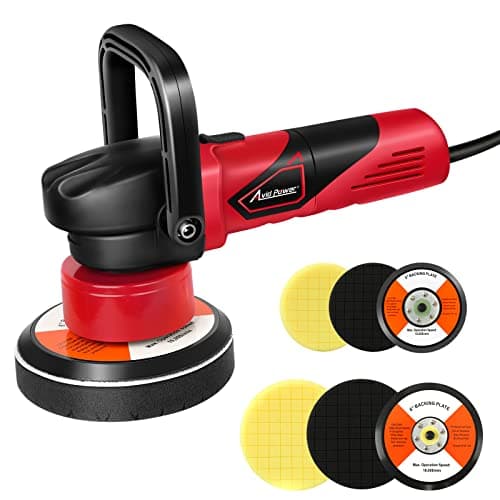
This is the machine to buy if you are not yet sure you will use one. It is a six-speed dual action at roughly a third of the price of the established names, it comes with pads, and it will remove light swirls from a daily driver perfectly well.
Who should skip it. Anyone who already knows they will correct more than one car a year. The build quality gap is real — bearing noise and backing plate wobble are the two complaints that recur in owner reports — and you will want a better machine within a season.
Correction speed
6.5
Control
7.5
Ergonomics
6.5
Build
5.5
Value
9.0
What works
The lowest-risk way to try machine polishing
Two backing plate sizes included, which is unusual at this price
Perfectly capable of removing light swirl marks
What does not
Bearing noise and plate wobble recur in owner reports
No published throw figure, which makes it hard to compare properly
Not a machine to do a full correction on a dark car with
Published specifications
Throw
Not published
Motor
Not published
Speed settings
6
Backing plate
5 in and 6 in
In the box
Kit with pads
04
The mistake almost everyone makes
The most common way to waste money here is to buy a better machine when the real limitation is the pad. A microfiber or firm foam cutting pad on a modest 8mm machine out-corrects a soft finishing pad on a long-throw machine, every time, because the pad is what touches the paint.
If your results are inconsistent and you already own a competent short-throw machine, the upgrade is four identical cutting pads and a second compound, not a new polisher. That costs a fraction of a machine and it fixes the actual problem.
05
What you need alongside the machine
Four pads minimum, all the same cut level, so you can swap when one loads up.
Two liquids at most — a hybrid one-step covers most daily drivers, and a finishing polish only if you can see the haze it is fixing.
A backing plate that matches your pads. A 5 in plate with 5.5 in pads is standard; mixing sizes makes the pad edge flex and the finish go hazy.
Painter's tape for trim and badges. It is the cheapest insurance on this list.
Good light. A cheap handheld inspection light shows you the defects you are actually removing, and without one you are guessing.
06
Before the machine comes out
Polishing a car that still has bonded iron and tar in the paint drags that contamination under the pad, which is how a correction session ends with more marring than it started with. The order is wash, decontaminate, correct, protect — set out in full on the detailing order of operations.
Concretely that means a proper two bucket wash, an iron remover, and a clay bar if the paint still feels rough through a plastic bag. Afterwards the paint is bare, which is the moment to apply a coating or a sealant.
07
Questions people actually ask
What is the best dual action polisher for a beginner?
The Griot's Garage G8, or the Chemical Guys TORQX if you want pads and liquids in the box. Both are 8mm throw machines, which is the most forgiving option near edges and badges — the places beginners actually do damage. Our beginner roundup is the shorter, more opinionated list.
Is a 15mm polisher better than a 9mm?
Faster, not better. A 15mm throw covers a hood in meaningfully less time and is less forgiving within an inch of an edge. If you correct several cars a year the time saving is real; if you correct one car every couple of years it is not worth the reduced margin for error.
Can you damage paint with a dual action polisher?
It is difficult but not impossible. A dual action stalls when you press too hard rather than digging in, which is the safety mechanism. Where people still cause damage is on edges and raised body lines, where the clear coat is thinnest — tape them, and keep the pad flat.
Do I need a backing plate as well as pads?
Most machines include one. The thing to check is the size match: a 5 in backing plate takes 5.5 in pads, and running a 5.5 in pad on a 6 in plate leaves the pad edge unsupported, which makes the finish hazy and wears the pad unevenly.
08
Sources
Every published figure on this page traces to one of these. Where a manufacturer does not publish a number, the page says so rather than estimating it.
Last reviewed October 5, 2026. Think a figure here is wrong? Tell us at contact@detailingandwax.com and we will check it, fix it and date the correction — see our editorial policy.