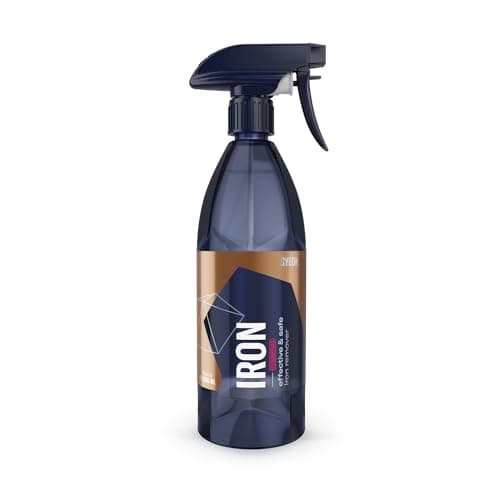
Our top pick: the GYEON Gyeon Iron Paint Cleaner and Fallout Remover.
How this is funded: we earn an Amazon commission when you buy through our links, at no extra cost to you. We sell nothing and stock nothing, so a pick is never a product we are trying to move. Prices are pulled live from Amazon and were last checked October 5, 2026; where we cannot verify a price we say so rather than print an old one. Full disclosure.
Research-basedPicked from published specifications and the pattern across verified-purchase reports. We have not used these ourselves and do not pretend otherwise.How we pick
Tap any row for the full write-up. Prices come straight from Amazon and are never typed in by hand.
The verdict
Gyeon Iron. It reacts fast, the color change is unambiguous, and it smells markedly less offensive than the alternatives — which sounds trivial until you have sprayed a whole car with something that does not. CARPRO IronX is the reference product and the large format is better value if you detail several cars.
02
What is actually happening
Brake dust is hot metallic particles that embed themselves in clear coat on contact. They then oxidize in place, which is what produces the orange specks on light-colored paint and the roughness you feel through a plastic bag.
An iron remover contains a compound that reacts with ferrous metal and dissolves it. The purple or red bleed running down the panel is that reaction — it is iron in solution, and it is the clearest visual feedback any detailing product gives you.
03
The ranked picks
Ordered on reaction speed and how safe each is on surrounding finishes. Prices are live from Amazon.
A color-change iron remover that works fast and smells less offensive than most — which sounds trivial until you have sprayed a whole car with the alternative. The purple bleed is the reaction dissolving bonded brake dust so a clay bar does not have to tear it out.
Who should skip it. Routine washing. Iron removers are a twice-a-year job, and using one monthly is both wasteful and harder on trim than it needs to be.
Speed
9.0
Dwell behavior
8.5
Finish safety
9.0
Value
8.0
What works
Fast, clear color change so you can see it working
Markedly less offensive smell than most
Safe on coated paint and painted wheels
What does not
A twice-yearly product, not a routine one
GYEON does not publish a bottle volume we could verify
Must be rinsed before it dries, which limits panel size in sun
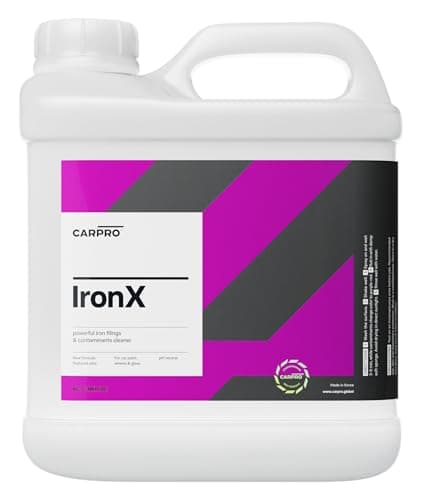
IronX is the iron remover everything else is compared against, and it still bleeds faster and more thoroughly than most. The listing here is a large format, which is excellent value per ounce if you detail more than one car.
Who should skip it. Someone decontaminating one car twice a year. The large format is far more product than you will use before it is worth buying fresh, and the smell is genuinely unpleasant.
Speed
9.5
Dwell behavior
9.0
Finish safety
9.0
Value
7.0
What works
Fastest, most complete bleed in this group
Excellent value per ounce in the large format
The category reference, with the longest track record
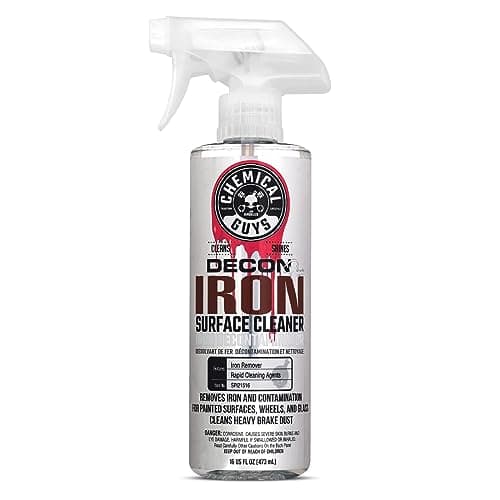
Formulated to work as both an iron remover on paint and a wheel cleaner, which is a sensible consolidation given they are the same chemistry doing the same job. A 16 oz bottle at this price makes twice-yearly decontamination genuinely cheap.
Who should skip it. Anyone who wants the fastest possible reaction. The dedicated removers bleed faster and more completely; this trades a little of that for versatility and price.
Speed
7.5
Dwell behavior
8.0
Finish safety
8.5
Value
9.5
What works
One bottle for paint and wheels
Cheap enough to decontaminate without thinking about cost
Widely available
What does not
Slower and less complete bleed than the dedicated removers
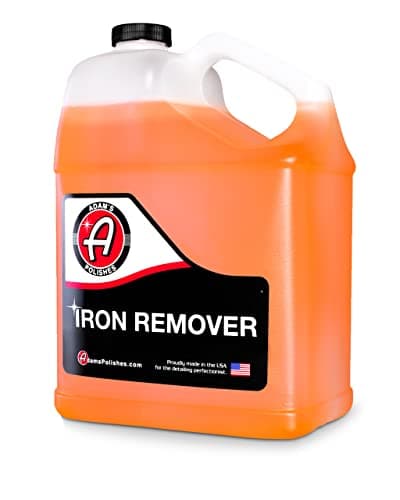
A gallon of color-change iron remover, which only makes sense if you are doing several cars a year or you share it. Performance is in line with the other quality removers; the format is the differentiator.
Who should skip it. One car. A gallon of iron remover will be old before a single-car owner finishes it, and these products do not improve with age.
Speed
8.5
Dwell behavior
8.5
Finish safety
9.0
Value
7.5
What works
Best value per ounce if you genuinely use it
Standard color-change chemistry that works
Adam's support if something is wrong with the batch
A clay bar shears contamination off the surface mechanically. If bonded iron is still present, the clay tears those metallic particles out of the clear coat and drags them across the panel on the way — which puts scratches into the paint you were decontaminating.
Chemical first, mechanical second, every time. Dissolve what will dissolve, then clay whatever is left. How to clay bar a car covers the full sequence.
05
Using one without staining anything
01Work on a cool car out of direct sun. These products stain if they dry.
02Wash first. Loose dirt wastes product and blocks contact with the paint.
03Spray one or two panels at a time, not the whole car.
04Let it dwell three to five minutes and watch the bleed. Do not let it dry.
05Agitate gently with a soft mitt on heavily contaminated areas.
06Rinse thoroughly, including every panel gap and under the mirrors.
07Keep it off unsealed trim, rubber and brake components where it can stain, and rinse immediately if you overspray.
06
What iron removers cannot do
Tar, sap and overspray are not ferrous — these need clay or a dedicated tar remover.
Water spot etching is mineral damage to the clear coat, not contamination on it. See how to remove water spots.
Swirl marks are physical scratches. Only polishing removes those.
Rust on bodywork is a paint repair, not a decontamination job.
07
Questions people actually ask
What does an iron remover do?
It chemically dissolves bonded iron particles — mostly brake dust — that have embedded themselves in your clear coat and oxidized there. The purple bleed you see is the reaction, with iron going into solution so it rinses away instead of being torn out by a clay bar.
Do you use an iron remover before or after claying?
Before, always. Claying over bonded iron drags metallic particles across the clear coat, which scratches the paint you are trying to decontaminate. Dissolve what will dissolve chemically, then clay whatever is left.
How often should you use an iron remover?
Twice a year for most cars — spring and autumn. Bonded iron takes months to accumulate, and these are strong products that are harder on trim and rubber than a routine wash needs to be.
Is iron remover safe on ceramic coatings?
The major brands state it is, and it is also the correct product for a coated car whose beading has dropped off — bonded iron sitting on top of a coating is the usual cause. Rinse thoroughly and top with an SiO2 spray afterwards.
08
Sources
Every published figure on this page traces to one of these. Where a manufacturer does not publish a number, the page says so rather than estimating it.
Last reviewed October 5, 2026. Think a figure here is wrong? Tell us at contact@detailingandwax.com and we will check it, fix it and date the correction — see our editorial policy.