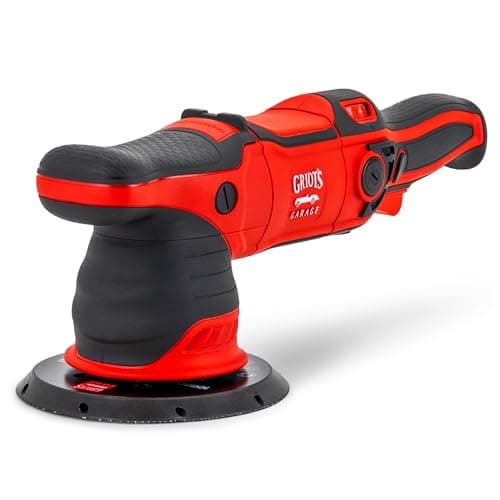
Featured here: the Griot's Garage Griot's Garage G9 Random Orbital Polisher.
How this is funded: we earn an Amazon commission when you buy through our links, at no extra cost to you. We sell nothing and stock nothing, so a pick is never a product we are trying to move. Prices are pulled live from Amazon and were last checked October 5, 2026; where we cannot verify a price we say so rather than print an old one. Full disclosure.
Research-basedPicked from published specifications and the pattern across verified-purchase reports. We have not used these ourselves and do not pretend otherwise.How we pick
Swirl marks are thousands of fine scratches in the clear coat, arranged in rough circles because of how a sponge or a towel moves. In direct sunlight they catch the light and produce the spiderweb pattern that makes dark paint look dull.
02
Where they actually come from
Essentially all of them come from contact during washing and drying. The grit that causes them is already on the car; the sponge or towel simply drags it across the clear coat.
A 9mm throw and a 1000W motor put the G9 exactly where most home detailers should be: fast enough to finish a car in an afternoon, short enough in the throw to stay predictable near badges and body lines. It is the machine we would buy if we were buying one machine.
Who should skip it. If you already own a competent 8mm machine, this is not the upgrade you think it is — the extra millimeter of throw will not fix inconsistent results. Put the money into better pads and a second liquid instead. It is also heavier than the G8, and you notice that on vertical panels after an hour.
Correction speed
8.5
Control
9.0
Ergonomics
7.5
Build
9.0
Value
8.5
What works
9mm throw is the best general-purpose compromise on the market
1000W does not bog down under pressure on a cutting pad
Griot's lifetime warranty is the strongest in the category
Takes the same 5 in plate and 5.5 in pads as everything else
What does not
Heavier than the G8, which shows on doors and quarters
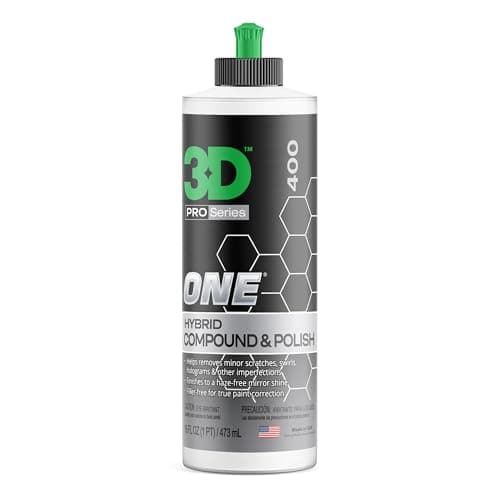
3D ONE is a genuine one-step: it starts as a compound and the abrasives break down as you work, so the same pass that removes the defect also finishes it. On a medium pad it handles most daily-driver swirls and leaves paint that does not need a second liquid.
Who should skip it. Anyone who wants maximum cut. A dedicated heavy compound removes more, faster. ONE is a time-saver and a simplifier, not a defect-removal champion.
Cut
8.0
Finish
9.0
Ease of use
8.5
Value
8.0
What works
Truly finishes down, so most cars need only this one liquid
Very low dusting compared with traditional compounds
Flexible — cut level changes with the pad you pair it with
What does not
Less outright cut than a dedicated heavy compound
Costs noticeably more per ounce than Ultimate Compound
Needs working properly; rushing the pass wastes the diminishing abrasive
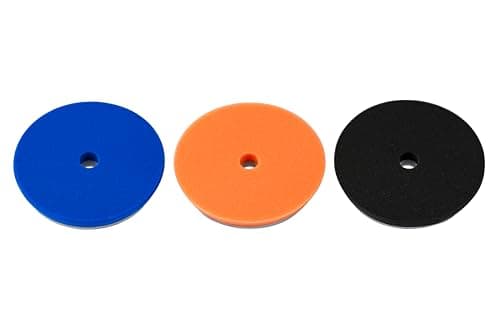
Lake Country makes the foam a great many other brands rebadge, and the HDO line is built specifically for the pressure a long-throw machine puts through a pad. A three-pack of the same pad is more useful than four different ones, because a saturated pad stops cutting and you need a spare mid-panel.
Who should skip it. Short-throw machines under heavy pressure — HDO foam is designed around orbital machines and is firmer than a general-purpose finishing pad. If you only ever finish, buy a softer foam.
Cut
8.0
Finish
8.0
Longevity
8.5
Value
8.5
What works
Multiple identical pads, which is how pads should be bought
Built for the pressure a long-throw machine applies
Lake Country foam is the reference other brands rebadge
What does not
Firmer than a general-purpose finishing foam
5.5 in is too large for tight panels — you will want smaller too
No cutting and finishing variety in a single-type pack
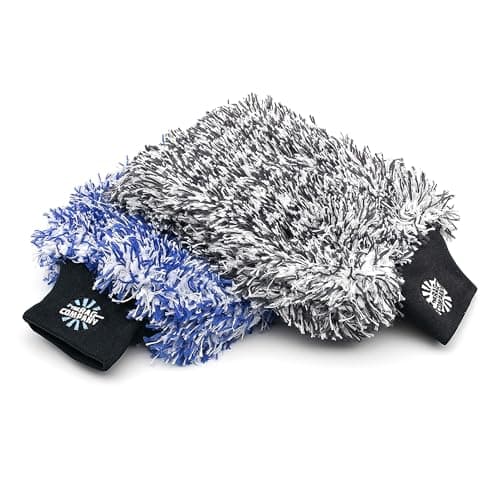
Deep, dense microfiber with enough pile to pull grit up and away from the paint rather than trapping it against the surface. Two in the pack, which matters — a mitt that hits the ground is finished, and having a spare stops people picking it up and carrying on.
Who should skip it. Nothing much. It is more expensive than a chenille mitt and worth it, but if your washing technique is the actual problem a better mitt will not save you.
Grit release
9.0
Capacity
9.0
Durability
8.5
Value
8.0
What works
Deep pile pulls grit away from the panel
Two in the pack, so a dropped mitt is not a crisis
Rinses out cleanly between panels
What does not
More expensive than a chenille mitt
Bulky and slow to dry
The Rag Company does not publish a GSM figure for this one
Dragging grit across the clear coat, almost always during washing or drying. Automatic washes with brushes are the fastest cause; washing without a pre-rinse and drying by dragging a towel are the most common. Weather and sun do not cause swirl marks.
Can swirl marks be removed without a machine?
Light ones, on a small area, with a compound and a lot of effort. For a whole car it is not realistic — a machine generates abrading action a hand cannot sustain. A glaze will hide light swirls temporarily if correction is not an option.
Will a ceramic coating hide swirl marks?
No — it seals them in. A coating is optically clear and locks the surface in whatever state you applied it to, for years. Correct first, then coat. See do you need to polish before coating.
How long does it take to remove swirl marks from a car?
Five to seven hours of machine work on a mid-size car, plus one to two hours of washing and decontamination first and an hour of protection afterwards. A first attempt realistically takes a full day.
08
Sources
Every published figure on this page traces to one of these. Where a manufacturer does not publish a number, the page says so rather than estimating it.
Last reviewed October 5, 2026. Think a figure here is wrong? Tell us at contact@detailingandwax.com and we will check it, fix it and date the correction — see our editorial policy.