Featured here: the Chemical Guys Chemical Guys Total Interior Cleaner and Protectant.
How this is funded: we earn an Amazon commission when you buy through our links, at no extra cost to you. We sell nothing and stock nothing, so a pick is never a product we are trying to move. Prices are pulled live from Amazon and were last checked October 5, 2026; where we cannot verify a price we say so rather than print an old one. Full disclosure.
Research-basedPicked from published specifications and the pattern across verified-purchase reports. We have not used these ourselves and do not pretend otherwise.How we pick
An interior detail is three to four hours on a normal daily driver and most of a day on a neglected one. The sequence below is organized around one principle: gravity. Work top to bottom and dry to wet, so you are never re-soiling a surface you have already finished.
02
Stage one — strip the car, 20 minutes
Everything out. Mats, child seats, the contents of every door pocket and the glovebox.
Mats go outside where they can be cleaned and dried separately.
Seats fully forward, then fully back as you work — the dirt lives exactly where the seat normally sits.
Make a decision about the trunk now, because it is the part everyone skips and then wishes they had not.
03
Stage two — dry debris, 40 minutes
01Dry brush the vents, seams and switch panels with a soft brush so the dust is loose before any liquid touches it.
02Vacuum top down — headliner if it needs it, then seats, console, door cards, then footwells.
03Agitate carpet with a stiff brush before the final vacuum pass. This lifts embedded grit that suction alone leaves.
04Crevice tool along every seam: seat bases, the sides of the console, door pockets, seat rails.
05Vacuum the trunk and the spare wheel well.
04
What this guide uses
An interior cleaner, a vacuum, brushes and a glass cleaner. Prices are live from Amazon.
Chemical GuysSpec-verified
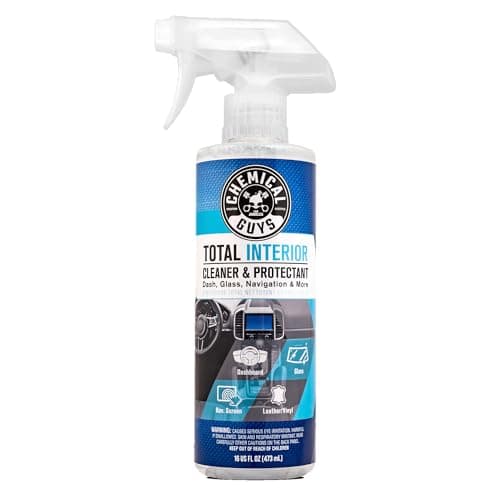
Chemical Guys Total Interior Cleaner and Protectant
Best for: One bottle for every hard surface in the cabin
Cleans and protects in one pass across plastic, vinyl and coated leather, and leaves a matte finish rather than the greasy sheen that marks an over-dressed interior. For most people this single bottle replaces three.
Who should skip it. Heavy soiling. It is a maintenance cleaner, and genuinely dirty door cards want a diluted all-purpose cleaner first.
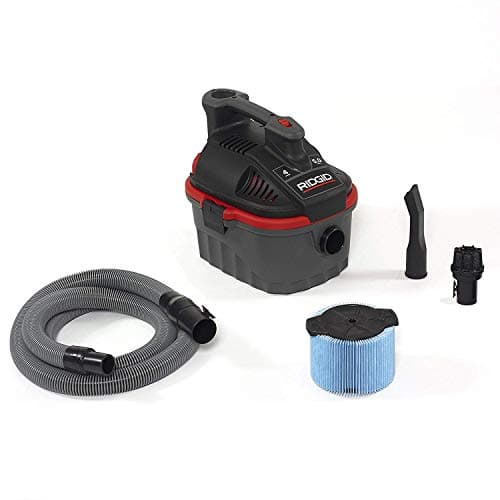
Four gallons, 5.0 peak horsepower, and a hose narrow enough to concentrate airflow where car work needs it. Wet capability matters if you ever extract carpets, and the compact size means it lives in the garage rather than the way.
Who should skip it. Anyone who needs cordless. This is a corded machine, and if the car is not near an outlet that is a daily annoyance rather than a one-off.
Suction
9.0
Reach
8.0
Attachments
8.5
Value
8.5
What works
Genuine suction with a car-appropriate hose diameter
Wet pickup for carpet extraction
Built to survive a garage
What does not
Corded, which is the real limitation
Loud
4 gallons fills quickly if you also use it for the garage
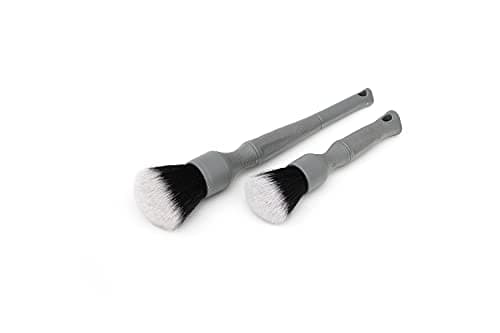
Synthetic bristles soft enough that these can be used on painted panels around badges and emblems, with a grip that does not slip when wet. A set, so you get the sizes a real interior and exterior detail needs.
Who should skip it. Scrubbing. These are soft by design — carpet and heavily soiled plastic want a stiffer brush, and using these for that ruins them.
Softness
9.5
Reach
8.5
Durability
8.5
Value
7.5
What works
Soft enough for paint around badges and emblems
Synthetic, so they handle wet use
A set rather than a single size
What does not
Too soft for carpet or heavy soiling
Expensive for brushes
Detail Factory does not publish a brush count we could verify
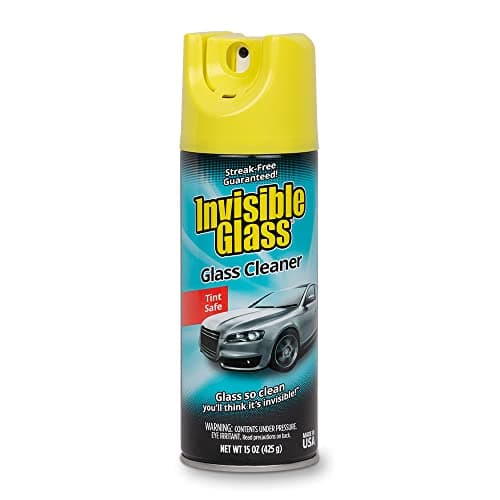
Ammonia-free, leaves no residue at all, and the aerosol foam clings to a vertical windshield instead of running into the dash. It is the one product on this page with essentially no competition.
Who should skip it. Nothing in a car. It is safe on tint, on screens and on glass, which is a rare combination. Buy two.
01Top down again. Headliner and pillars first, dash and door cards next, console and lower trim last.
02Spray the cleaner onto the towel, not onto the surface.
03Agitate textured plastic with a soft brush and wipe immediately.
04Screens and instrument lenses with a [screen-safe product](/interior/best-car-interior-cleaners) or a dry microfiber only.
05Switches and buttons with a soft brush, barely damp.
06Never dress the steering wheel or the pedals. Clean them and leave them dry.
07Door shuts and sills last, which are filthier than the cabin and belong at the end.
06
Stage four — seats, 45 to 90 minutes
Leather: clean with a pH-balanced cleaner on a soft brush, lift with a damp towel, let it dry, then condition thinly. Never spray perforated leather directly. See leather conditioners.
Cloth: foam cleaner, agitate with a brush, blot firmly with a towel, and do not soak the foam underneath. See upholstery cleaners.
Alcantara: light foam, soft brush in one direction, lift with a dry towel. No dressing, no soaking, no pressure.
07
Stage five — carpet and mats, 30 to 60 minutes
Pre-treat stains, apply cleaner a footwell at a time, agitate with a stiff brush, then extract or blot hard. Mats get the same treatment outside the car where they can dry properly. The detail is on how to deep clean car carpet.
08
Stage six — glass, 20 minutes, and always last
Every product you have used has put overspray on the inside of the windshield. Cleaning the glass earlier means cleaning it twice.
01Two dedicated low-pile glass towels, one to clean and one to buff.
02Spray the towel, not the glass.
03Interior vertically, exterior horizontally, so a streak tells you which side it is on.
04Lower each window an inch and do the top strip that normally sits in the seal.
05Mirrors and the instrument cluster lens last.
09
Finishing
Replace the cabin air filter if it has been more than a year. It is the single most common cause of a smell that survives a full detail.
Leave the car open to air for an hour if you used any wet products.
Put the mats back only when they are genuinely dry, including underneath.
Do not use an air freshener to finish. If the car still smells, find the source.
10
Questions people actually ask
How long does it take to detail a car interior?
Three to four hours on a normal daily driver and most of a day on a neglected one. The vacuuming and the seats take the longest; the hard surfaces go quickly once the car is stripped out.
What order should you detail a car interior in?
Strip the car, dry debris and vacuum, hard surfaces top to bottom, seats, carpet, then glass last. Glass is last every time because every product you use before it puts overspray on the inside of the windshield.
How do you get a smell out of a car interior?
Find the source rather than masking it. Usually damp carpet under a mat, something spilled under a seat, or a cabin air filter that has not been changed. Extract the carpets, dry them fully, and replace the filter.
Should you dress the steering wheel?
No. Any dressing makes a wheel slick, which is unpleasant and mildly unsafe. Clean it with a damp towel and a gentle interior cleaner and leave it dry — the same applies to the pedals.
11
Sources
Every published figure on this page traces to one of these. Where a manufacturer does not publish a number, the page says so rather than estimating it.
Last reviewed October 5, 2026. Think a figure here is wrong? Tell us at contact@detailingandwax.com and we will check it, fix it and date the correction — see our editorial policy.