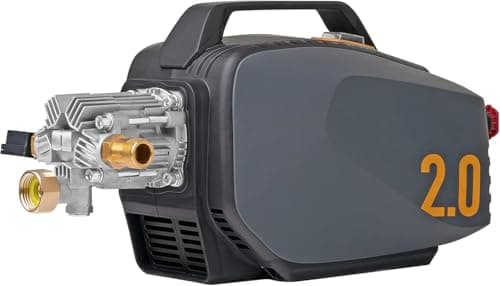
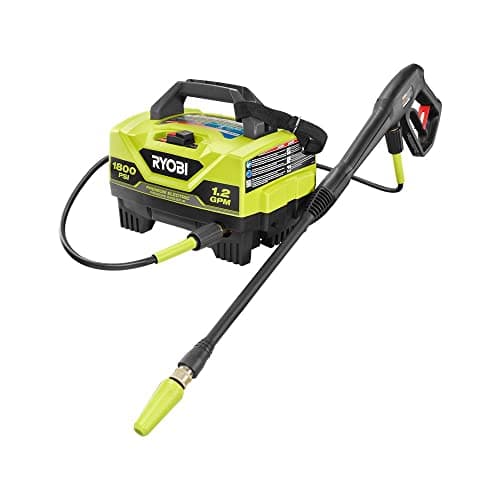
Our top pick: the Active Active 2.0 GPM Electric Pressure Washer.
How this is funded: we earn an Amazon commission when you buy through our links, at no extra cost to you. We sell nothing and stock nothing, so a pick is never a product we are trying to move. Prices are pulled live from Amazon and were last checked October 5, 2026; where we cannot verify a price we say so rather than print an old one. Full disclosure.
Research-basedPicked from published specifications and the pattern across verified-purchase reports. We have not used these ourselves and do not pretend otherwise.How we pick
Quick picks — Best pressure washers
#
Product
Best for
Flow rate
Price
01
Active 2.0 GPM Electric Pressure Washer
Flow rate, which is the spec that actually matters for foam
Tap any row for the full write-up. Prices come straight from Amazon and are never typed in by hand.
The verdict
The Active 2.0 if foam is the point — 2.0 GPM feeds a cannon better than anything else here and the 1800 PSI is plenty for a car. The Sun Joe SPX3000 is the sensible budget answer and the most common detailing pressure washer in American driveways for good reason.
02
Flow rate, not pressure
Pressure washers are marketed on PSI because it is the bigger number. For washing a car, the number that matters is GPM — gallons per minute — because that is what carries grit off the paint and what feeds a foam cannon.
An 1800 PSI machine at 2.0 GPM produces thicker foam and rinses better than a 2500 PSI machine at 1.2 GPM. Pressure above about 1500 PSI adds nothing useful on paint and does start to risk lifting loose trim and failing clear coat on older cars.
Which specs matter for a car, and which do not
Spec
What it does for car washing
Target
Flow rate (GPM)
Carries grit away; feeds the foam cannon
1.4 minimum, 2.0 ideal
Pressure (PSI)
Above 1500 it adds nothing on paint
1500 to 2000 is plenty
Motor type
Induction motors last; universal motors are louder and shorter-lived
Induction if the budget allows
Hose length
How often you move the machine
25 ft or more
Fitting
Whether your cannon connects
1/4 in quick connect, or budget an adapter
03
The ranked picks
All electric — gas machines are louder, heavier and produce far more pressure than paint wants. Prices are live from Amazon.
No. 01ActiveSpec-verified
Active 2.0 GPM Electric Pressure Washer
Best for: Flow rate, which is the spec that actually matters for foam
2.0 GPM at 1800 PSI is the right shape of machine for detailing: car work wants water volume to carry grit away and to feed a foam cannon, not raw pressure. This is the machine that makes a cannon produce its best foam.
Who should skip it. Anyone who also wants to strip a deck. 1800 PSI is deliberately modest, and for heavy cleaning jobs a higher-pressure machine does more.
Pressure
7.0
Flow
9.5
Build
8.5
Value
7.5
What works
2.0 GPM is genuinely high flow for an electric machine
Feeds a foam cannon better than anything else here
Built for detailing rather than general cleaning
What does not
Modest pressure if you want to clean a driveway too
Most expensive machine in this group
Active does not publish a detergent tank spec we could verify
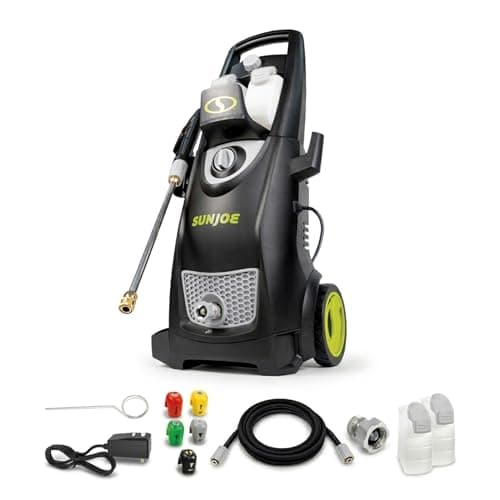
2500 max PSI, dual detergent tanks, and a price that has made this the most common car-detailing pressure washer in American driveways. For washing a car it is more than enough machine — car work is about flow and consistency rather than raw pressure.
Who should skip it. Heavy or continuous use. The induction motor and plastic fittings are built to a price, and owner reports describe the hose connections as the first thing to fail.
Pressure
8.5
Flow
7.0
Build
6.5
Value
9.5
What works
Far more machine than car washing requires
Two detergent tanks for soap and pre-wash
The cheapest credible entry into pressure washing
What does not
Plastic hose fittings are the common failure point
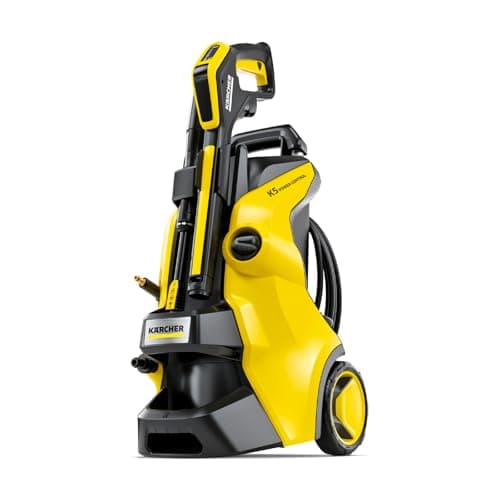
Karcher builds the water-cooled induction motors that outlast the universal motors in budget machines, and the K5 is where that starts in their consumer range. 2500 PSI, a 32 ft hose, and the best build quality of anything here.
Who should skip it. Anyone on a budget. It costs roughly twice the Sun Joe for a machine that washes a car no better — you are buying longevity, not performance.
Pressure
8.5
Flow
7.5
Build
9.5
Value
7.0
What works
Water-cooled induction motor built to last years
32 ft hose means moving the machine far less often
Best build quality in this group
What does not
Roughly twice the price for no better car washing
Karcher's bayonet fitting needs an adapter for most cannons
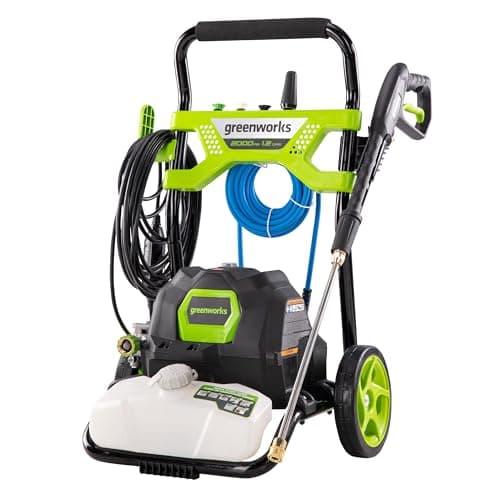
2000 PSI and 1.2 GPM is the common middle ground: enough pressure for general cleaning, enough flow for a foam cannon to work properly. If this machine has to do more than cars, this is the sensible shape.
Who should skip it. Maximum foam. 1.2 GPM feeds a cannon adequately rather than generously, and next to a 2.0 GPM machine the difference in foam thickness is visible.
1800 PSI and 1.2 GPM is the floor for usable foam, and this is the cheapest way to reach it from a brand with a real service network. For washing a car and nothing else, it is enough.
Who should skip it. Anything beyond car washing. At 1800 PSI it is slow on concrete and siding, and the compact build is not meant for long sessions.
Before you order, work out what fitting the machine has and whether your intended foam cannon matches. Most consumer machines in the US use a 1/4 in quick connect and most cannons are sold to match. Karcher uses a proprietary bayonet and needs an adapter; some machines use an M22 thread.
Buy the adapter with the machine. It is a cheap part that otherwise costs you the weekend you were planning to wash the car in. The foam cannon roundup has the cannons.
05
Using one safely on paint
Keep the nozzle at least 12 in from the paint, further on older or repainted panels.
Use a 40-degree (white) or 25-degree (green) nozzle. The red zero-degree nozzle has no business near a car.
Never hold it on one spot, particularly on badges, trim edges and failing clear coat.
Stay away from failing paint entirely. A pressure washer will find every weak edge and lift it.
Rinse top to bottom so dirty water runs off panels you have already done.
06
Questions people actually ask
What PSI pressure washer is best for washing a car?
1500 to 2000 PSI is plenty. Above that adds nothing useful on paint and starts to risk lifting trim and failing clear coat. The number that actually matters for car work is flow rate — aim for 1.4 GPM minimum and 2.0 GPM if you can.
Can a pressure washer damage car paint?
Sound paint on a modern car is fine with a wide-angle nozzle held a foot away. Damage happens with a zero-degree nozzle, holding the spray on one spot, or working near already-failing clear coat and loose trim — the washer finds every weak edge.
What GPM do you need for a foam cannon?
1.4 GPM is the practical minimum for usable foam and 2.0 GPM is noticeably thicker. This is why people buy high-PSI machines and get disappointing foam — pressure is not what feeds a cannon.
Is an electric or gas pressure washer better for car detailing?
Electric, clearly. Gas machines are built for decks and concrete: louder, heavier, and producing more pressure than paint wants. Every machine we would recommend for car work is electric.
07
Sources
Every published figure on this page traces to one of these. Where a manufacturer does not publish a number, the page says so rather than estimating it.
Last reviewed October 5, 2026. Think a figure here is wrong? Tell us at contact@detailingandwax.com and we will check it, fix it and date the correction — see our editorial policy.