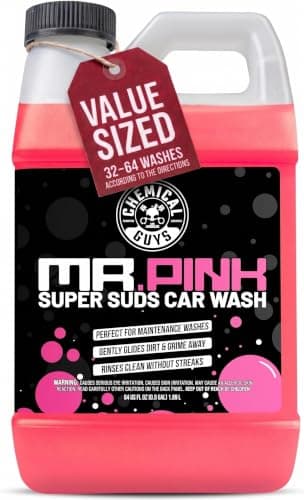
Featured here: the Chemical Guys Chemical Guys Mr. Pink Car Wash Soap.
How this is funded: we earn an Amazon commission when you buy through our links, at no extra cost to you. We sell nothing and stock nothing, so a pick is never a product we are trying to move. Prices are pulled live from Amazon and were last checked October 5, 2026; where we cannot verify a price we say so rather than print an old one. Full disclosure.
Research-basedPicked from published specifications and the pattern across verified-purchase reports. We have not used these ourselves and do not pretend otherwise.How we pick
Detailing a car at home is not one job. It is five, in a fixed order, and almost everything that goes wrong is a sequencing error rather than a technique one — polishing before decontaminating, coating before correcting, drying before clearing the trapped water.
02
The five stages
The five stages and what each costs you
Stage
What it does
How often
Time
Wash
Removes loose dirt safely
Every 1 to 2 weeks
45 minutes
Decontaminate
Removes bonded contamination
Twice a year
1 to 2 hours
Correct
Removes defects from the clear coat
Every 2 to 4 years
A day
Protect
Adds a sacrificial layer
2 to 4 times a year
1 hour
Maintain
Keeps the protection working
Every wash
10 minutes
Four of the five are routine and cheap. One — correction — is a day of work and the only one that removes clear coat, which is why the whole structure exists to make it necessary as rarely as possible.
If you own a pressure washer, a foam cannon is the single highest-value addition — it removes most of the grit before anything touches the paint.
Stage two — decontaminate
Two separate jobs, twice a year. An iron remover dissolves bonded brake dust chemically; a clay bar shears off tar, sap and overspray mechanically. Chemical first, always.
The test for whether you need the second one: the bag test.
A detail spray as a drying aid on every wash, an SiO2 spray every few months if the car is coated, and the discipline not to run it through a brush wash.
03
A starting kit across the stages
A shampoo, a mitt, a machine and a sealant — one from each of the stages that matter most. Prices are live from Amazon.
Mr. Pink is pH-neutral, extremely slippery, and works in both a bucket and a foam cannon, which is why it ends up on more shelves than anything else in this category. It does not strip wax or sealant, and it suds enough that you can see where you have washed.
Who should skip it. Stripping a car before a coating — it is deliberately gentle and leaves everything on the paint. It is also not the best foam producer if a thick cannon foam is what you are after.
Lubricity
9.0
Cleaning
7.5
Suds
8.0
Coating safe
9.5
Value
8.5
What works
Genuinely slippery, which is what reduces wash marring
Works in a bucket and a cannon equally well
Safe over wax, sealant and ceramic coatings
What does not
Not a stripping wash — the wrong choice before a coating
Thinner cannon foam than dedicated snow foams
Chemical Guys publishes no dilution ratio we could verify
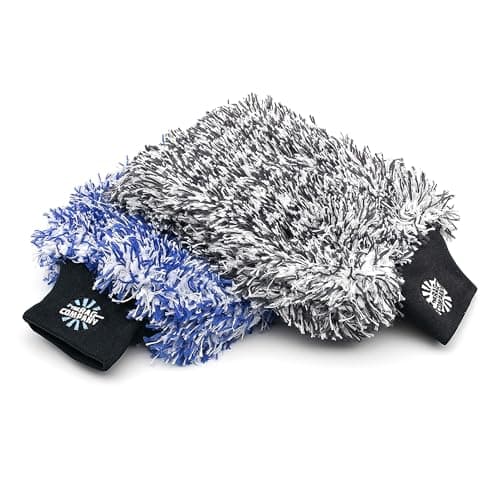
Deep, dense microfiber with enough pile to pull grit up and away from the paint rather than trapping it against the surface. Two in the pack, which matters — a mitt that hits the ground is finished, and having a spare stops people picking it up and carrying on.
Who should skip it. Nothing much. It is more expensive than a chenille mitt and worth it, but if your washing technique is the actual problem a better mitt will not save you.
Grit release
9.0
Capacity
9.0
Durability
8.5
Value
8.0
What works
Deep pile pulls grit away from the panel
Two in the pack, so a dropped mitt is not a crisis
Rinses out cleanly between panels
What does not
More expensive than a chenille mitt
Bulky and slow to dry
The Rag Company does not publish a GSM figure for this one
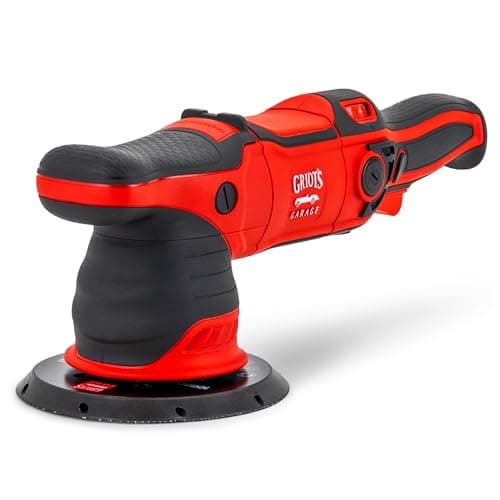
A 9mm throw and a 1000W motor put the G9 exactly where most home detailers should be: fast enough to finish a car in an afternoon, short enough in the throw to stay predictable near badges and body lines. It is the machine we would buy if we were buying one machine.
Who should skip it. If you already own a competent 8mm machine, this is not the upgrade you think it is — the extra millimeter of throw will not fix inconsistent results. Put the money into better pads and a second liquid instead. It is also heavier than the G8, and you notice that on vertical panels after an hour.
Correction speed
8.5
Control
9.0
Ergonomics
7.5
Build
9.0
Value
8.5
What works
9mm throw is the best general-purpose compromise on the market
1000W does not bog down under pressure on a cutting pad
Griot's lifetime warranty is the strongest in the category
Takes the same 5 in plate and 5.5 in pads as everything else
What does not
Heavier than the G8, which shows on doors and quarters
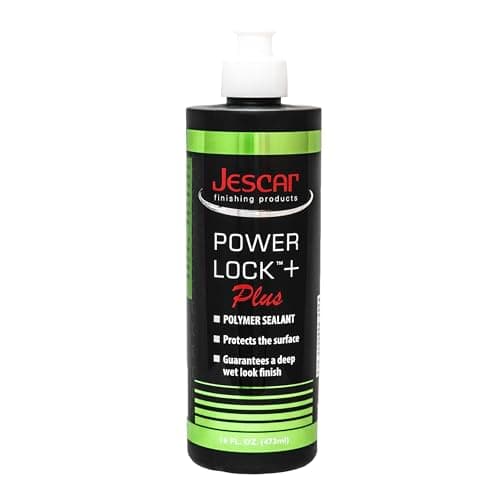
Power Lock Plus is the durability benchmark among consumer sealants, and it applies as easily as anything here — thin coat, short cure, wipe off. If the goal is to protect a car properly and not think about it for six months, this is the product.
Who should skip it. Carnauba warmth. A polymer sealant looks sharp and glassy, and on dark paint some people genuinely prefer the softer carnauba look.
Durability
9.5
Gloss
8.0
Ease of use
8.5
Value
8.5
What works
The longest-lasting sealant in this roundup
Easy, forgiving application for its durability class
Works by hand or by machine
What does not
Glassy rather than warm on dark paint
Needs a properly clean, bare surface to bond
Costs more than the mass-market sealants
Published specifications
Type
Polymer sealant
Claimed durability
Up to 12 months, per Jescar
Volume
16 oz
Form
Liquid
Coating safe
No — a sealant replaces a coating, it does not top one
01Fix the wash first. Two buckets, two grit guards, a decent mitt and a plush drying towel. Under fifty dollars, and it prevents more damage than anything else you can buy.
02Add a pre-wash — a foam gun if you have a hose, a cannon if you have a pressure washer.
03Decontaminate once and see what the paint feels like afterwards. Most people have never done this.
04Protect it with a sealant, and learn the beading test.
05Only then consider a polisher. If the paint still bothers you after all of the above, correction is the answer — and your wash routine is now good enough that it will last.
05
What this costs
A complete wash setup is modest. Decontamination products are twice-a-year purchases. A polisher and consumables is the significant one, and it is also a one-time purchase that then covers every car you own for a decade.
Five stages in order: wash, decontaminate, correct, protect, maintain. Four are routine and inexpensive; correction is a day of work and the only one that removes clear coat, which is why the rest exists to make it necessary as rarely as possible.
Can you detail a car yourself?
Yes, and the washing and protection stages are genuinely easy. Correction has a learning curve and a full day attached, but a dual action polisher is designed to stall rather than dig in, which makes it difficult to cause real damage with.
What should you buy first for car detailing?
Two buckets, two grit guards, a deep-pile wash mitt and a plush drying towel. That setup prevents more paint damage than anything else you can buy, and it costs a fraction of a polisher.
How often should you detail your car?
Wash every one to two weeks, decontaminate twice a year, protect two to four times a year, and correct every two to four years at most. Correction is the only stage that spends clear coat, so the others exist to space it out.
07
Sources
Every published figure on this page traces to one of these. Where a manufacturer does not publish a number, the page says so rather than estimating it.
Last reviewed October 5, 2026. Think a figure here is wrong? Tell us at contact@detailingandwax.com and we will check it, fix it and date the correction — see our editorial policy.