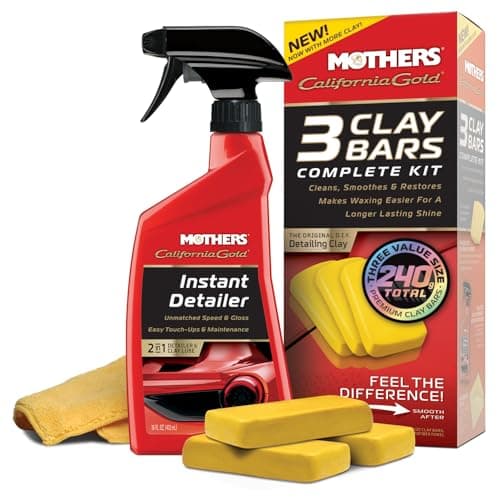
Featured here: the Mothers Mothers California Gold Clay Bar Complete Kit.
How this is funded: we earn an Amazon commission when you buy through our links, at no extra cost to you. We sell nothing and stock nothing, so a pick is never a product we are trying to move. Prices are pulled live from Amazon and were last checked October 5, 2026; where we cannot verify a price we say so rather than print an old one. Full disclosure.
Research-basedPicked from published specifications and the pattern across verified-purchase reports. We have not used these ourselves and do not pretend otherwise.How we pick
A clay bar is a malleable polymer that shears bonded contamination off the surface of your clear coat — tar, tree sap, overspray, industrial fallout. It does this by abrading, gently, which means doing it when the paint does not need it costs you clear coat for nothing.
02
Step one — find out if you need to
01Wash and dry one panel properly.
02Put your hand inside a plastic sandwich bag.
03Run your fingertips lightly over the paint. The bag amplifies texture your fingers cannot feel directly.
04Smooth as glass means stop. You do not need to clay, and claying anyway adds marring.
05Rough or gritty means continue.
03
Step two — chemical decontamination first
This is the rule most guides omit and it matters a great deal. Bonded iron — brake dust embedded in the clear coat — is metallic and hard. Clay does not dissolve it; clay tears it out and drags it across the panel, which puts scratches into paint you were decontaminating.
Spray an iron remover on a cool panel, watch the purple bleed, rinse before it dries. Then re-do the bag test — a great deal of what felt rough will now be gone, and you may not need to clay at all.
04
What this process needs
Clay, a lubricant, and the iron remover that comes first. Prices are live from Amazon.
MothersSpec-verified
Mothers California Gold Clay Bar Complete Kit
Best for: A complete first clay kit, three bars deep
Three 80-gram bars and the lubricant in one box, which is the right way to buy clay for the first time. Three bars matters because the correct response to dropping clay on the ground is to throw it away, and people with one bar do not.
Who should skip it. Experienced detailers who already have a lubricant they prefer and would rather buy clay alone.
Cutting speed
7.0
Marring risk
8.5
Longevity
7.5
Value
9.0
What works
Three bars, so a dropped bar is not the end of the job
Lubricant included
Fine grade, which is right for most daily drivers
What does not
Paying for lubricant you may already own
Fine grade is slow on heavily contaminated paint
Clay bars are single-drop consumables however careful you are
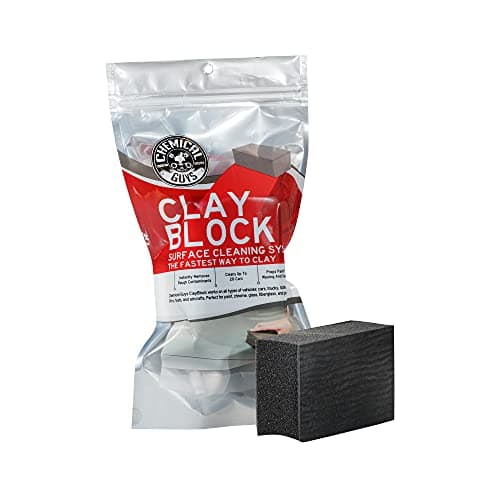
A rubber polymer block rather than a clay bar: it rinses clean, it survives being dropped, and it does the same job faster. The trade is that it is less conformable, so it does not follow complex curves the way a clay bar does.
Who should skip it. Intricate areas and tight curves, where a conformable bar genuinely reaches what a rigid block cannot. Most people end up owning both.
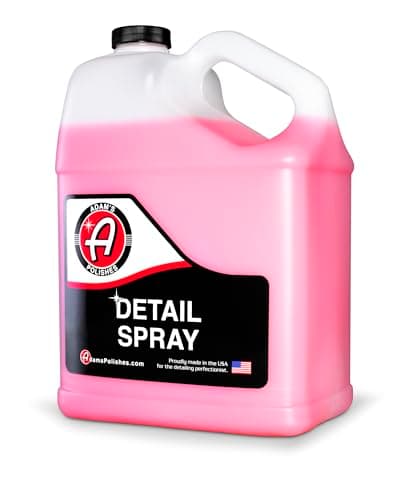
Adam's Detail Spray is the reference quick detailer: slick enough to use as a clay lubricant, gentle enough to lift dust without marring, and it works as a drying aid. If you own one bottle of anything in this category, this is a sensible one.
Who should skip it. Washing a dirty car. No detail spray is a waterless wash on genuine dirt, and using one that way is a reliable way to put swirls into clean paint.
Lubricity
9.5
Gloss
8.0
Ease of use
9.5
Value
7.0
What works
Excellent lubricity — doubles as a clay lubricant
Works as a drying aid, which is its best use
Safe over every protection type
What does not
Not protection in any meaningful sense
Expensive per ounce next to the mass-market detailers
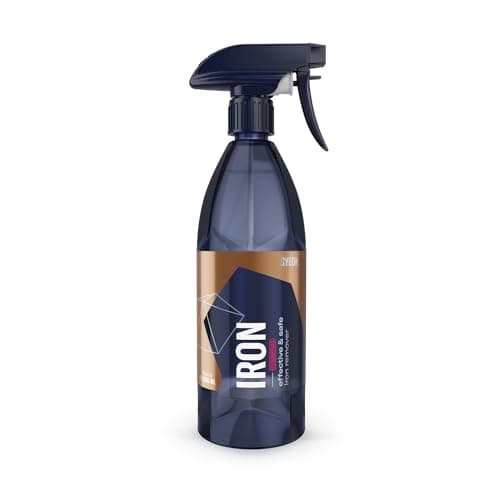
A color-change iron remover that works fast and smells less offensive than most — which sounds trivial until you have sprayed a whole car with the alternative. The purple bleed is the reaction dissolving bonded brake dust so a clay bar does not have to tear it out.
Who should skip it. Routine washing. Iron removers are a twice-a-year job, and using one monthly is both wasteful and harder on trim than it needs to be.
Speed
9.0
Dwell behavior
8.5
Finish safety
9.0
Value
8.0
What works
Fast, clear color change so you can see it working
Markedly less offensive smell than most
Safe on coated paint and painted wheels
What does not
A twice-yearly product, not a routine one
GYEON does not publish a bottle volume we could verify
Must be rinsed before it dries, which limits panel size in sun
Neither? Protect the same day with a sealant or a wax. Bare clear coat collects contamination quickly, and leaving it bare undoes the work.
07
Clay alternatives
The three media, honestly
Speed
Marring risk
Reusable
Soft clay bar
Slowest
Lowest
Until dropped
Clay block
Faster
Moderate
Years
Clay mitt
Fastest
Highest
Years
On a large vehicle a mitt turns a two-hour job into twenty minutes and will leave marring that wants a light polish afterwards. On dark or soft paint, a bar is the safer choice. The clay roundup covers the specific products.
08
Questions people actually ask
How do you know if your car needs claying?
The bag test. Put your hand in a plastic sandwich bag and run it over washed, dried paint — the bag amplifies texture your fingers miss. Rough means clay; smooth means skip it, because claying smooth paint adds marring and removes nothing.
What can you use as clay bar lubricant?
A dedicated clay lubricant, a quick detailer spray, or a rinseless wash solution diluted for the purpose. Never water alone and never nothing — clay on a dry panel is effectively sandpaper.
Do you polish before or after claying?
After. Claying shears bonded contamination off the surface, and polishing a panel that still has tar and overspray on it drags that contamination under the pad. Wash, chemically decontaminate, clay, then polish.
What happens if you drop a clay bar?
Throw it away. It has picked up grit from the ground that you cannot see and cannot remove by kneading, and using it will put deep scratches into your clear coat. This is why clay kits sensibly come with more than one bar.
09
Sources
Every published figure on this page traces to one of these. Where a manufacturer does not publish a number, the page says so rather than estimating it.
Last reviewed October 5, 2026. Think a figure here is wrong? Tell us at contact@detailingandwax.com and we will check it, fix it and date the correction — see our editorial policy.