Independent picks for detailing your own car. We stock nothing, so we have nothing to move.
01
Ceramic & graphene
Do you need to polish before a ceramic coating?
Sometimes. A coating is optically clear and locks the surface in for years, so the real question is what you are willing to look at until it wears off.
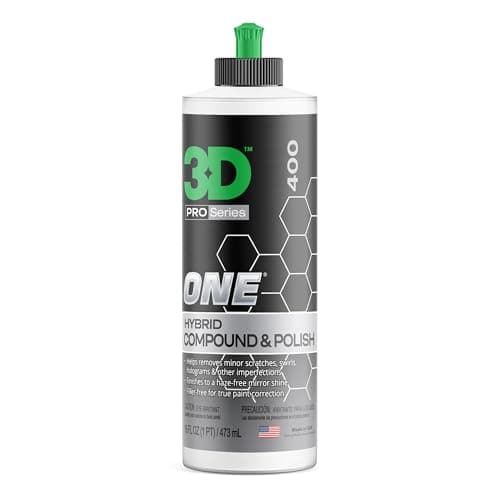
Featured here: the 3D 3D ONE Hybrid Compound and Polish.
How this is funded: we earn an Amazon commission when you buy through our links, at no extra cost to you. We sell nothing and stock nothing, so a pick is never a product we are trying to move. Prices are pulled live from Amazon and were last checked October 5, 2026; where we cannot verify a price we say so rather than print an old one. Full disclosure.
Research-basedPicked from published specifications and the pattern across verified-purchase reports. We have not used these ourselves and do not pretend otherwise.How we pick
You always have to decontaminate. Polishing is the part that is genuinely situational, and the industry answer of 'always correct first' is correct for a professional charging for the result and overcautious for a lot of home installs.
02
The five-minute test
01Wash and dry one panel properly — the hood or a door.
02Take it into direct sunlight, or use a handheld inspection light in a dark garage at a shallow angle.
03Look at the reflection from a low angle, with the light source behind the panel.
04Decide honestly: can you see swirl marks? Not squinting. At a normal viewing distance.
05If yes, correct. If no, do not. A coating makes existing defects slightly more visible, not less, because it increases gloss.
03
When polishing first is genuinely necessary
Visible swirl marks at normal viewing distance. You are sealing them in for the coating's life.
Any multi-year coating. The longer the coating lasts, the longer you live with whatever is underneath.
Dark paint. Black and dark blue show everything, and a coating raises the gloss that reveals it.
Water spot etching or bird dropping marks, which a coating locks in exactly as it is.
A used car you have just bought, where you do not know what the previous owner's wash routine was.
04
When you can reasonably skip it
Genuinely new paint with no visible defects, which is the clearest case.
Light-colored cars — silver, white and light gray hide marring well enough that correcting may not change what you see.
A spray coating lasting months rather than years. The commitment is short, so the stakes are low.
A car you have corrected recently and washed carefully since.
05
Both paths, with live prices
A one-step compound and a machine if you are correcting, plus a real coating and a spray coating for either path.
3D ONE is a genuine one-step: it starts as a compound and the abrasives break down as you work, so the same pass that removes the defect also finishes it. On a medium pad it handles most daily-driver swirls and leaves paint that does not need a second liquid.
Who should skip it. Anyone who wants maximum cut. A dedicated heavy compound removes more, faster. ONE is a time-saver and a simplifier, not a defect-removal champion.
Cut
8.0
Finish
9.0
Ease of use
8.5
Value
8.0
What works
Truly finishes down, so most cars need only this one liquid
Very low dusting compared with traditional compounds
Flexible — cut level changes with the pad you pair it with
What does not
Less outright cut than a dedicated heavy compound
Costs noticeably more per ounce than Ultimate Compound
Needs working properly; rushing the pass wastes the diminishing abrasive
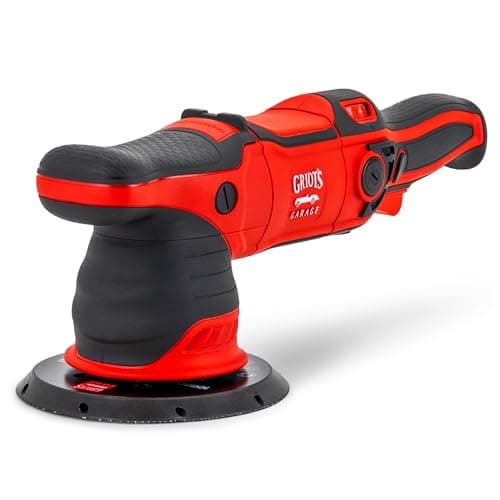
A 9mm throw and a 1000W motor put the G9 exactly where most home detailers should be: fast enough to finish a car in an afternoon, short enough in the throw to stay predictable near badges and body lines. It is the machine we would buy if we were buying one machine.
Who should skip it. If you already own a competent 8mm machine, this is not the upgrade you think it is — the extra millimeter of throw will not fix inconsistent results. Put the money into better pads and a second liquid instead. It is also heavier than the G8, and you notice that on vertical panels after an hour.
Correction speed
8.5
Control
9.0
Ergonomics
7.5
Build
9.0
Value
8.5
What works
9mm throw is the best general-purpose compromise on the market
1000W does not bog down under pressure on a cutting pad
Griot's lifetime warranty is the strongest in the category
Takes the same 5 in plate and 5.5 in pads as everything else
What does not
Heavier than the G8, which shows on doors and quarters
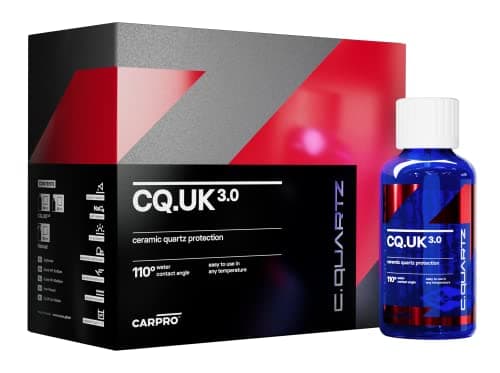
The UK formulation exists specifically because the original CQuartz was difficult to work with in cold, humid conditions — which describes most home garages for half the year. It flashes more predictably at lower temperatures, and that single property makes it the easier real coating to install well.
Who should skip it. Anyone expecting the outright durability of the top tier. UK 3.0 trades some claimed life for a far wider application window, and that is a deliberate and sensible trade for a driveway installation.
Claimed durability
8.0
Ease of application
8.5
Gloss
8.5
Beading
9.0
Value
8.5
What works
Formulated for cooler, damper conditions — the real-garage coating
Comes as a kit, so nothing essential is missing
Far more forgiving flash window than the top-tier coatings
What does not
Shorter claimed life than Crystal Serum Light
Still wants a corrected, panel-wiped surface
50 ml is enough for one car and little margin for error
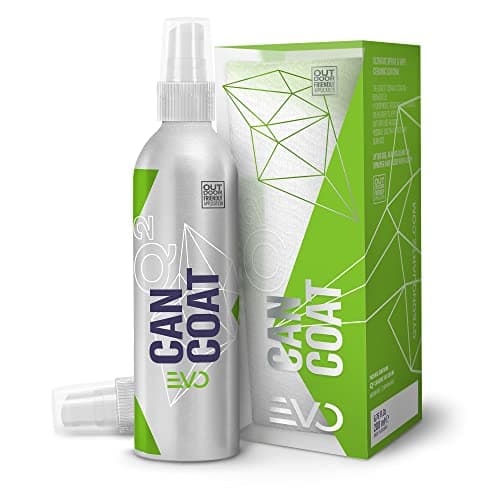
CanCoat sits between a spray and a real coating: it goes on like a spray wax but cures to something closer to a thin coating, and it lasts a season rather than a month. For a daily driver that gets washed regularly, this is the honest sweet spot of this whole category.
Who should skip it. Anyone expecting multi-year durability. It is not a replacement for a real coating and GYEON does not pretend it is — it is the product for people who would rather spend twenty minutes three times a year.
Claimed durability
7.0
Ease of application
9.5
Gloss
8.5
Beading
9.0
Value
8.0
What works
Genuinely close to coating behavior for a fraction of the work
Works on glass, trim and wheels as well as paint
Very hard to apply badly — levels easily
What does not
Six months, not years — this is the trade you are making
Costs more than a conventional spray coating
GYEON does not publish a bottle volume we could verify
This is the step people conflate with polishing and then skip along with it. Polishing leaves oils on the paint. So does the carnauba in some shampoos, and so does road film. A coating applied over any of them bonds to the film rather than to the clear coat, looks fine for a few weeks and then fails patchily.
Panel prep spray, or isopropyl alcohol diluted to roughly 15% to 20%, wiped over every surface and allowed to flash off. Five minutes per panel and it is the difference between a coating that lasts and one that does not. Even if you skip polishing entirely, do not skip this.
07
If you decide to correct
A one-step correction is almost always the right level before coating: it removes the defects you can see without spending more clear coat than the job needs. The process is on paint correction steps, and the machines are in the dual action roundup.
Then panel wipe, then coat the same day if you can. Corrected paint left bare for a week collects contamination that you will have to remove again.
08
Questions people actually ask
Do you have to polish before a ceramic coating?
You have to decontaminate and panel wipe. Polishing is situational: if you can see swirl marks at a normal viewing distance in sunlight, correct first, because the coating seals them in for years and slightly amplifies them. On defect-free new paint, skip it.
What happens if you ceramic coat over swirl marks?
The swirls stay, and the increased gloss makes them marginally more visible. Nothing bad happens to the coating itself — you have simply paid for a multi-year product that preserves a finish you did not want. Removing it means polishing the coating off.
Can you skip claying before a ceramic coating?
Only if the paint passes the bag test — put your hand in a plastic bag and run it over the panel. If it feels rough, there is bonded contamination that the coating would bond to instead of the clear coat. If it is smooth, you can skip the clay.
What is a panel wipe and do I need one?
A panel wipe is an alcohol-based spray that removes polishing oils and residue so the coating bonds to bare clear coat. Yes, you need it, and it is the step most commonly skipped — a coating bonded to oil rather than paint fails within weeks.
09
Sources
Every published figure on this page traces to one of these. Where a manufacturer does not publish a number, the page says so rather than estimating it.
Last reviewed October 5, 2026. Think a figure here is wrong? Tell us at contact@detailingandwax.com and we will check it, fix it and date the correction — see our editorial policy.