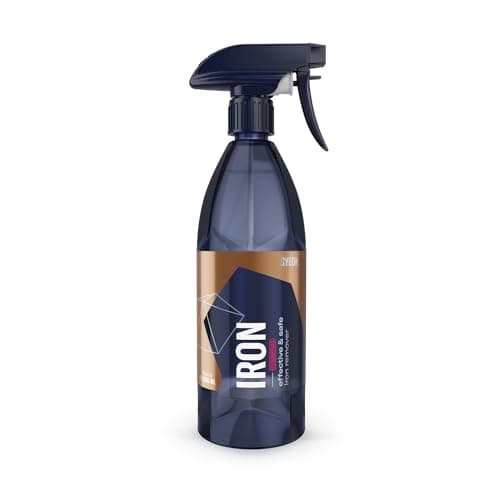
Featured here: the GYEON Gyeon Iron Paint Cleaner and Fallout Remover.
How this is funded: we earn an Amazon commission when you buy through our links, at no extra cost to you. We sell nothing and stock nothing, so a pick is never a product we are trying to move. Prices are pulled live from Amazon and were last checked October 5, 2026; where we cannot verify a price we say so rather than print an old one. Full disclosure.
Research-basedPicked from published specifications and the pattern across verified-purchase reports. We have not used these ourselves and do not pretend otherwise.How we pick
This page is the spine of the site. Almost every other page assumes a position in this sequence, and almost every expensive detailing mistake is a step taken out of turn — claying before the iron remover, polishing before claying, coating before polishing, waxing before coating.
02
The sequence
01Wheels and arches, with separate tools and water.
02Pre-rinse the whole car, top to bottom.
03Foam or pre-wash, dwell three to five minutes, rinse.
04Contact wash, two buckets, top panels first.
05Final rinse, free-flowing without a nozzle.
06Dry, blowing the gaps clear first, then patting with a plush towel.
07Chemical decontamination with an iron remover.
08Mechanical decontamination with clay, if the bag test says so.
09Correct, with a machine, if there are defects you want gone.
10Panel wipe, if a coating is going on next.
11Protect — coating, sealant or wax.
12Dress trim and tires, last, so nothing sprays onto fresh protection.
13Glass, which is last on the exterior and last on the interior too.
03
The products that mark the stage boundaries
An iron remover, clay, a compound and a sealant — one for each of the four stages after washing. Prices are live from Amazon.
A color-change iron remover that works fast and smells less offensive than most — which sounds trivial until you have sprayed a whole car with the alternative. The purple bleed is the reaction dissolving bonded brake dust so a clay bar does not have to tear it out.
Who should skip it. Routine washing. Iron removers are a twice-a-year job, and using one monthly is both wasteful and harder on trim than it needs to be.
Speed
9.0
Dwell behavior
8.5
Finish safety
9.0
Value
8.0
What works
Fast, clear color change so you can see it working
Markedly less offensive smell than most
Safe on coated paint and painted wheels
What does not
A twice-yearly product, not a routine one
GYEON does not publish a bottle volume we could verify
Must be rinsed before it dries, which limits panel size in sun
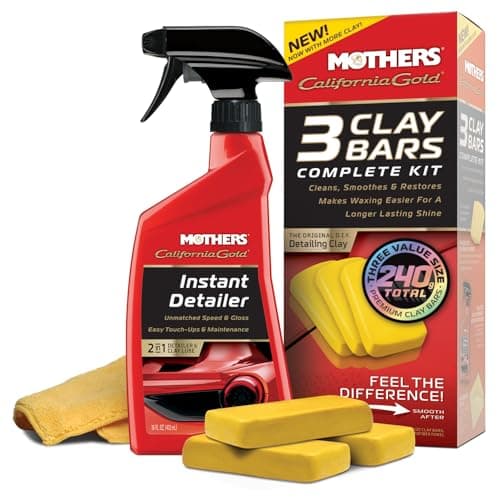
Three 80-gram bars and the lubricant in one box, which is the right way to buy clay for the first time. Three bars matters because the correct response to dropping clay on the ground is to throw it away, and people with one bar do not.
Who should skip it. Experienced detailers who already have a lubricant they prefer and would rather buy clay alone.
Cutting speed
7.0
Marring risk
8.5
Longevity
7.5
Value
9.0
What works
Three bars, so a dropped bar is not the end of the job
Lubricant included
Fine grade, which is right for most daily drivers
What does not
Paying for lubricant you may already own
Fine grade is slow on heavily contaminated paint
Clay bars are single-drop consumables however careful you are
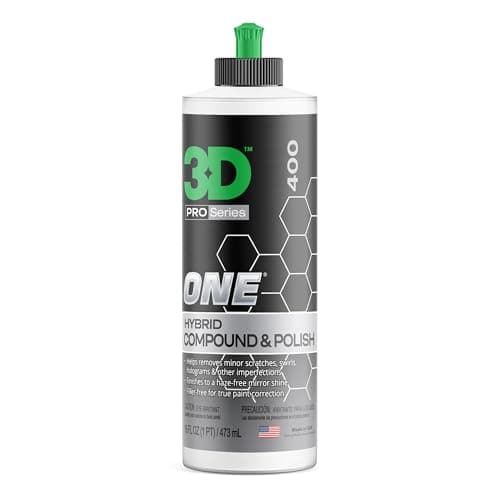
3D ONE is a genuine one-step: it starts as a compound and the abrasives break down as you work, so the same pass that removes the defect also finishes it. On a medium pad it handles most daily-driver swirls and leaves paint that does not need a second liquid.
Who should skip it. Anyone who wants maximum cut. A dedicated heavy compound removes more, faster. ONE is a time-saver and a simplifier, not a defect-removal champion.
Cut
8.0
Finish
9.0
Ease of use
8.5
Value
8.0
What works
Truly finishes down, so most cars need only this one liquid
Very low dusting compared with traditional compounds
Flexible — cut level changes with the pad you pair it with
What does not
Less outright cut than a dedicated heavy compound
Costs noticeably more per ounce than Ultimate Compound
Needs working properly; rushing the pass wastes the diminishing abrasive
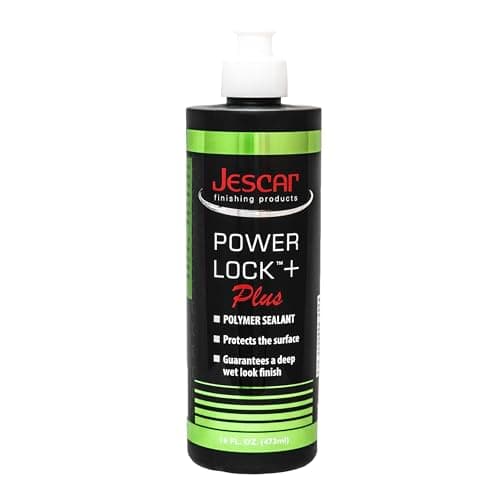
Power Lock Plus is the durability benchmark among consumer sealants, and it applies as easily as anything here — thin coat, short cure, wipe off. If the goal is to protect a car properly and not think about it for six months, this is the product.
Who should skip it. Carnauba warmth. A polymer sealant looks sharp and glassy, and on dark paint some people genuinely prefer the softer carnauba look.
Durability
9.5
Gloss
8.0
Ease of use
8.5
Value
8.5
What works
The longest-lasting sealant in this roundup
Easy, forgiving application for its durability class
Works by hand or by machine
What does not
Glassy rather than warm on dark paint
Needs a properly clean, bare surface to bond
Costs more than the mass-market sealants
Published specifications
Type
Polymer sealant
Claimed durability
Up to 12 months, per Jescar
Volume
16 oz
Form
Liquid
Coating safe
No — a sealant replaces a coating, it does not top one
The mitt picks up grit the foam would have removed
Iron remover
The wash
Dirt blocks contact and wastes product
Clay
The iron remover
Clay drags metallic particles across the clear coat
Polish
The clay
Tar and overspray get dragged under the pad
Panel wipe
The polish
The coating bonds to polishing oils, not paint
Protect
Everything above
You seal in whatever you did not remove
Trim and tires
Protection
Dressing oversprays onto fresh wax or coating
Glass
Everything
Every product you used leaves overspray on it
05
The five sequence errors people actually make
01Claying before the iron remover. The clay tears bonded iron out of the clear coat and drags it. This is the most damaging one.
02Polishing an uncontaminated-looking but unclayed car. Tar and overspray go under the pad and scratch.
03Coating without a panel wipe. The coating bonds to polishing oil and fails in weeks.
04Waxing a car you are about to coat. The coating cannot bond through wax.
05Dressing tires before washing the car. Overspray lands on paint you then wash off, wasting both.
06
The workflow spine across the site
The hubs on this site map onto this sequence, which is deliberate. Washing covers steps 1 to 8. Polishers covers step 9. Coatings and protection cover steps 10 and 11. Wheels covers steps 1 and 12. Interior is the parallel job.
Which means that when a page here says 'this comes after decontamination', it is pointing at a specific place in the list above rather than making a general gesture at good practice.
07
A realistic weekend
A full correct-and-coat weekend
Saturday
Sunday
Morning
Wheels, wash, dry
Correct the remaining panels
Midday
Iron remover, clay
Panel wipe
Afternoon
Correct the horizontal panels
Apply protection
Evening
Stop — do not rush the correction
Leave it to cure dry
A wash and protect without correction is a single morning. The weekend above is the full job, and it is the one that only happens every few years.
08
Questions people actually ask
What order should you detail a car in?
Wheels, pre-rinse, foam, contact wash, rinse, dry, iron remover, clay, correct, panel wipe, protect, trim and tires, glass. Each step removes something the next one would otherwise drag across the paint.
Do you clay before or after an iron remover?
After. An iron remover dissolves bonded brake dust chemically; claying first means the clay tears those metallic particles out of the clear coat and drags them across the panel, which is the damage you were trying to avoid.
Do you polish before or after claying?
After. Claying shears bonded tar, sap and overspray off the surface. Polishing before that means dragging those contaminants under the pad, which scratches the paint you are correcting.
When do you dress tires in a detail?
Last, after the paint is protected. Dressing applied earlier oversprays onto paint you then wash or wax over, which wastes both products and leaves a greasy stripe along the lower panels.
09
Sources
Every published figure on this page traces to one of these. Where a manufacturer does not publish a number, the page says so rather than estimating it.
Last reviewed October 5, 2026. Think a figure here is wrong? Tell us at contact@detailingandwax.com and we will check it, fix it and date the correction — see our editorial policy.