Independent picks for detailing your own car. We stock nothing, so we have nothing to move.
01
Washing & decon
The best engine bay cleaners
An engine bay is painted metal, bare aluminum, soft plastic and electrical connectors in the same square foot. The degreaser that cleans a garage floor fastest is the wrong one.
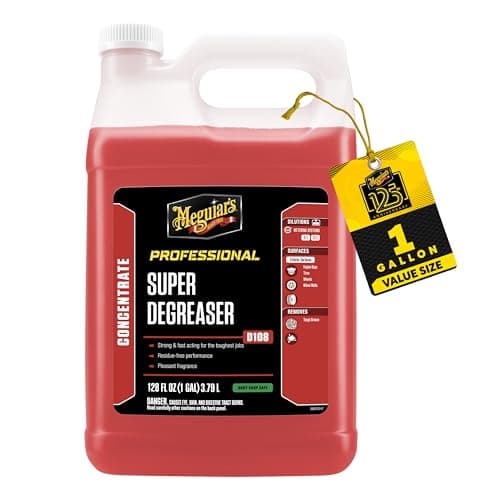
Our top pick: the Meguiar's Professional D108 Detailer Super Degreaser, 1 gal.
How this is funded: we earn an Amazon commission when you buy through our links, at no extra cost to you. We sell nothing and stock nothing, so a pick is never a product we are trying to move. Prices are pulled live from Amazon and were last checked November 19, 2026; where we cannot verify a price we say so rather than print an old one. Full disclosure.
Research-basedPicked from published manufacturer specifications and the consistent pattern across verified-purchase owner reports. Every product here scores 8.4 or better on our rubric.How we pick
Best engine degreaserMeguiar's
Meguiar's Professional D108 Detailer Super Degreaser, 1 gal
A gallon of professional-line concentrate that dilutes down for engine bays, tires, wheels and interior surfaces.
Our score9.2Best for: the best value in a dilutable professional degreaser
Tap any row for the full write-up. Prices come straight from Amazon and are never typed in by hand.
The verdict
Meguiar's D108 Super Degreaser is the pick: a dilutable professional gallon that is a strong engine degreaser at one ratio and a mild cleaner at another, for the lowest cost per use here. If you want zero decisions, the Gunk aerosol is spray-dwell-rinse and nothing else. Purple Power cleans the hardest and is the one most likely to damage something.
02
Why an engine bay is not just a dirty surface
The reason this needs its own page rather than a line on the all-purpose cleaner roundup is material mix. In one engine bay you have painted sheet metal, bare and cast aluminum, anodized brackets, rubber hoses, soft plastic covers, printed labels, exposed electrical connectors and an alternator with openings in it. A cleaner strong enough to strip baked-on oil off cast iron will also stain bare aluminum and haze soft plastic, and it does both permanently.
So the right product is not the strongest one. It is the one that cuts the grease actually present at a dilution that leaves everything else alone — which is why five of the six products here are concentrates. A concentrate is not a hassle; it is the control you need. The same bottle handles a filthy twenty-year-old bay and a three-year-old engine with plastic covers, because you choose the strength.
If what you actually want is one bottle that does the cabin, the wheels and the engine at different dilutions, that is a different question and the honest answer is on the all-purpose cleaners page. This page is about products built for grease specifically.
03
What to judge a degreaser on
Form. A ready-to-use aerosol is point-and-shoot. A concentrate costs less per use and lets you choose strength. A 2.5 gallon industrial jug is cheapest per gallon and the most capable of ruining something.
Chemistry. Citrus solvents cut grease gently and are kind to mixed materials. Water-based alkaline cleaners rinse out cleanly and are harder on bare aluminum. Petroleum-solvent aerosols cut fastest and are the least pleasant to be near.
Dilutability. The single most useful feature on this page. One concentrate at three ratios replaces three products.
Rinse behavior. Everything here needs rinsing. Water-based products rinse out of seams and crevices more completely, which matters in a place full of both.
What the maker says about aluminum. Mostly, nothing. Where a manufacturer publishes no guidance, the entry says so rather than reassuring you.
The trade-off that runs through this whole category: cutting power and material safety pull in opposite directions.
Chemistry
Cuts grease
Risk on bare aluminum
Rinses out
Citrus solvent concentrate
Strong
Low at sane dilution
Well
Water-based alkaline concentrate
Strong
Moderate to high if neat
Very well
Petroleum-solvent aerosol
Strongest, fastest
Low
Needs a thorough rinse
Industrial alkaline concentrate
Strongest
High if neat
Needs a thorough rinse
04
The ranked engine bay cleaners
Ordered on grease cutting weighted against how safe each is on the materials actually in a modern bay, then on cost per use. Prices are live from Amazon.
No. 01Meguiar'sOutstandingSpec-verified
Meguiar's Professional D108 Detailer Super Degreaser, 1 gal
Best for: The best value in a dilutable professional degreaser
A gallon of professional-line concentrate that dilutes down for engine bays, tires, wheels and interior surfaces. Because the dilution is yours to choose, one bottle is a strong engine degreaser and a mild general cleaner depending on how you mix it.
Grease cutting
Exceptional
Material safety
Good
Ease of use
Good
Value
Exceptional
Why we picked it
Cheapest per diluted ounce of anything on this page
One concentrate covers engine, wheels and interior jobs
Meguiar's professional line, so the documentation is good
Good to know. You supply the bottle, the water and the dilution judgement
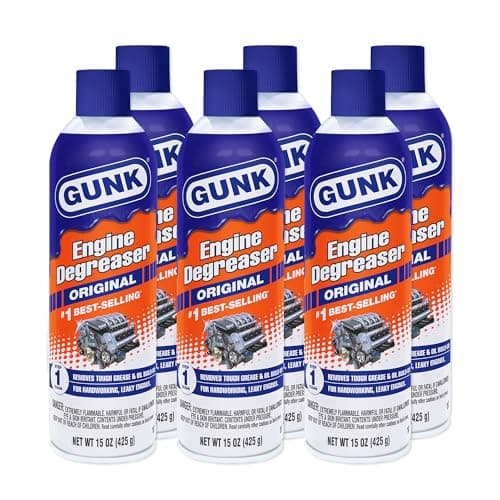
The product most people picture when they think engine degreaser, and it still works the way it always did: spray the cold engine, let it break the grease down, rinse with water. No dilution, no spray bottle, no decisions.
Grease cutting
Strong
Material safety
Good
Ease of use
Exceptional
Value
Strong
Why we picked it
Zero decisions: spray, dwell, rinse
Gunk state it rinses off with plain water
Per-can price in a case of six is very good
Good to know. No dilution option means no gentle setting
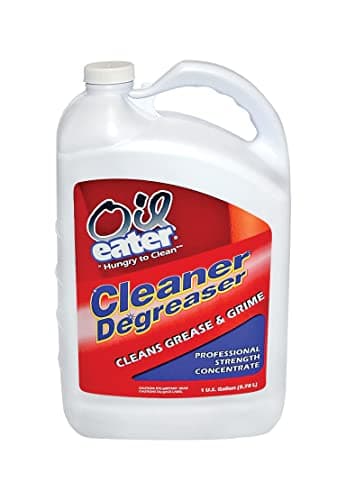
A professional-strength water-based cleaner and degreaser sold for dissolving grease, oil and heavy stains, at the lowest gallon price on this page. Water-based chemistry also means it is the easiest of these to rinse fully out of a bay.
Grease cutting
Strong
Material safety
Adequate
Ease of use
Good
Value
Exceptional
Why we picked it
The cheapest gallon here by a wide margin
Water-based, so it rinses out of a bay cleanly
Equally useful on a garage floor or a set of ramps
Good to know. Alkaline at full strength — dilute it and keep it off bare aluminum
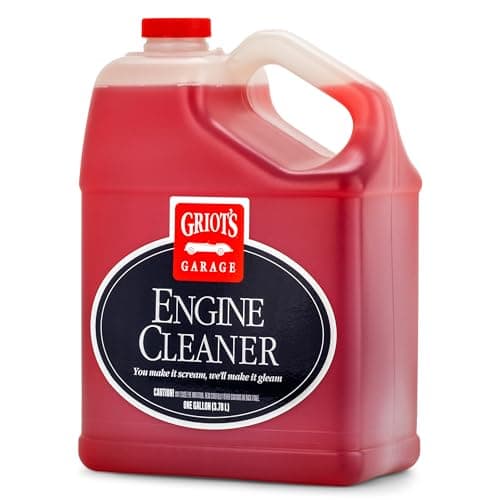
Griot's sell this as an engine cleaner specifically, for oil, dirt and grime on cars, motorcycles, boats and RVs. Buying a product formulated for the surface mix in an engine bay is a reasonable way to spend more and worry less.
Grease cutting
Strong
Material safety
Strong
Ease of use
Strong
Value
Good
Why we picked it
Formulated for engine bays rather than adapted to them
Griot's list it for motorcycles, boats and RVs as well
A gallon at a sane price for a purpose-built product
Good to know. Dearer than a general concentrate doing the same work
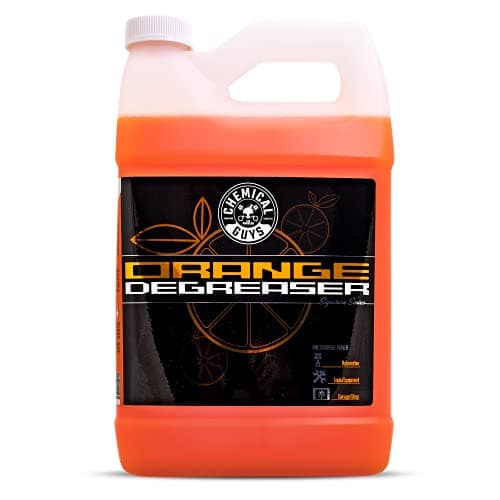
A heavy-duty citrus degreaser that Chemical Guys name for engines, tires, tools and undercarriages, supplied as a dilutable gallon. Citrus solvency is the gentlest way to get real grease-cutting power, which matters when the surfaces underneath are mixed plastic and painted metal.
Grease cutting
Exceptional
Material safety
Strong
Ease of use
Good
Value
Good
Why we picked it
Citrus chemistry cuts grease without the harshness of a caustic
Named by Chemical Guys for engines and undercarriages specifically
Dilutes down to a safe general-purpose strength
Good to know. The most expensive gallon on this page
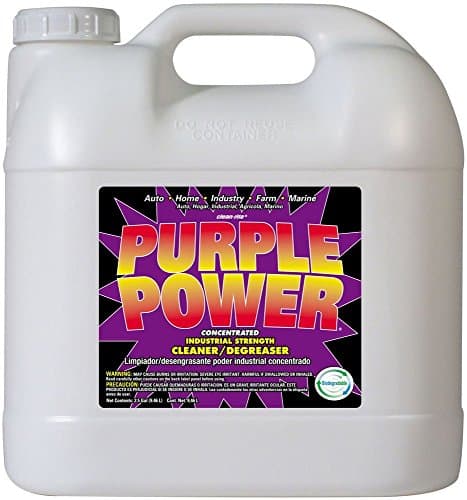
An industrial-strength cleaner and degreaser in a 2.5 gallon jug, which is the strongest and the largest thing on this page. It belongs on a bay that has been ignored for a decade, diluted, with the aluminum masked off.
Grease cutting
Exceptional
Material safety
Trade-off
Ease of use
Adequate
Value
Strong
Why we picked it
Shifts baked-on grease that citrus concentrates will not
2.5 gallons is a very low price per diluted gallon
Equally at home on concrete, equipment and ramps
Good to know. 2.5 gallons is an absurd quantity for one car
Meguiar's D108 is a gallon of professional-line concentrate that the maker lists for engines, tires, wheels and interior surfaces. Diluted heavily it is a general cleaner; diluted lightly it is a serious degreaser. That range is the whole value, because the dirt in an engine bay is not uniform — the area around a valve cover needs more than the inner fender does.
It also wins on arithmetic. Per diluted ounce it is the cheapest thing on this page, and a gallon of concentrate is a multi-year supply for one car. What you give up is convenience: you supply the spray bottle, the water and the judgement about ratio, and none of that is in the box.
When the aerosol is the better buy
The Gunk aerosol earns its place by removing every decision. Spray the cold engine, let it break the grease down, rinse with water — the maker states it rinses off with plain water, and that is the entire instruction set. For someone cleaning one engine bay once, that simplicity is worth more than the cost per ounce.
The two honest downsides are the quantity and the fumes. It is sold as a case of six, which is excellent per-can value and far more than one car will ever need, and a petroleum-solvent aerosol in a confined space is the least pleasant product here to breathe. Work outside, upwind, and do not do this in a closed garage.
06
The strong stuff, and what it costs you
Purple Power is an industrial-strength cleaner and degreaser in a 2.5 gallon jug, and it is on this page because there is a real use case: a bay that has been ignored for a decade, with grease that citrus concentrates genuinely will not shift. It is also, unambiguously, the product here most likely to cause damage.
Used neat on bare or polished aluminum, strong alkaline cleaners stain and etch, and the result is not recoverable with more cleaning. Dilute it, keep it off anything bright and unpainted, wear eye protection and gloves, and rinse far more thoroughly than feels necessary. If your bay is tidy and plastic-covered, this is the wrong product and the milder concentrates will do everything you need.
Oil Eater sits at the sensible end of the same chemistry: water-based, professional strength, the cheapest gallon here, and it rinses out of crevices cleanly because it is water-based. It needs the same respect around bare aluminum, at a fraction of the quantity and the price.
07
The method, which matters more than the product
01Let the engine cool completely. Touch-cool, not nearly-cool.
02Cover the alternator, air intake, fuse box and exposed connectors. Bags and rubber bands.
03Blow or brush the loose debris out first — leaves and grit turn into a paste that is harder to remove than the grease was.
04Mist the degreaser on from the bottom up, keeping it off bare aluminum, and let it dwell without drying. In sun, work in sections.
05Agitate with a brush. This is where the cleaning actually happens — a set of detailing brushes reaches the places a spray cannot.
06Rinse with low pressure and plenty of volume. A gentle flow carries product out of seams; a narrow jet drives water into connectors.
07Dry it properly, ideally with air rather than towels, and run the engine for a few minutes to drive off what is left.
On pressure: use the lowest setting that moves water, and keep the lance well back. This is the one place on a car where a pressure washer is a liability rather than an asset — what PSI you need for a car covers the numbers, and an engine bay wants the bottom of that range or a plain hose.
Finish, or it looks worse than when you started
A degreased bay is clean and chalky. Every plastic cover and rubber hose that was dark is now gray, because the degreaser removed the oils that were making it look dark. That is normal and it is also why the job is not finished at the rinse step: the bay needs a dressing on the plastic and rubber afterward to look right.
The products that do this are the same ones that work on exterior trim — a water-based dressing applied thinly and wiped back, not a glossy solvent gel sprayed everywhere. The trim restorers page covers that side, and the technique is the same one in how to restore faded trim: thin coats, worked in, excess removed.
Where this sits in a full detail is early. Engine bay work throws degreaser overspray and dirty water around, so it belongs before the car gets washed, not after — the detailing order of operations has the full sequence.
08
Our recommendation
Buy this one
Meguiar's Professional D108 Detailer Super Degreaser, 1 gal
A gallon of professional-line concentrate that dilutes down for engine bays, tires, wheels and interior surfaces.
Gunk Engine Degreaser Original Spray, 15 oz, Case of 6
The product most people picture when they think engine degreaser, and it still works the way it always did: spray the cold engine, let it break the grease down, rinse with water.
Meguiar's Professional D108 Super Degreaser for most people — a dilutable gallon that works as a strong degreaser or a mild cleaner depending on the ratio, at the lowest cost per use on this page. If you want no decisions at all, the Gunk aerosol is spray, dwell and rinse with plain water.
Is it safe to wash your engine bay?
Yes, with two precautions that matter more than the product you choose. Let the engine cool completely first, and cover the alternator, air intake, fuse box and any exposed electrical connectors with bags before you spray anything. Then rinse with low pressure and high volume rather than a narrow jet. Most engine bay damage is water intrusion, not chemistry.
Can I use an all-purpose cleaner on my engine bay?
You can, and a strong dilution of a good APC handles a lightly dirty bay. Dedicated degreasers cut baked-on oil and grease faster, which is the difference on a neglected engine. If you would rather own one bottle for the cabin, the wheels and the bay, an all-purpose cleaner at a strong dilution is a reasonable compromise.
Will engine degreaser damage aluminum?
Strong alkaline and industrial degreasers will stain and etch bare or polished aluminum if used neat, and the damage is not reversible by cleaning. Citrus concentrates are gentler. Dilute whatever you use, keep it off bright unpainted metal, and rinse thoroughly. Most makers publish no aluminum guidance at all, so treat caution as the default.
Why does my engine bay look gray after cleaning it?
Because the degreaser removed the oils that were making the plastic and rubber look dark, which is exactly what it is supposed to do. The job is not finished at the rinse. Apply a thin coat of a water-based trim dressing to the covers and hoses and wipe the excess back, and the bay will look better than it did before.
Should I use a pressure washer on my engine bay?
Only at the lowest setting, well back, and ideally not at all — a garden hose is safer. High pressure drives water past seals and into connectors, which is the main way people turn a cleaning job into an electrical fault. Volume rinses a bay; pressure damages one.
10
Sources
Every published figure on this page traces to one of these. Where a manufacturer does not publish a number, the page says so rather than estimating it.
Last reviewed October 19, 2026. Think a figure here is wrong? Tell us at contact@detailingandwax.com and we will check it, fix it and date the correction — see our editorial policy.