Featured here: the Solution Finish Solution Finish Black Trim Restorer.
How this is funded: we earn an Amazon commission when you buy through our links, at no extra cost to you. We sell nothing and stock nothing, so a pick is never a product we are trying to move. Prices are pulled live from Amazon and were last checked October 5, 2026; where we cannot verify a price we say so rather than print an old one. Full disclosure.
Research-basedPicked from published specifications and the pattern across verified-purchase reports. We have not used these ourselves and do not pretend otherwise.How we pick
Faded black trim is oxidized plastic: UV has degraded the polymer surface and worn away the carbon black pigment at the top, leaving a gray, chalky, microscopically rough layer. Restoring it means putting pigment back, and that only works on a genuinely clean surface.
02
Stage one — clean it properly, and this is the step people skip
Every dressing ever applied to that trim is still on it, in the texture. A dye applied over old silicone dressing bonds to the dressing rather than the plastic and comes off with it within weeks, which is why most first attempts fail.
01Spray [an APC at around 10:1](/interior/best-all-purpose-cleaners) onto the trim.
02Scrub with a medium brush, working into the texture.
03Rinse and repeat. On trim that has been dressed for years, three passes is normal.
04Check by feel. Clean oxidized trim feels dry and slightly chalky. If it still feels slick, there is dressing left.
05Let it dry completely, several hours if the texture is deep. Any moisture in the texture stops the dye bonding.
03
What this process uses
A dye-based restorer, the APC that cleans first, and two coatings to seal the result. Prices are live from Amazon.
Solution FinishOwner reports
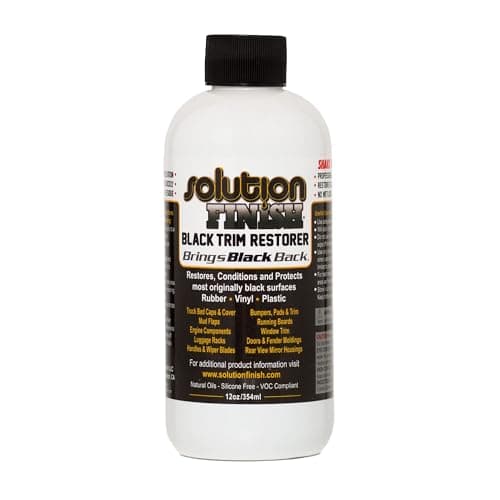
Solution Finish Black Trim Restorer
Best for: Faded trim that dressings have failed on
This is a dye rather than a dressing, which is why it works where dressings do not: it re-pigments oxidized plastic instead of coating it. Silicone-free, so body shops will work on a car treated with it, and the result holds for months.
Who should skip it. Already-black trim. On trim that has not faded there is nothing for the dye to do, and a protectant is the better product.
Effectiveness
9.5
Durability
9.0
Ease of use
7.5
Value
8.5
What works
Re-pigments rather than coating — it genuinely works
Silicone-free, so it does not contaminate paintwork
A very small amount covers a whole car
What does not
Pointless on trim that has not faded
Stains hands and anything porous it touches
Solution Finish does not publish a bottle volume we could verify
Published specifications
Type
Dye-based restorer
Volume
Not published
Silicone free
Yes, per Solution Finish
Durability
Months, per Solution Finish
Surface prep
Clean and fully dry
Chemical GuysSpec-verified
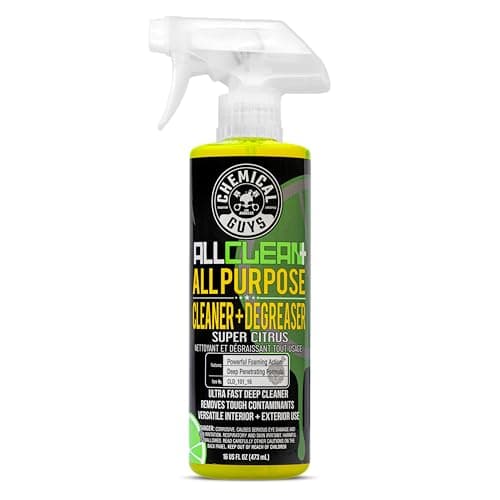
Chemical Guys All Clean+ Citrus All-Purpose Cleaner
Best for: One concentrate that dilutes to every job
A dilutable citrus APC is the most useful bottle in a detailing cupboard, because the same concentrate goes from a gentle interior mix to a strong wheel-well mix. The ratio is the whole product — get it wrong on a dash and the damage is permanent.
Who should skip it. Use at full strength on anything in a cabin. Neat APC lifts the coating off soft-touch plastic, and there is no correction step for that.
Cleaning
9.0
Surface safety
6.0
Versatility
9.5
Value
9.5
What works
One bottle covers every cleaning job at different ratios
Citrus rather than solvent smell
Very cheap per diluted quart
What does not
Destructive on soft-touch plastic if used neat
Needs a spray bottle and a label
Not for leather, Alcantara or screens at any dilution
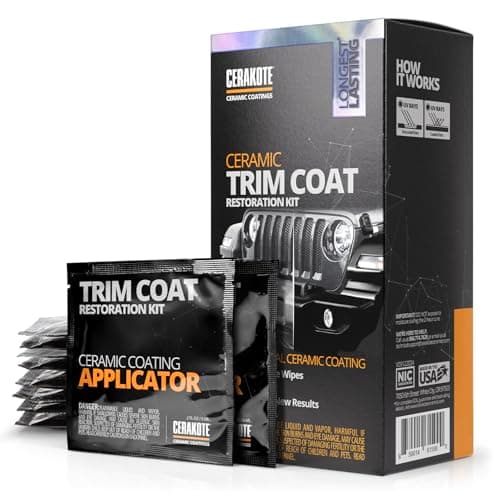
A ceramic coating for plastic trim rather than a dressing, applied with the included applicator. It bonds rather than sitting on the surface, which is why the claimed life is in years where a dressing is in weeks.
Who should skip it. Heavily faded trim. A coating seals what is there; if the plastic is gray, restore the color with a dye first and coat it afterwards.
Effectiveness
8.5
Durability
9.5
Ease of use
8.0
Value
9.0
What works
Bonds to the plastic rather than sitting on it
Applicator included
Far longer lasting than any dressing
What does not
Seals the current color — restore faded trim first
CERAKOTE does not publish a volume or silicone status we could verify
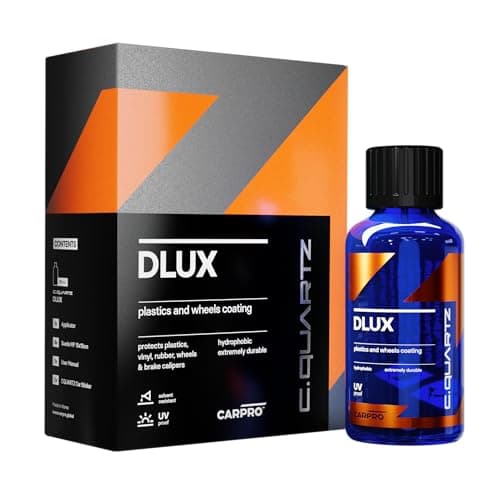
DLUX coats plastic trim and wheels alike, which is sensible because both face the same problem — heat, brake dust and UV. It is the longest-lasting trim treatment here and it demands the most careful prep.
Who should skip it. Faded trim. Like any coating it seals the current state, so restore the color first or you are preserving gray plastic for two years.
01Tape the paint at every edge of every trim piece. A dye-based restorer stains paint and does not wipe off like a dressing.
02Wear nitrile gloves. It stains skin for days.
03Apply a very small amount to a foam applicator. Far less than feels right — a few drops covers a whole mirror cap.
04Work it into the texture in overlapping passes.
05Wipe the excess immediately with a dedicated towel. Excess dye that cures on the surface goes streaky.
06Check at a low angle for missed areas and for over-applied patches while you can still fix them.
07Let it cure as the product specifies before the car gets wet.
05
Stage three — seal it, which is optional and makes the difference
A dye-based restorer on its own holds for six months to a year. Sealing it with a trim coating takes that to one to two years, because the coating protects the restored pigment from the UV that degraded it in the first place.
01Wait until the restorer has fully cured — follow the product, usually at least 24 hours.
02Make sure the trim is clean and dry.
03Apply the trim coating thinly with the included applicator.
04Level it before it flashes, exactly as you would a paint coating.
Cracked or warped trim. Physical damage; dye does not fill it.
Painted trim that is failing. That is a paint problem and it needs paint.
White polish residue dried into the texture. It has to come out mechanically first, with a brush and patience, and it is genuinely tedious.
Trim that has been heat damaged. If the surface has deformed, nothing cosmetic recovers it.
07
Keeping it black
The thing that degraded the trim in the first place is UV, and the thing that protects it is a coating or consistent re-application. Park in shade where you can, wash the trim with the car rather than ignoring it, and reapply before it goes visibly gray rather than after.
Restoring trim once a year is a twenty-minute job. Restoring trim that has gone badly gray is a three-hour one, largely because of the cleaning stage.
08
Questions people actually ask
How do you restore faded black plastic trim?
Clean it with an APC and a brush until it feels chalky rather than slick, dry it completely, apply a dye-based restorer thinly with an applicator, wipe the excess, and optionally seal it with a trim coating. The cleaning stage is the one people skip.
Why does trim restorer stop working after a few weeks?
Because it was applied over old dressing rather than over clean plastic. The restorer bonds to the dressing, and when that washes off the restorer goes with it. Three cleaning passes with an APC is normal on trim that has been dressed for years.
How long does restored trim stay black?
Six months to a year with a dye-based restorer alone, and one to two years if you seal it with a trim coating afterwards. Parking in shade and reapplying before it goes visibly gray both extend it considerably.
Does trim restorer come off paint?
Not easily — a dye-based restorer stains paint and does not wipe off the way a dressing does. Tape the edges of every trim piece before you start, and wear gloves, because it stains skin for days too.
09
Sources
Every published figure on this page traces to one of these. Where a manufacturer does not publish a number, the page says so rather than estimating it.
Last reviewed October 5, 2026. Think a figure here is wrong? Tell us at contact@detailingandwax.com and we will check it, fix it and date the correction — see our editorial policy.