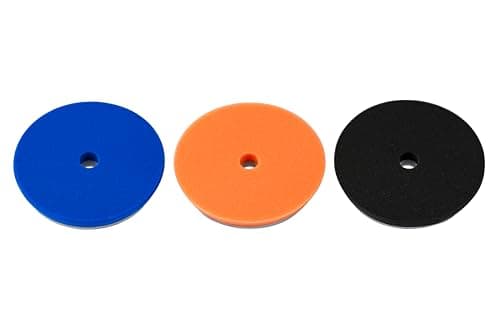
Our top pick: the Lake Country Lake Country 5.5 in HDO Foam Polishing Pad Kit.
How this is funded: we earn an Amazon commission when you buy through our links, at no extra cost to you. We sell nothing and stock nothing, so a pick is never a product we are trying to move. Prices are pulled live from Amazon and were last checked October 5, 2026; where we cannot verify a price we say so rather than print an old one. Full disclosure.
Research-basedPicked from published specifications and the pattern across verified-purchase reports. We have not used these ourselves and do not pretend otherwise.How we pick
Quick picks — Best polishing pads
#
Product
Best for
Our score
Price
01
Lake Country 5.5 in HDO Foam Polishing Pad Kit
Buying pads the way you should — a matched set, not a sampler
Tap any row for the full write-up. Prices come straight from Amazon and are never typed in by hand.
The verdict
Buy four identical pads, not a sampler. The Lake Country HDO three-pack is the best starting point for a long-throw machine; Buff and Shine Uro-Tec in the polishing grade is the cheapest way to get four of the same pad for a short-throw machine. A microfiber cutting pad is the single upgrade that rescues a slow machine.
02
Why pads matter more than the machine
A polisher moves a pad in a pattern. It is the pad and the liquid on it that abrade the clear coat, and the difference between a firm cutting foam and a soft finishing foam on identical machines is larger than the difference between a $50 machine and a $500 one on identical pads.
Which means: if a correction is going slowly, the answer is almost never a bigger machine. It is a more aggressive pad, or a fresh one, because a pad saturated with spent compound stops cutting entirely. That happens around halfway through a hood, which is exactly when people conclude their machine is not powerful enough.
03
The ranked picks
Cut level is the primary axis. Prices are live from Amazon, and pads are consumables — budget to replace them annually if you correct regularly.
No. 01Lake CountrySpec-verified
Lake Country 5.5 in HDO Foam Polishing Pad Kit
Best for: Buying pads the way you should — a matched set, not a sampler
Lake Country makes the foam a great many other brands rebadge, and the HDO line is built specifically for the pressure a long-throw machine puts through a pad. A three-pack of the same pad is more useful than four different ones, because a saturated pad stops cutting and you need a spare mid-panel.
Who should skip it. Short-throw machines under heavy pressure — HDO foam is designed around orbital machines and is firmer than a general-purpose finishing pad. If you only ever finish, buy a softer foam.
Cut
8.0
Finish
8.0
Longevity
8.5
Value
8.5
What works
Multiple identical pads, which is how pads should be bought
Built for the pressure a long-throw machine applies
Lake Country foam is the reference other brands rebadge
What does not
Firmer than a general-purpose finishing foam
5.5 in is too large for tight panels — you will want smaller too
No cutting and finishing variety in a single-type pack
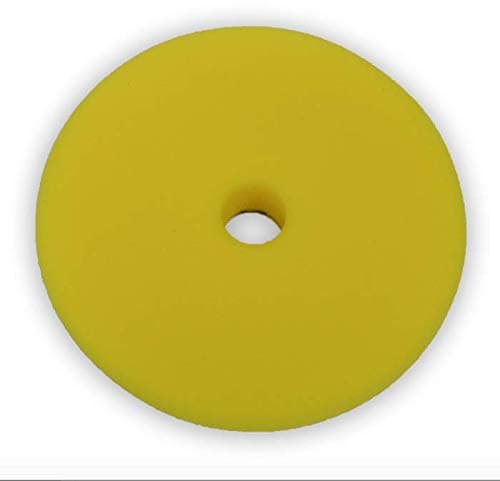
Uro-Tec is color-coded by cut and the yellow is the polishing grade — the middle of the range and the one that does most of the work on a daily driver. At this price there is no reason to own one; buy four and swap when the first saturates.
Who should skip it. Heavy defect removal. Yellow is a polishing foam. If the paint has deep swirls you need the cutting grade first, and this pad will only make them look slightly better.
Cut
7.0
Finish
8.5
Longevity
8.0
Value
9.5
What works
Cheap enough to buy the four you actually need
Clear color coding across the range makes cut level unambiguous
5 in is the most useful size on modern panels
What does not
Sold singly — a single pad is not a correction kit
Polishing grade only; heavy defects need the cutting foam
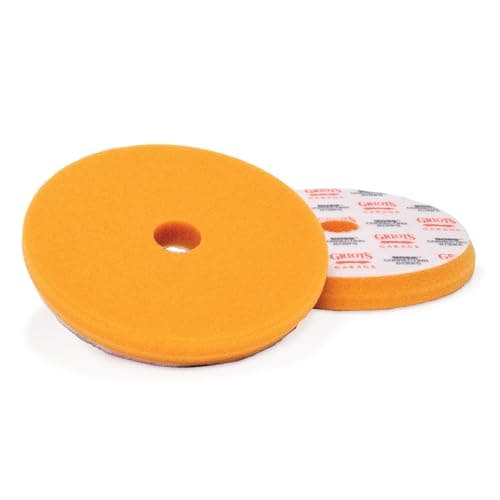
Griot's designed the BOSS foam around their own throw figures, and the pairing shows — on a G8 or G9 these track flatter and run cooler than generic foam of the same nominal density. Correcting pads, so they cut rather than finish.
Who should skip it. Final finishing on dark paint. These are the correcting grade; you will want a softer polishing or finishing foam for the last pass if you can see haze.
Cut
8.5
Finish
7.0
Longevity
8.0
Value
8.0
What works
Designed around the throw of the Griot's machines specifically
Runs cooler than generic foam under sustained pressure
Standard 5.5 in size fits any 5 in plate, not just Griot's
What does not
Correcting grade only — not a finishing pad
Costs more than generic foam of similar density
Griot's does not publish a density figure to compare against
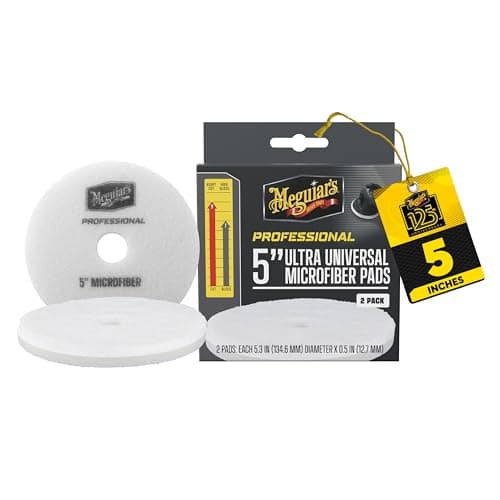
A microfiber pad cuts considerably harder than foam of the same nominal grade, which is how a modest 8mm machine ends up removing defects it otherwise could not. The trade is that microfiber leaves more haze and almost always needs a foam finishing pass after it.
Who should skip it. A one-step job. If you want to correct and finish in a single pass, use foam. Microfiber is a two-step tool and planning otherwise means a hazy car in direct sun.
Cut
9.0
Finish
6.0
Longevity
7.0
Value
8.5
What works
Cuts harder than foam, which rescues a short-throw machine
Two in the pack, so you can swap when the first loads up
Washes out and recovers better than people expect
What does not
Leaves haze that needs a foam finishing pass afterwards
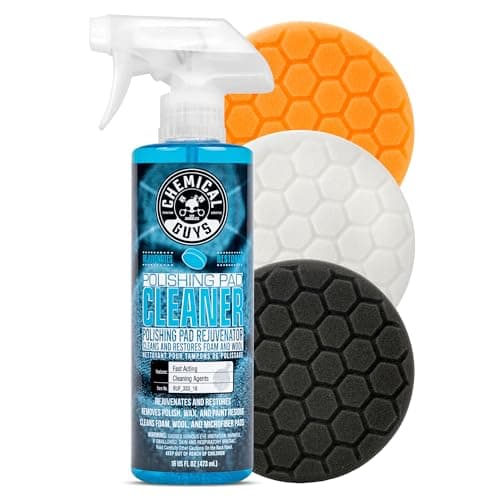
A sampler is the wrong way to buy pads for a job and the right way to find out what your paint responds to. Four cut levels plus the pad cleaner lets you test on a single panel before committing to four of whichever one worked.
Who should skip it. Correcting a whole car. One pad per cut level means you are working with a saturated pad halfway through the hood, which is precisely when cutting ability falls off a cliff.
Cut
7.5
Finish
8.0
Longevity
7.0
Value
8.0
What works
Four cut levels in one purchase — genuinely useful for diagnosis
Pad cleaner included, which people forget to buy
Hex pattern vents heat better than flat foam
What does not
One pad per level is not enough to correct a car
6.5 in is large for modern curved panels
You will end up buying multiples of whichever one worked
The practical rule: foam if you want to correct and finish in one pass, microfiber if your machine is not cutting fast enough and you are willing to do a second foam pass afterwards. Most people are better served by foam and a more aggressive compound.
05
Sizing, and the mistake that makes a finish hazy
5.5 in pads on a 5 in backing plate is the standard pairing, and the small overhang is deliberate — it lets the pad edge flex into curves without the plate edge digging in.
Never run a pad smaller than your plate. The exposed plate edge will contact paint, and that is a repaint rather than a polish.
Smaller pads cut faster because the same machine energy is concentrated in less area. A 3 in pad on a mini machine is genuinely aggressive.
Match pad size across a job. Swapping between 5.5 in and 6.5 in mid-correction changes how hard the machine cuts and you will see the transition.
06
How long a pad lasts
A foam pad survives perhaps ten to fifteen full corrections if you wash it after every use and do not let compound dry in it. Microfiber lasts less. The signs that one is finished: it no longer recovers its loft after washing, the foam has torn at the edge, or the backing has started to separate from the face — that last one will throw the pad off the plate mid-pass.
Wash pads in warm water with a dedicated pad cleaner or a mild detergent, rinse until the water runs clear, squeeze rather than wring, and air dry face up. Color coding helps here: see what polishing pad colors mean.
07
Questions people actually ask
How many polishing pads do I need for one car?
Four of the cut level you are using, minimum. A pad saturated with spent compound stops cutting about halfway through a hood, and swapping to a fresh one is what keeps the correction consistent. One pad per cut level is a sampler, not a kit.
What do the colors of polishing pads mean?
Within one brand, color indicates cut level — but there is no industry standard, so a yellow pad from one maker may be more aggressive than a green one from another. Always read the manufacturer's cut description rather than assuming. Polishing pad colors explained sets out the main brands.
Are microfiber pads better than foam?
They cut harder and they finish worse. Microfiber is the right choice when a short-throw machine is not removing defects fast enough and you are prepared to follow with a foam finishing pass. For one-step work, foam is better.
Can you wash and reuse polishing pads?
Yes, and you should — a pad washed after every use lasts ten to fifteen corrections. Warm water, mild detergent or a pad cleaner, rinse until clear, squeeze out rather than wring, and dry face up. A pad with compound dried into it is finished.
08
Sources
Every published figure on this page traces to one of these. Where a manufacturer does not publish a number, the page says so rather than estimating it.
Last reviewed October 5, 2026. Think a figure here is wrong? Tell us at contact@detailingandwax.com and we will check it, fix it and date the correction — see our editorial policy.