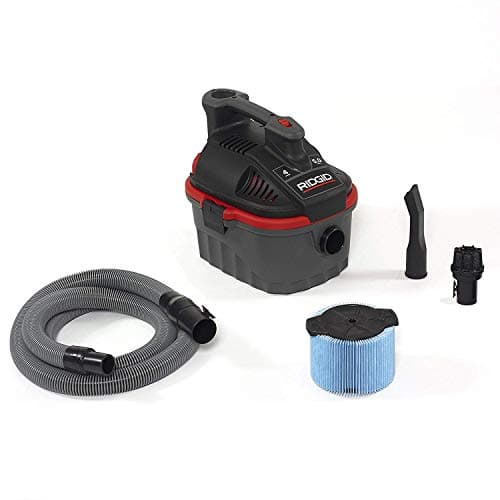
Our top pick: the RIDGID RIDGID 4 Gallon Portable Wet and Dry Vacuum.
How this is funded: we earn an Amazon commission when you buy through our links, at no extra cost to you. We sell nothing and stock nothing, so a pick is never a product we are trying to move. Prices are pulled live from Amazon and were last checked October 5, 2026; where we cannot verify a price we say so rather than print an old one. Full disclosure.
Research-basedPicked from published specifications and the pattern across verified-purchase reports. We have not used these ourselves and do not pretend otherwise.How we pick
Tap any row for the full write-up. Prices come straight from Amazon and are never typed in by hand.
The verdict
The RIDGID 4-gallon wet/dry vac. Genuine suction, a hose narrow enough to concentrate airflow where car work needs it, wet pickup for carpet extraction, and it survives a garage. The Dyson V8 is the answer if cordless matters more to you than wet capability.
02
The specs that actually matter
Peak horsepower and air watts are the numbers on the box, and they describe how much air a machine moves in ideal conditions. Car work is not ideal conditions — it is a narrow tool reaching under a seat rail, and what matters there is whether the tool fits and whether the airflow is concentrated.
What to buy on, in order
Spec
Why it matters for a car
What to look for
Crevice tool length
Seat rails and under-seat gaps hold most of the dirt
Long enough to reach the back of a rail
Hose diameter
Narrower concentrates airflow where you need it
Narrow, or a reducer included
Cord or runtime
A car is rarely next to an outlet
25 ft cord, or 20+ minutes of runtime
Wet pickup
Only if you extract carpets
Nice to have, not essential
Filter type
Fine dust is most of what a car holds
Washable, and easy to clean
Peak horsepower
The number everyone compares
Least important of these
03
The ranked picks
A shop vac, a cordless stick, a budget shop vac, a vacuum-blower combination and a 12V handheld. Prices are live from Amazon.
Four gallons, 5.0 peak horsepower, and a hose narrow enough to concentrate airflow where car work needs it. Wet capability matters if you ever extract carpets, and the compact size means it lives in the garage rather than the way.
Who should skip it. Anyone who needs cordless. This is a corded machine, and if the car is not near an outlet that is a daily annoyance rather than a one-off.
Suction
9.0
Reach
8.0
Attachments
8.5
Value
8.5
What works
Genuine suction with a car-appropriate hose diameter
Wet pickup for carpet extraction
Built to survive a garage
What does not
Corded, which is the real limitation
Loud
4 gallons fills quickly if you also use it for the garage
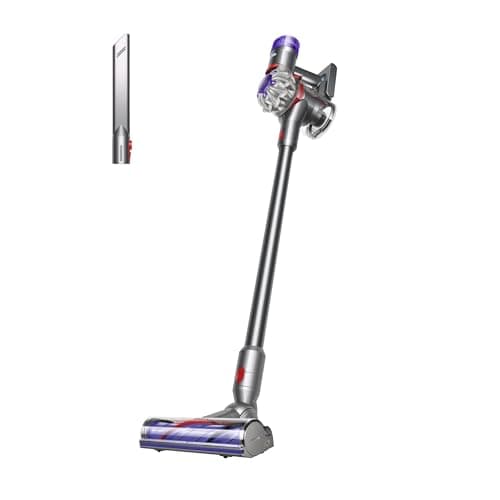
Cordless is a genuine upgrade for car work — no extension lead, no dragging a canister around the vehicle. The V8 has enough runtime to do a car's interior on a single charge if you are not leaning on boost mode the whole time.
Who should skip it. Wet work, or anyone extracting carpets. It also costs several times a shop vac that out-sucks it on dry debris.
Suction
7.5
Reach
9.5
Attachments
9.0
Value
6.5
What works
Cordless, which genuinely changes how often you vacuum the car
Light enough to use one-handed in a footwell
Good attachment set out of the box
What does not
No wet pickup at all
Several times the price of a shop vac with more suction
Dyson does not publish a comparable peak HP figure
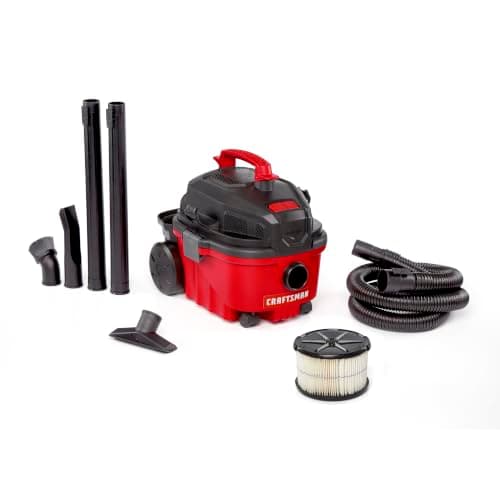
Functionally equivalent to the RIDGID at a lower price: same capacity, same peak horsepower claim, same wet capability. The hose and attachments are the weaker part, and that is where the saving is.
Who should skip it. Anyone who cares about attachment quality. The crevice tool is shorter than the RIDGID's, which matters for reaching under seat rails.
Suction
8.5
Reach
7.0
Attachments
7.0
Value
9.0
What works
Cheaper than the RIDGID for the same core capability
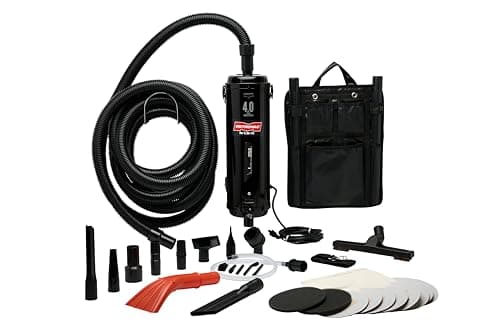
A 4.0 peak horsepower machine that vacuums the interior and then reverses to blow the exterior dry, which removes a separate purchase. Built in the US to a standard that is obvious as soon as you pick it up.
Who should skip it. Budget buyers, or anyone who needs wet pickup. It is the most expensive vacuum here and it does not do wet.
Suction
9.0
Reach
8.0
Attachments
8.5
Value
6.5
What works
Vacuum and dryer in one machine
Build quality is in a different class to the shop vacs
Strong suction for a compact unit
What does not
Most expensive vacuum here
No wet pickup
METROVAC does not publish a tank capacity we could verify
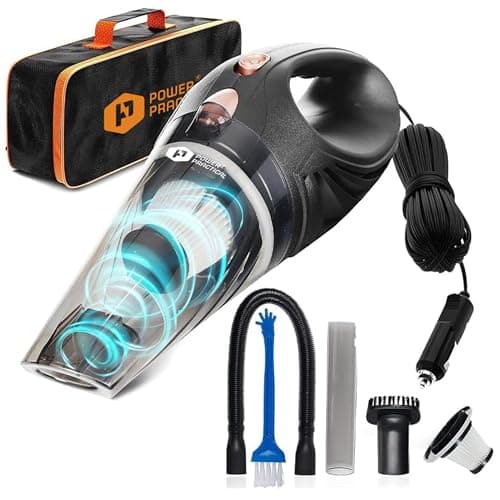
Plugs into the 12V socket, lives in the trunk, and handles crumbs and footwell debris the day they appear. It has nothing like the suction of a shop vac and that is not what it is for — convenience is the entire product.
Who should skip it. A proper interior detail. It will not pull embedded grit out of carpet pile, and anyone expecting it to will be disappointed within minutes.
Suction
5.0
Reach
8.5
Attachments
7.0
Value
9.5
What works
Lives in the car, so it gets used
Long cord reaches every seat
Costs very little
What does not
Nowhere near enough suction for a real detail
No wet pickup
ThisWorx does not publish a capacity figure we could verify
Published specifications
Capacity
Not published
Power
12V vehicle socket
Wet pickup
No
Cordless
No — 16 ft cord to the 12V socket
Crevice tool
Included
04
Corded against cordless
Cordless is a genuine convenience for car work — no extension lead, no dragging a canister around the vehicle, and it gets used far more often as a result. The cost is runtime and raw suction, and no cordless stick vacuum does wet pickup.
A reasonable compromise many people land on: a cheap cordless handheld that lives in the car for crumbs and footwell debris, and a corded shop vac in the garage for actual detailing. That is two inexpensive purchases rather than one expensive one.
05
Technique that beats a better machine
01Remove everything first, including the mats. Working around objects is most of the time penalty.
02Agitate before you suck. A detailing brush through carpet pile and seat seams lifts embedded grit that suction alone will not.
03Top down. Headliner, seats, console, then footwells. Debris falls.
04Move the seats fully forward and fully back. The dirt lives exactly where the seat normally sits.
05Use the crevice tool along every seam — seat bases, the console sides, the door pockets.
06Empty the canister before it is full. Suction falls off sharply well before a shop vac is actually full.
06
Questions people actually ask
What is the best vacuum for car detailing?
A 4-gallon wet/dry shop vac with a long crevice tool — genuine suction, a hose narrow enough for car work, and wet pickup if you extract carpets. A cordless stick vacuum is the alternative if being untethered matters more than wet capability.
Do you need a wet dry vacuum for a car?
Only if you plan to extract carpets. For ordinary dry vacuuming it is an unused capability, and most people never use it. It becomes genuinely useful the first time someone spills something.
Is a cordless vacuum good enough for car detailing?
For everything except carpet extraction, yes — and because it is far more convenient, it tends to get used more often, which matters more than peak suction. Check the runtime: under 20 minutes on boost is frustrating in a car.
How do you vacuum a car properly?
Remove everything including the mats, agitate carpet and seams with a brush first, work top down, move the seats fully forward and back, and use a crevice tool along every seam. Agitation before suction is what lifts embedded grit.
07
Sources
Every published figure on this page traces to one of these. Where a manufacturer does not publish a number, the page says so rather than estimating it.
Last reviewed October 5, 2026. Think a figure here is wrong? Tell us at contact@detailingandwax.com and we will check it, fix it and date the correction — see our editorial policy.