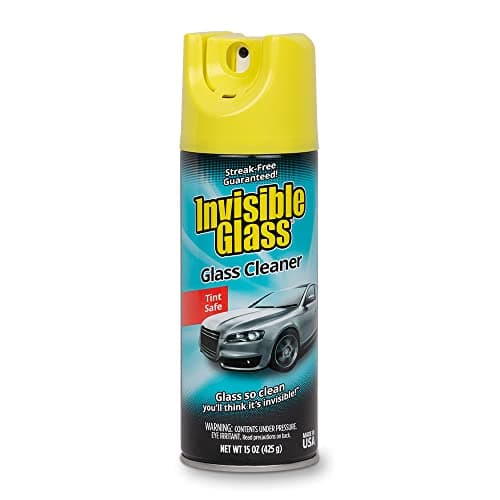
Our top pick: the Invisible Glass Invisible Glass Auto Glass Cleaner Foaming Spray.
How this is funded: we earn an Amazon commission when you buy through our links, at no extra cost to you. We sell nothing and stock nothing, so a pick is never a product we are trying to move. Prices are pulled live from Amazon and were last checked October 5, 2026; where we cannot verify a price we say so rather than print an old one. Full disclosure.
Research-basedPicked from published specifications and the pattern across verified-purchase reports. We have not used these ourselves and do not pretend otherwise.How we pick
Tap any row for the full write-up. Prices come straight from Amazon and are never typed in by hand.
The verdict
Invisible Glass. It leaves no residue at all, the aerosol foam clings to a vertical windshield instead of running into the dash, and it is safe on tint and screens. Sprayway is functionally the same thing for less money if you are buying in volume.
02
Why ammonia is the problem
Household glass cleaner is usually ammonia-based, and ammonia does two things a car does not want. It degrades the adhesive and the dye in window tint, causing purpling and bubbling over time. And it hazes the anti-glare coatings on instrument lenses and touchscreens, permanently.
Every product on this page is ammonia-free, which is the first thing to check and the reason not to use whatever is under the kitchen sink.
03
The ranked picks
Aerosol foams, trigger sprays and a gallon refill. Prices are live from Amazon.
No. 01Invisible GlassSpec-verified
Invisible Glass Auto Glass Cleaner Foaming Spray
Best for: The glass cleaner detailers actually use
Ammonia-free, leaves no residue at all, and the aerosol foam clings to a vertical windshield instead of running into the dash. It is the one product on this page with essentially no competition.
Who should skip it. Nothing in a car. It is safe on tint, on screens and on glass, which is a rare combination. Buy two.
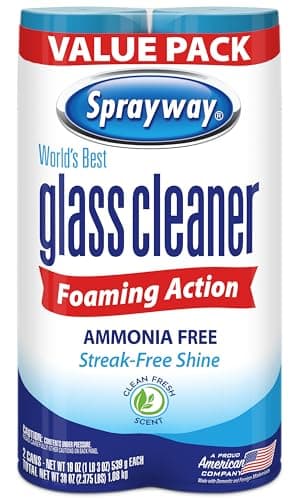
Sprayway has been the professional detailer's glass cleaner for decades on price and performance alone. Ammonia-free foam, no residue, and two cans for less than one of most alternatives.
Who should skip it. Nothing in particular. The only argument against it is that Invisible Glass is marginally better at not leaving any residue at all.
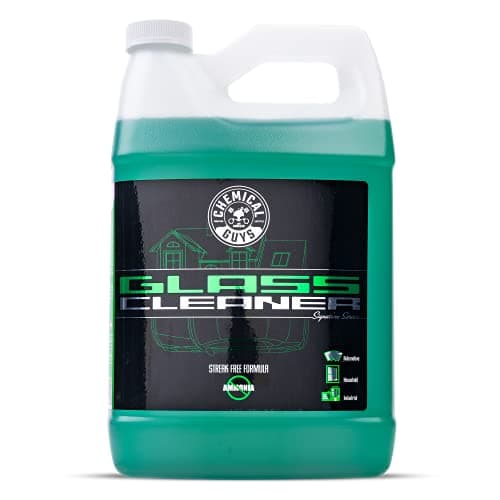
A gallon of ammonia-free, tint-safe glass cleaner to refill a spray bottle from. The chemistry is conventional; the format is the reason to buy it, and it works out considerably cheaper per use than aerosols.
Who should skip it. One car. A gallon of glass cleaner is a multi-year supply for a single vehicle, and a trigger bottle is harder to control on a vertical windshield than foam.
Streak freedom
8.5
Tint safety
10.0
Ease of use
7.5
Value
9.0
What works
Cheapest per use by a distance
Ammonia free and tint safe
Refills whatever bottle you prefer
What does not
A gallon is a multi-year supply for one car
Trigger spray runs on a vertical windshield more than foam does
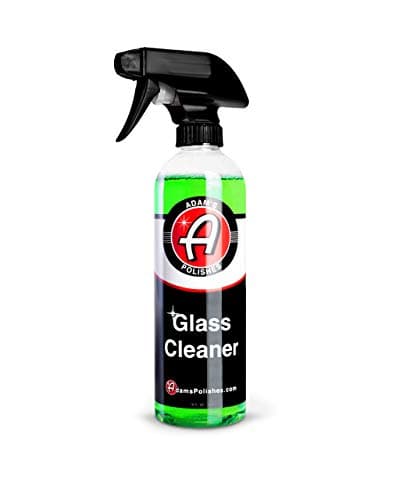
Ammonia-free trigger spray that handles the interior film most glass cleaners struggle with. Trigger format gives more control over how much you use than an aerosol, at the cost of some cling.
Who should skip it. A vertical windshield in a hurry — liquid runs where foam stays. Spray the towel rather than the glass and this stops being an issue.
Streak freedom
8.5
Tint safety
10.0
Ease of use
8.0
Value
8.0
What works
Good on the interior film other cleaners leave behind
Trigger control over how much you use
Tint safe
What does not
Runs on vertical glass unless sprayed onto the towel
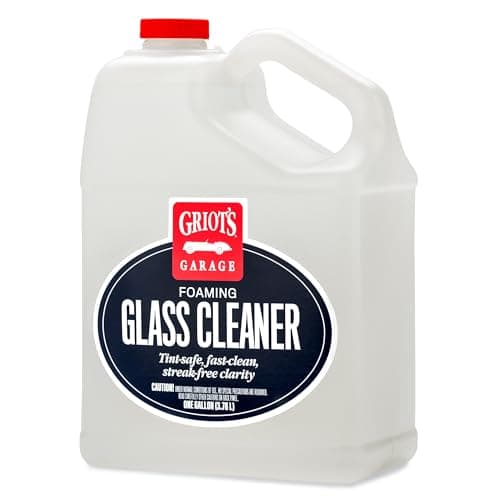
Foaming, tint-safe and no-streak, which is the correct specification for automotive glass. Functionally very close to the aerosol competition, at a price that only makes sense if you are already buying Griot's products.
Who should skip it. Value shoppers. Sprayway and Invisible Glass do the same job for considerably less.
Most streaking is a technique problem rather than a product problem, and this method fixes it with almost any decent cleaner.
01Use two dedicated glass towels, low-pile and used for nothing else. Residue from wax or interior dressing is what creates smears.
02Spray the towel, not the glass, for interior work — overspray on a dash is tedious and overspray on a screen is worse.
03Wipe with the first towel to clean.
04Buff immediately with the second, dry towel before it can dry on its own.
05Wipe exterior glass horizontally and interior glass vertically. When a streak appears you immediately know which side it is on.
06Do the top edge last, with the window lowered an inch, so the strip that sits in the seal gets cleaned too.
05
The film on the inside of the windshield
That haze is off-gassing from interior plastics combined with the overspray from every interior product ever used in the car. It builds up slowly and it is the main reason interior glass is harder to clean than exterior.
It needs two passes: a first with a slightly damp towel and cleaner to cut the film, a second to buff clear. On a car that has never had this done, expect three passes and a visible difference in night-time glare afterwards.
06
Tint, and what not to do
Ammonia-free only, which is the whole reason this list exists.
No abrasives, no razor blades on tinted glass — the film is on the inside and both will cut it.
Soft towels only. A worn microfiber with a hard edge will mark film.
Wait a week after new tint before cleaning it at all, so the adhesive has cured.
07
Questions people actually ask
What is the best glass cleaner for cars?
Invisible Glass — ammonia-free, no residue at all, and the aerosol foam stays on a vertical windshield instead of running into the dash. Sprayway is functionally equivalent for less if you are buying in volume.
Can you use Windex on car windows?
Not if the windows are tinted or there are screens nearby. Household glass cleaner is usually ammonia-based, and ammonia degrades tint adhesive and dye over time and permanently hazes anti-glare coatings on displays.
How do you clean car windows without streaks?
Two dedicated low-pile glass towels — one to clean, one to buff immediately — and wipe exterior glass horizontally and interior vertically so you can tell which side a streak is on. Most streaking is technique, not product.
Why is the inside of my windshield always hazy?
Off-gassing from interior plastics plus overspray from every interior product used in the car. It needs two passes — one to cut the film, one to buff clear — and it is exactly why glass is the last step of an interior detail.
08
Sources
Every published figure on this page traces to one of these. Where a manufacturer does not publish a number, the page says so rather than estimating it.
Last reviewed October 5, 2026. Think a figure here is wrong? Tell us at contact@detailingandwax.com and we will check it, fix it and date the correction — see our editorial policy.