Independent picks for detailing your own car. We stock nothing, so we have nothing to move.
01
Wax & sealants
The best glass sealants and windshield water repellents
Every product in this category claims to make rain fly off your windshield. Two of them publish a number you could hold them to, and the gap between the claims and the datasheets is the whole story.
Our top pick: the Gtechniq G1 ClearVision Smart Glass.
How this is funded: we earn an Amazon commission when you buy through our links, at no extra cost to you. We sell nothing and stock nothing, so a pick is never a product we are trying to move. Prices are pulled live from Amazon and were last checked November 19, 2026; where we cannot verify a price we say so rather than print an old one. Full disclosure.
Research-basedPicked from published manufacturer specifications and the consistent pattern across verified-purchase owner reports. Every product here scores 8.4 or better on our rubric.How we pick
Best glass sealantGtechniq
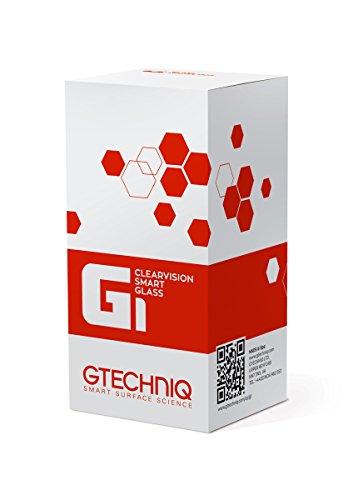
Gtechniq G1 ClearVision Smart Glass
G1 is the one product here that is sold on chemistry rather than on convenience: Gtechniq's claim is a chemical bond to the glass instead of a film sitting on top of it, and the claimed life — up to two years, or 30,000 miles — is multiples of anything else on this page.
Tap any row for the full write-up. Prices come straight from Amazon and are never typed in by hand.
The verdict
Gtechniq G1 ClearVision is the pick, because it is the only product here that claims a life measured in years rather than months and backs it with a chemical-bond mechanism rather than a surface film. Gyeon Q² View EVO is the one to buy if you want the figures audited — it is the only product in this group with a published spec table, including the honest admission that it needs about 31 mph of airflow before it does much. Aquapel is the best two-minute answer and carries a published six-month guarantee. Adam's Glass Sealant 2.0 is the cheapest real sealant here, and Rain-X is the cheapest thing that works at all.
02
What a glass sealant is for, and the one thing it is not
A glass sealant lowers the surface energy of the glass so water cannot wet out across it. Instead of forming a sheet that your wipers have to drag away, rain collects into beads, and once the car is moving fast enough, airflow carries those beads up over the roof without a wiper stroke. The payoff is not cosmetic. It is forward visibility in heavy rain at night, which is the single worst condition most drivers ever face.
What a sealant is not is a glass cleaner. This confuses more buyers than anything else in the category, because the two product types sit next to each other on the shelf and several bottles claim both jobs. A cleaner removes film and leaves nothing behind; a sealant deliberately leaves a layer. Applying a sealant over a dirty windshield bonds the layer to the dirt, and applying a cleaner over a fresh sealant is how people conclude the sealant failed after a week. The order matters, and the best car glass cleaners covers the step that has to happen first.
The second thing a sealant cannot do is fix damaged glass. Wiper-scratched glass, mineral-etched glass, or glass with a baked-on film of road grime will take a coating badly and shed it unevenly. If the windshield already looks hazy in low sun, the fix is mechanical — a glass polish — and no amount of coating substitutes for it. That is also why the two longest-lasting products here both require a polishing step and say so.
03
The criteria, in the order they decide the purchase
This category is unusually easy to rank badly, because every bottle claims the same thing in the same words. So the ranking below is built on what is actually published, which turns out to separate the field cleanly.
01A published durability figure. Not 'long-lasting'. A number, with a unit. Two products here publish one in years, one publishes a guarantee in months, and six publish nothing.
02Bonded coating or surface repellent. A chemical bond to the silica in the glass survives wiper blades; a physical film is scrubbed off by them. This is the single biggest predictor of how long a product lasts on a windshield that gets used.
03Whether prep is required, and whether the maker says so. A glass coating that needs polished glass and does not tell you is a product that will disappoint. The honest ones specify it.
04The speed at which it starts working. Beading needs airflow. One maker in this group publishes the threshold; the rest let you find out on a 25 mph commute.
05Cost per application, not cost per bottle. A 15 ml coating that lasts two years costs less per year than a cheap spray reapplied monthly, and a single-use applicator pack is a subscription whether it is sold as one or not.
04
Bonded coatings versus repellent sprays
There are really only two kinds of product on this page, and the price difference between them is mostly a difference in chemistry rather than in brand positioning.
The two product classes on this page, and how they fail
Bonded glass coating
Repellent spray
How it attaches
Chemical bond to the silica in the glass
Physical film sitting on the surface
Typical claimed life
Six months to two years
Weeks to a few months, usually unstated
Prep needed
Glass polish plus a panel wipe, usually mandatory
Clean glass
Application
Pane by pane with an applicator, with a cure period
Spray, spread, buff off
Wiper survival
Good — the bond is under the blade, not on top of it
Aquapel sits deliberately between the two: it is a single-use applicator you wipe on in two minutes like a spray, but the published mechanism is a chemical bond with the glass using fluorinated compounds, and the guarantee is six months. That combination is why it is the product windshield replacement shops hand you, and why it ranks third here despite asking for no polishing step at all.
05
The ranked glass sealants and repellents
Ordered on published durability first, then on whether the product bonds or sits on the surface, then on cost per application. Prices are live from Amazon.
No. 01GtechniqCategory-definingSpec-verified
Gtechniq G1 ClearVision Smart Glass
Best for: The longest claimed life in the category
G1 is the one product here that is sold on chemistry rather than on convenience: Gtechniq's claim is a chemical bond to the glass instead of a film sitting on top of it, and the claimed life — up to two years, or 30,000 miles — is multiples of anything else on this page. It is also the one that punishes a rushed prep, because a chemical bond needs genuinely clean glass to bond to.
Claimed durability
Exceptional
Ease of use
Adequate
Published evidence
Strong
Value
Strong
Why we picked it
Claimed life is measured in years where the rest of the category claims months
Published as wiper-proof, which is how most repellents actually die
Chemical bond rather than a physical film — the reason for the durability claim
Reduces wiper friction, so it is gentler on the blades than bare glass
Good to know. 15 ml is a one-car bottle, and it only earns its claimed life on glass that has been polished first.
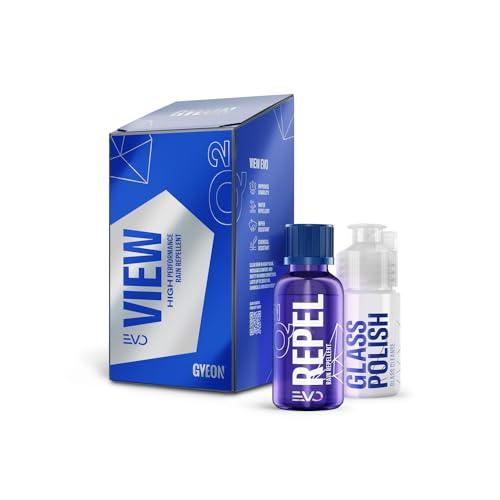
Gyeon are the only maker in this group who publish the category the way a coating should be published: a real-world lifespan figure, a consumption figure, an alcohol tolerance, and — unusually honest — the road speed below which the coating does not do very much. The kit includes the glass polish the coating needs, which removes the usual reason a glass coating fails early.
Claimed durability
Exceptional
Ease of use
Good
Published evidence
Exceptional
Value
Good
Why we picked it
The only product here with a published spec table rather than marketing adjectives
The glass polish the coating needs is included, not sold separately
Publishes the speed below which it does not shed, which almost nobody admits
Full alcohol tolerance, so a panel wipe will not strip it
Good to know. 20 ml is one car, and Gyeon's own site and this retail listing disagree on the life - 24 months versus 12.
Published specifications
Claimed durability
Up to 24 months / 50,000 km (this listing states up to 12 months)
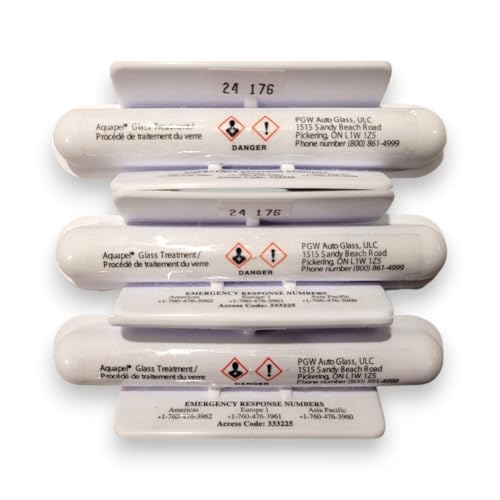
Aquapel is the windshield-shop product, and it is built around a single-use applicator you crack, wipe on and wipe off inside a couple of minutes. It carries a published six-month guarantee and a published chemical-bond claim, which puts it well ahead of the spray repellents on durability without asking for a polishing step.
Claimed durability
Strong
Ease of use
Exceptional
Published evidence
Strong
Value
Good
Why we picked it
Published six-month guarantee — a rare actual commitment in this category
No glass polish step required, unlike the ceramic coatings here
Two minutes per windshield, start to finish
Chemical-bond claim rather than a surface film, like the long-life coatings
Good to know. Single-use applicators: three in this pack, one per windshield, so the cost repeats every six months.
Published specifications
Claimed durability
Published 6-month guarantee
Supplied as
Single-use sealed applicators, 3 in this pack
Coverage
One applicator per windshield, or two side windows
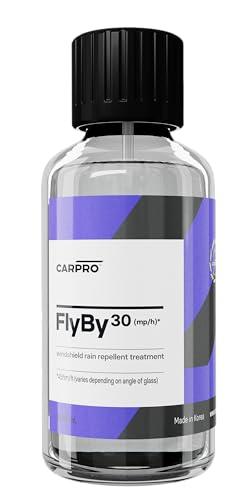
FlyBy30 is the glass coating that assumes you already own the rest of the CARPRO shelf: the published routine is CeriGlass polish, then Eraser, then a few drops of the coating on a suede applicator in a crisscross pattern. Done that way it is as good as anything here. Done on unpolished glass it is a waste of a 20 ml bottle.
Claimed durability
Good
Ease of use
Adequate
Published evidence
Good
Value
Strong
Why we picked it
Published prep routine is unusually specific, which is why it performs when followed
20 ml treats roughly two cars, so the cost per car is reasonable
Suede applicators in the kit rather than sold separately
Crisscross application pattern is published, which prevents the usual streaking
Good to know. 20 ml treats about two cars, but you also need CeriGlass and Eraser for the prep CARPRO specify.
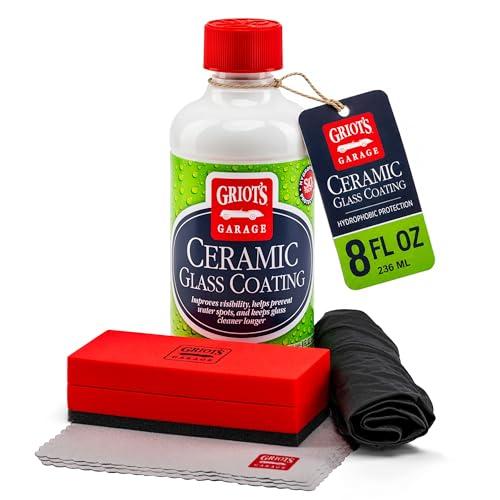
This is the easiest entry point into a real SiO2 glass coating: the applicator pad and the microfiber towels are in the box, the instructions assume you have never done it before, and Griot's sell it as their longest-lasting glass protectant. What they do not do is say how long that is, which is the one thing a buyer wants to know.
Claimed durability
Good
Ease of use
Exceptional
Published evidence
Trade-off
Value
Strong
Why we picked it
Applicator pad and towels included, so nothing else is needed on the first go
SiO2 chemistry at a mid-range price rather than a boutique one
Griot's support and returns are the easiest in this group
Beads water and sheds dust and pollen, not just rain
Good to know. Kit pricing means paying for towels you may already own, and Griot's publish no durability interval.
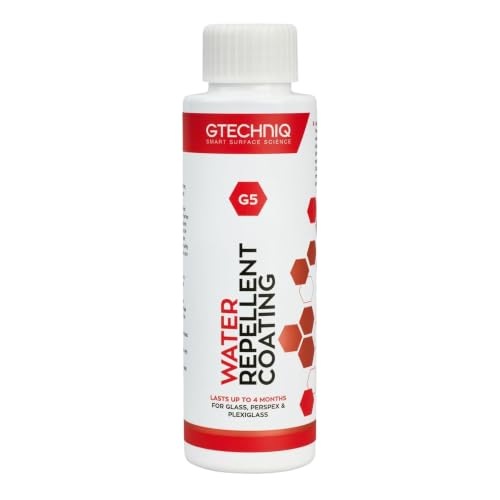
G5 is the answer to the complaint every glass coating earns: that it only works once you are moving fast enough for air to push the beads off. Gtechniq publish G5 as working at low speed, which makes it the sensible pick for a car that spends its life under 40 mph — and it trades four months of life for that, against G1's claimed two years.
Claimed durability
Good
Ease of use
Exceptional
Published evidence
Strong
Value
Strong
Why we picked it
Published as working at low driving speeds, which most glass coatings are not
Bottle size is sensible — 3.4 fl oz covers several applications
Rated for Perspex as well as glass, so it suits headlights and bike screens
Easiest Gtechniq glass product to apply by a wide margin
Good to know. 3.4 fl oz is several applications, which is the right size for a product with a four-month claimed life.
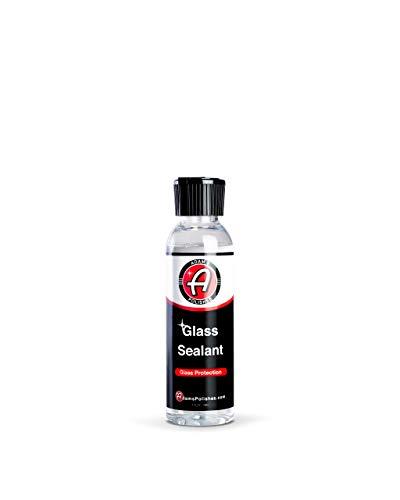
Adam's publish this as a super-concentrated sealant rather than as a repellent spray, and at 4 oz it is the lowest-cost way onto this page by a clear margin. Water rolls off treated glass and the glass stays cleaner between washes. There is no durability figure, so treat it as a season at a time and reapply when the beading stops.
Claimed durability
Adequate
Ease of use
Exceptional
Published evidence
Trade-off
Value
Exceptional
Why we picked it
Cheapest genuine sealant on this page, not a repellent spray
Concentrated, so 4 oz goes further than the bottle size suggests
Easy wipe-on application with no polish step published
Adam's own support and return policy behind it
Good to know. 4 oz is a single-car-household size, concentrated, and the cheapest real sealant here.
Published specifications
Claimed durability
Not published
Volume
4 oz, published as super concentrated
Form
Wipe-on sealant
Rated surfaces
Automotive glass
Glass polish first
Not published
Published behavior
Water rolls off; glass stays cleaner between washes
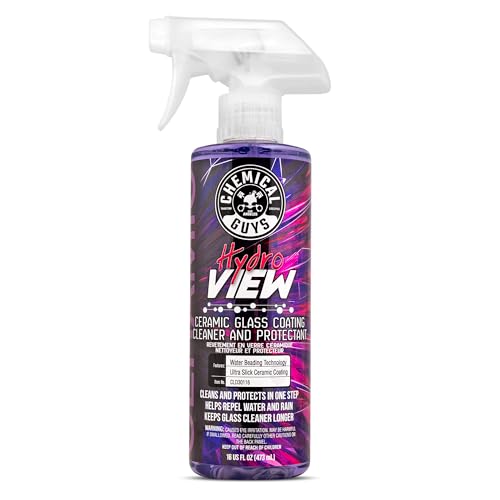
HydroView is the one bottle here that does both jobs: it cleans the glass and leaves a hydrophobic layer in the same wipe, which makes it the realistic choice for the inside of a windshield and for maintenance between real coatings. It is not a substitute for a bonded coating, and Chemical Guys do not claim it is.
Claimed durability
Trade-off
Ease of use
Exceptional
Published evidence
Adequate
Value
Strong
Why we picked it
Cleans and coats in one pass, which is the right tool for interior glass
16 oz spray bottle — the largest, most practical format on this page
No prep step, no cure time, no planning required
Genuinely useful as maintenance over a bonded coating
Good to know. A 16 oz spray is the most practical format on this page, but it is maintenance over a coating rather than a replacement for one.
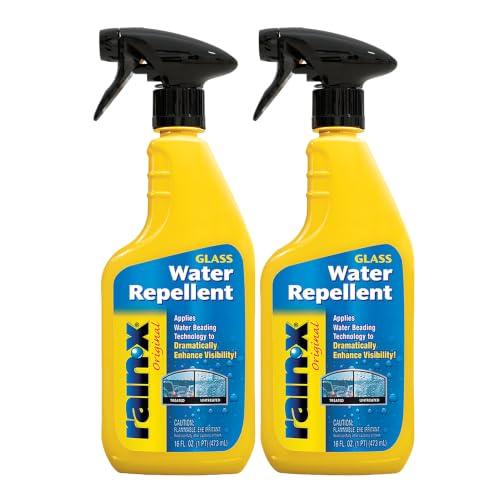
Rain-X is the benchmark the rest of this category is measured against, and it earns the place: it is cheap, it is in every parts store, and it visibly works the first time you drive in rain. What it is not is durable. Rain-X publish no interval, and in practice wipers take it off a windshield in weeks rather than months.
Claimed durability
Trade-off
Ease of use
Exceptional
Published evidence
Trade-off
Value
Exceptional
Why we picked it
Cheapest route to visible rain beading, by a wide margin
Sold here as a 2-pack, so there is enough for several seasons
Available everywhere, so a top-up is never a mail order
Works on the first drive, which none of the bonded coatings can claim
Good to know. Sold here as a 2-pack, which is more than one car needs - and expect to redo it seasonally rather than annually.
Three of the four bonded coatings here will fail inside a month on unprepared glass, and the reason is simple: a chemical bond needs silica to bond to, and a used windshield is covered in a transparent film of road grime, old repellent, wiper rubber and mineral deposits. The coating bonds to that film instead, and the film comes off in the rain.
01Wash the glass with car shampoo and dry it. This removes the loose layer, which is the only layer most people remove.
02Clay or polish the glass. A dedicated glass polish is the correct tool; Gyeon include theirs in the box and CARPRO specify CeriGlass by name. This is the step that removes the transparent film.
03Panel wipe with an isopropyl alcohol solution or the maker's prep product, and dry with a fresh towel. No residue, no fingerprints.
04Apply the coating in overlapping passes on one pane at a time, then level and wipe off inside the window the maker publishes. Gyeon's is ten to thirty seconds, which is short.
05Keep it out of the rain while it cures. Every bonded coating here publishes a cure period, and a rain shower during it is the usual reason a first attempt looks blotchy.
07
Wipers: the thing that actually kills a glass coating
On a windshield, the sealant does not wear out from weather. It wears out from a rubber blade dragging across it a few hundred thousand times. That is why the durability spread in this category is so wide: a coating on your side windows and rear glass will outlast the same coating on the swept area of the windshield by a factor of several, and nobody's marketing mentions it.
It is also why Gtechniq publish G1 as wiper-proof and why that matters more than the headline figure. A coating that survives the blade is a coating you reapply on a schedule; a coating that does not is a coating that goes patchy in the swept arc first, which produces the juddering, chattering wipers that gave glass repellents a bad name in the first place.
Two practical consequences. First, replace tired wiper blades before you coat, not after — a torn blade will shred a fresh coating in a week. Second, when a coating does start going patchy in the swept area, strip and redo it rather than topping it up: a second layer over a half-worn one is exactly the uneven surface that causes the chatter.
What about the rest of the glass?
Side windows and the rear screen are where these products look best, because there is no blade on them and the beading survives for the full claimed life. On side glass the practical benefit is being able to see the mirror in rain, which on a modern car with thick pillars is worth more than most people expect. Coat them at the same time as the windshield; the bottles here are all sized for the whole car, and the side glass is the part that will still be beading in a year.
08
How to tell when it has stopped working
Run a hose over the dry car and watch the windshield. A working sealant pushes water into tight, high-contact-angle beads that roll rather than slide. A spent one lets water spread into a sheet that clings. If the swept arc sheets and the glass outside it beads, the coating has not failed — the wipers have taken it off the only part they touch, which is the normal failure pattern and tells you exactly where to reapply.
The other signal is wiper noise. A smooth, quiet wipe on a wet windshield means the coating is still lubricating the blade. Juddering, skipping or chattering in the middle of the arc almost always means a partially worn layer. That is a strip-and-redo, not a top-up.
What is not a signal is the look of the glass when dry. None of these products changes the appearance of clean glass, and a product you cannot see is not a product that has worn off. Do the water test instead of trusting your eyes.
09
What this category costs over three years
The cheapest bottle on this page is not the cheapest product, and the arithmetic is worth doing once. A spray repellent reapplied every two months needs eighteen applications over three years. A bonded coating with a claimed two-year life needs two. The bonded coating is several times the price per bottle and a fraction of the price per year — and more importantly it is a fraction of the labor, because the expensive part of this job is not the product but the hour of polishing and wiping.
That is the real argument for the top of this page over the bottom of it. If you are going to prep the glass properly once, put something on it that will still be there in two years. If you are not going to prep the glass, buy Rain-X, accept that it is a seasonal product, and spend the money you saved on a decent set of microfiber towels instead — the single biggest cause of streaky glass is a tired towel.
The same logic applies elsewhere on the car, and it is why this site treats glass, wheels and paint as one protection decision rather than three. The best wheel coatings is the same argument on the dirtiest part of the car, and ceramic coating sprays is the equivalent for paint when a full coating is more commitment than you want.
10
Our recommendation
Buy this one
Gtechniq G1 ClearVision Smart Glass
G1 is the one product here that is sold on chemistry rather than on convenience: Gtechniq's claim is a chemical bond to the glass instead of a film sitting on top of it, and the claimed life — up to two years, or 30,000 miles — is multiples of anything else on this page.
Gyeon are the only maker in this group who publish the category the way a coating should be published: a real-world lifespan figure, a consumption figure, an alcohol tolerance, and — unusually honest — the road speed below which the coating does not do very much.
Gtechniq G1 ClearVision, on the strength of a claimed two-year life and a chemical-bond mechanism rather than a surface film. If you want figures you can check rather than a brand claim, Gyeon Q² View EVO is the only product in this group with a published spec table, including a real-world lifespan of up to 18 to 24 months and the speed at which the repellency starts working. For the quickest good result, Aquapel wipes on in two minutes and carries a published six-month guarantee.
How long does a windshield water repellent last?
It depends entirely on whether it bonds to the glass or sits on it, and on how much your wipers run. Bonded coatings publish six months to two years; spray repellents like Rain-X publish nothing and realistically last weeks to a couple of months in the swept area of a windshield. The unswept glass — side windows and rear screen — holds any of these products far longer than the windshield does.
Do you need to polish the glass before applying a glass coating?
For a bonded coating, yes, and the makers that are honest about it say so. Gyeon include a glass polish in the box and CARPRO specify CeriGlass followed by a panel wipe. A used windshield carries a transparent film of road grime, wiper rubber and old repellent, and a coating applied over that film bonds to the film rather than to the glass. Spray repellents need clean glass but not a polish.
Is Rain-X bad for your windshield?
It does not damage glass. The complaint against it is that it wears unevenly in the arc the wipers sweep, and a half-worn repellent is what makes blades judder and chatter. That is a maintenance annoyance rather than damage, and the fix is to strip and reapply rather than add a second coat over a worn one. Use it on exterior glass only, never on the inside of the windshield.
Can you use a glass sealant on the inside of the windshield?
No, and it will cost you a hazy windshield. A hydrophobic layer does nothing on interior glass because there is no rain and no airflow to move beads, and the layer itself smears in a way that is hard to remove. Interior glass wants a dedicated cleaner and two clean towels. The one exception on this page is Chemical Guys HydroView, which is a cleaner that leaves a light layer and is sold for both sides.
At what speed does a glass coating start repelling water?
Gyeon publish about 50 km/h, which is roughly 31 mph, for Q² View EVO, and that figure is broadly representative of bonded coatings. Below it, beads form but there is not enough airflow to clear them, so you will still use the wipers. Gtechniq publish their G5 repellent as working at low speed specifically, which makes it the more sensible choice for a car that lives in town.
What is the difference between a glass sealant and a glass cleaner?
A cleaner removes film and leaves nothing behind. A sealant deliberately leaves a hydrophobic layer and has little or no cleaning ability. Combination products exist and are genuinely useful for maintenance, but a product that cleans and coats in one pass is bonding to glass it is cleaning at the same time, which is a weaker bond by construction. Clean first, coat second, and expect the two-in-one bottles to be the shortest lived.
Will a glass coating stop water spots?
It reduces them, because water that beads and rolls off leaves less mineral behind than water that sheets and dries in place. It does not prevent them — a coated windshield parked under a sprinkler will still spot. Existing etched spots are damage to the glass itself and need a mechanical fix before coating; see the water spot removers page for what actually works on glass versus paint.
12
Sources
Every published figure on this page traces to one of these. Where a manufacturer does not publish a number, the page says so rather than estimating it.
Last reviewed November 10, 2026. Think a figure here is wrong? Tell us at contact@detailingandwax.com and we will check it, fix it and date the correction — see our editorial policy.