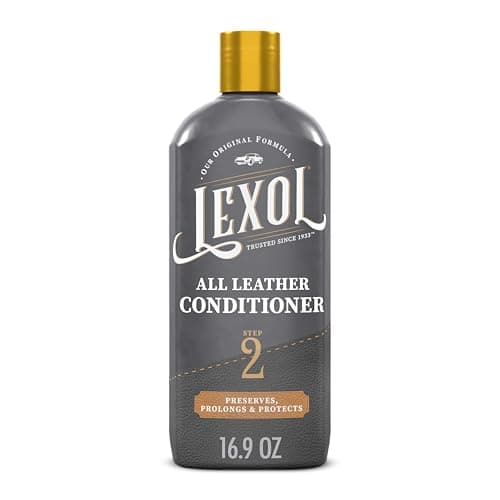
Our top pick: the Lexol Lexol All Leather Conditioner.
How this is funded: we earn an Amazon commission when you buy through our links, at no extra cost to you. We sell nothing and stock nothing, so a pick is never a product we are trying to move. Prices are pulled live from Amazon and were last checked October 5, 2026; where we cannot verify a price we say so rather than print an old one. Full disclosure.
Research-basedPicked from published specifications and the pattern across verified-purchase reports. We have not used these ourselves and do not pretend otherwise.How we pick
Quick picks — Best leather conditioners
#
Product
Best for
Type
Price
01
Lexol All Leather Conditioner
The leather conditioner with the longest track record
Tap any row for the full write-up. Prices come straight from Amazon and are never typed in by hand.
The verdict
Lexol for most cars — pH-balanced, matte, non-greasy and backed by decades of use. Buy the Chemical Guys kit instead if you need the cleaner too, because conditioning dirty leather is worse than doing nothing at all.
02
The coated-leather fact
Almost all leather in cars built in the last twenty-five years is pigmented and coated with a polyurethane layer. What your hand touches is that coating, not the hide. Which means a heavy conditioner has nothing to soak into — it sits on the surface, attracts dust, and feels greasy.
The practical consequence: coated leather needs cleaning far more than it needs conditioning. A light pH-balanced conditioner afterwards keeps the coating supple and protects it from UV; a heavy oil-rich product is the wrong tool and it is the one most often sold.
The water drop test, and what each type needs
Leather type
How to tell
What it needs
Coated / pigmented
A water drop beads on the surface
Cleaning, then a light conditioner
Uncoated / aniline
A water drop darkens and soaks in
A gentle cleaner and a richer conditioner
Nappa, perforated
Visible perforations
Minimal moisture, never sprayed directly
Alcantara / suede
Fabric texture, not leather
Neither — it needs a dedicated fabric approach
Leatherette / vinyl
Uniform grain, no pores
Interior cleaner only. Conditioner does nothing.
03
The ranked picks
Ordered for modern coated car leather, with the one rich conditioner for genuinely dry uncoated hide. Prices are live from Amazon.
No. 01LexolSpec-verified
Lexol All Leather Conditioner
Best for: The leather conditioner with the longest track record
Lexol has been the default leather conditioner for decades, and it is still the sensible answer: pH-balanced, non-greasy, and it leaves a matte finish rather than the plastic shine that cheap dressings produce.
Who should skip it. Cleaning. Conditioner on dirty leather seals the dirt in. Clean first, always, then condition only if the leather actually needs it.
Surface safety
9.5
Conditioning
8.5
Finish
9.0
Value
9.0
What works
Decades-long track record and a huge body of owner reports
Matte finish, never shiny
Cheap for the volume
What does not
Conditioner only — you still need a cleaner
Most modern car leather is coated and needs less of this than people think
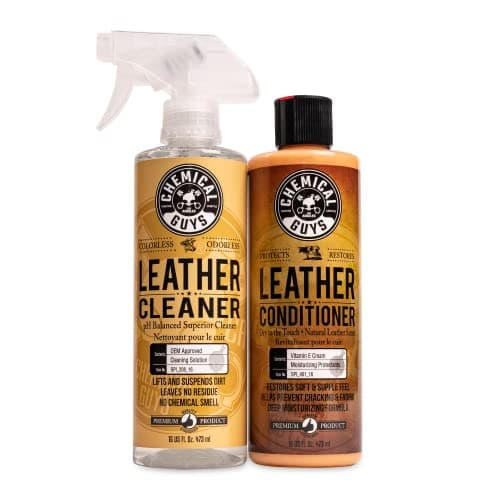
The correct way to buy leather care is as a pair, because conditioning dirty leather is worse than doing nothing. Two 16 oz bottles covers a whole interior several times over.
Who should skip it. Perforated leather, where neither bottle should be sprayed directly — apply to the applicator or the product wicks into the holes and stains from underneath.
Surface safety
8.5
Conditioning
8.5
Finish
8.5
Value
8.5
What works
Both products, correctly paired
Enough volume for several full interiors
Matte, non-greasy result
What does not
Never spray either onto perforated leather
Two bottles to store
Chemical Guys does not publish a dwell time we could verify
Cleaner, conditioner and a brush. The brush is the part people skip and the part that matters: leather grain holds dirt that a towel slides straight over, and agitating it is most of the job.
Who should skip it. Anyone who already owns a soft interior brush, in which case you are paying for a tool you have.
Surface safety
8.5
Conditioning
8.5
Finish
9.0
Value
8.0
What works
Includes the brush, which is the step people skip
Properly matte finish
Good customer support if a batch is wrong
What does not
Redundant if you own an interior brush
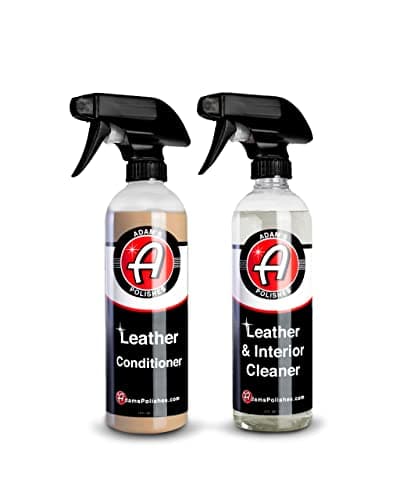
Adam's does not publish bottle volumes we could verify
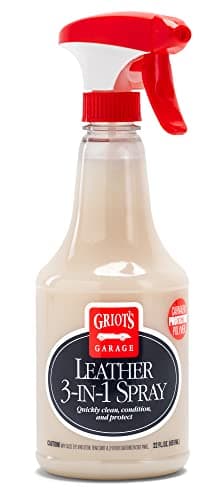
Cleans, conditions and protects in one spray, which is a compromise — it does none of the three as thoroughly as a dedicated product. As a monthly maintenance wipe between proper cleans, that compromise is the right one.
Who should skip it. Neglected leather. A genuinely dirty seat needs a dedicated cleaner and a brush first; this product will smear it around.
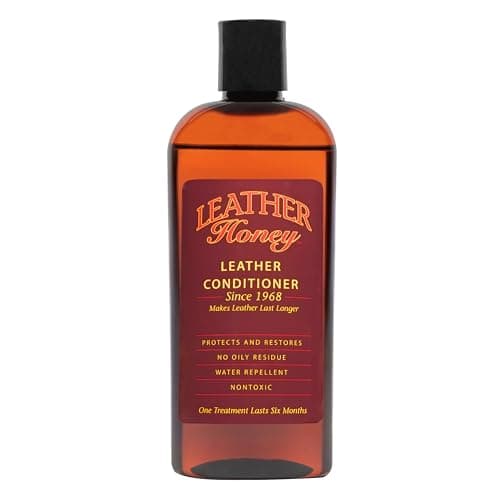
A heavy, slow-absorbing conditioner aimed at leather that is actually dry — which in a car usually means an older interior with worn or uncoated hide. On modern coated leather it mostly sits on the surface.
Who should skip it. Modern coated car leather. The coating is what you are touching, not the hide, so a heavy conditioner has nothing to soak into and leaves a film.
Surface safety
8.0
Conditioning
9.5
Finish
8.0
Value
8.0
What works
Genuinely revives dry, uncoated leather
A little goes a long way
Non-toxic, with a long manufacturing history
What does not
Wrong product for modern coated car leather
Very slow to absorb — hours, not minutes
Leather Honey does not publish a volume we could verify
Published specifications
Volume
Not published
Type
Conditioner only
Finish
Matte once fully absorbed
pH balanced
Not published
Suits
Uncoated and older leather
04
Cleaning first, always
01Vacuum the seats and the seams with a brush attachment first.
02Spray the cleaner onto a soft brush, not onto the leather.
03Agitate gently. Leather grain holds dirt that a towel slides straight over, and this is most of the work.
04Lift the suspension off with a damp microfiber towel, turning to fresh sides.
05Let it dry fully before conditioning.
06Apply conditioner thinly to an applicator, work it in, and buff off the excess after ten minutes.
05
How often
Clean every one to three months, more if the car is used daily and the seats are light-colored.
Condition two to four times a year. More than that on coated leather is product sitting on a surface that cannot absorb it.
Always after a deep clean, because cleaning removes some of what was protecting the coating.
Before and after a hot summer, which is when UV does most of the damage.
06
What leather conditioner does not fix
Cracking, color loss and worn bolsters are damage to the coating or the hide itself, and no conditioner reverses them. Those are leather repair jobs — dye, filler and a sealant — and conditioner applied over them simply makes the damage look slightly darker for a week.
What conditioner does do is keep sound leather from getting there, which is why the honest schedule is modest and regular rather than heavy and occasional.
07
Questions people actually ask
What is the best leather conditioner for car seats?
Lexol for most cars — pH-balanced, matte and non-greasy, with a very long track record. If the seats also need cleaning, buy a kit with both, because conditioning dirty leather seals the dirt in.
How often should you condition leather car seats?
Two to four times a year, and clean them every one to three months. Most modern car leather is coated, so conditioner sits on a polyurethane layer rather than feeding the hide — more frequent application just leaves product on the surface.
Can you use leather conditioner on perforated seats?
Yes, applied to a towel and used sparingly — never sprayed directly. Product sprayed at perforations wicks into the holes, sits in the foam underneath, and stains outward from inside the seat over the following weeks.
Will leather conditioner fix cracked seats?
No. Cracking is damage to the coating or the hide and needs leather repair — dye, filler and a sealant. Conditioner makes the damage look slightly darker for a week. What it does do is stop sound leather from getting there.
08
Sources
Every published figure on this page traces to one of these. Where a manufacturer does not publish a number, the page says so rather than estimating it.
Last reviewed October 5, 2026. Think a figure here is wrong? Tell us at contact@detailingandwax.com and we will check it, fix it and date the correction — see our editorial policy.