Independent picks for detailing your own car. We stock nothing, so we have nothing to move.
01
Interior
How often should you condition leather car seats?
Two to four times a year, and less than that on most modern cars. Nearly all factory leather is coated, which means conditioner sits on a film rather than feeding the hide.
How this is funded: we earn an Amazon commission when you buy through our links, at no extra cost to you. We sell nothing and stock nothing, so a pick is never a product we are trying to move. Prices are pulled live from Amazon and were last checked November 19, 2026; where we cannot verify a price we say so rather than print an old one. Full disclosure.
Research-basedPicked from published manufacturer specifications and the consistent pattern across verified-purchase owner reports. Every product here scores 8.4 or better on our rubric.How we pick
Top pickLexol
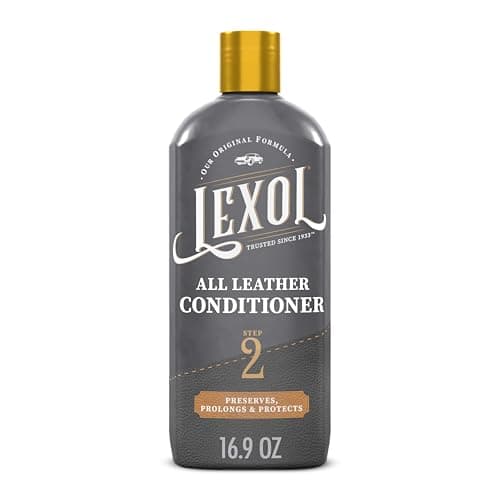
Lexol All Leather Conditioner
Lexol has been the default leather conditioner for decades, and it is still the sensible answer: pH-balanced, non-greasy, and it leaves a matte finish rather than the plastic shine that cheap dressings produce.
Clean leather seats every month or two, and condition them two to four times a year. On most cars built since the 1990s the leather is pigmented and coated, so the conditioner sits on a polyurethane film rather than soaking into hide — which means frequent conditioning adds shine and residue, not longevity. Uncoated and older leather genuinely does need feeding, and for that quarterly is right.
02
First work out which kind of leather you have
This decides everything else, and the test takes ten seconds. Put a single drop of water on an inconspicuous part of the seat — the side bolster near the floor is ideal.
The drop sits on the surface and beads. The leather is coated (pigmented, finished). This is almost every factory car interior from the last thirty years.
The drop darkens the leather and soaks in. The leather is uncoated — aniline, nubuck or an older unfinished hide. It genuinely absorbs product and genuinely needs feeding.
On coated leather, what you are maintaining is a thin polyurethane layer, not the hide underneath. Conditioner cannot reach the hide through it. What keeps coated leather alive is keeping that layer clean and un-abraded, because when the coating cracks the leather fails there — and no amount of conditioner prevents that.
The schedule by leather type, which is the only honest way to answer this
Leather type
Clean
Condition
What actually extends its life
Coated / pigmented (most cars)
Every 1 to 2 months
2 to 3 times a year
Cleaning, and keeping grit off the bolsters
Perforated and ventilated
Monthly, lightly
2 times a year, sparingly
Never flooding the perforations
Uncoated / aniline
Every 1 to 2 months
Every 3 months
Regular feeding and staying out of direct sun
Older unfinished hide
Gently, every 2 months
Every 2 to 3 months
Conditioner, genuinely
Leatherette / vinyl
Monthly
Never — it is plastic
A UV protectant, not a conditioner
03
What the schedule above needs
A conditioner for coated leather, a cleaner-and-conditioner kit, and a feeding conditioner for older uncoated hide. Prices are live from Amazon.
LexolCategory-definingSpec-verified
Lexol All Leather Conditioner
Best for: The leather conditioner with the longest track record
Lexol has been the default leather conditioner for decades, and it is still the sensible answer: pH-balanced, non-greasy, and it leaves a matte finish rather than the plastic shine that cheap dressings produce.
Surface safety
Exceptional
Conditioning
Strong
Finish
Exceptional
Value
Exceptional
Why we picked it
Decades-long track record and a huge body of owner reports
Matte finish, never shiny
Cheap for the volume
Good to know. Most modern car leather is coated and needs less of this than people think
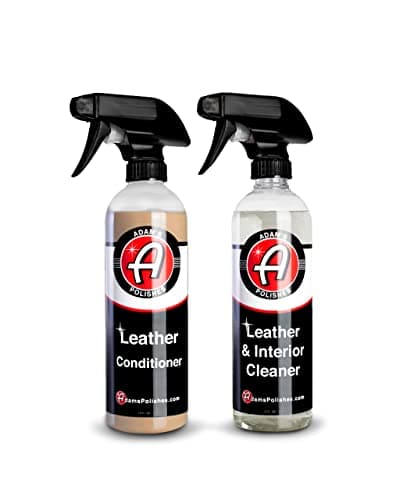
Cleaner, conditioner and a brush. The brush is the part people skip and the part that matters: leather grain holds dirt that a towel slides straight over, and agitating it is most of the job.
Surface safety
Strong
Conditioning
Strong
Finish
Exceptional
Value
Strong
Why we picked it
Includes the brush, which is the step people skip
Properly matte finish
Good customer support if a batch is wrong
Good to know. Costs more than buying the two bottles separately
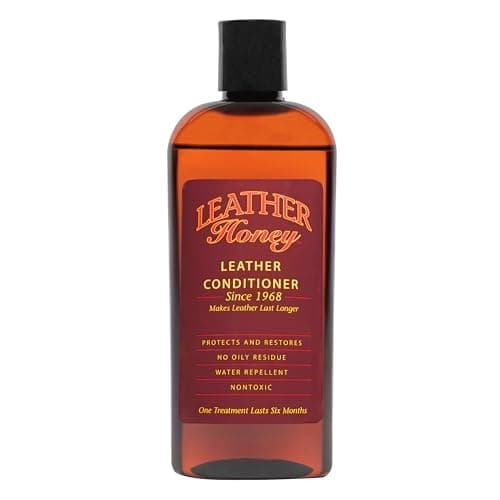
A heavy, slow-absorbing conditioner aimed at leather that is actually dry — which in a car usually means an older interior with worn or uncoated hide. On modern coated leather it mostly sits on the surface.
Surface safety
Strong
Conditioning
Exceptional
Finish
Strong
Value
Strong
Why we picked it
Genuinely revives dry, uncoated leather
A little goes a long way
Non-toxic, with a long manufacturing history
Good to know. Wrong product for modern coated car leather
Published specifications
Volume
Not published
Type
Conditioner only
Finish
Matte once fully absorbed
pH balanced
Not published
Suits
Uncoated and older leather
04
Why cleaning matters more than conditioning
Car seats fail at the driver's outer bolster first, every time, and the cause is abrasion: denim rivets, keys, belt buckles and grit ground into the same spot thousands of times. That wears through the coating, and once the coating is through, the hide is exposed to body oils and UV.
Nothing in a bottle reverses that. What slows it down is removing the grit before it is ground in — which makes a regular, gentle clean the high-value job and conditioning the finishing touch. How to detail a car interior covers the full routine, and the best car interior cleaners ranks what is safe to use.
05
How to tell a seat is actually due
01Clean one seat and let it dry fully.
02Look at it in daylight. Dull and slightly chalky in the high-contact areas means it is due; evenly matte and supple means it is not.
03Press the bolster with a thumb. If the grain stays creased rather than springing back, it wants conditioning.
04Check the water-drop test again. On coated leather the answer will usually be that the coating is fine and the seat just needed cleaning.
05Condition only the areas that failed those checks, not the whole interior by default.
06
Applying it, and the finish to aim for
Apply to an applicator, not to the seat. Spraying directly floods perforations and seams.
A thin coat, worked in, then wiped off. Anything left on the surface is residue, not protection.
Matte, never shiny. A glossy seat is a slippery seat and the shine is unabsorbed product. Choose a conditioner that states a matte finish.
Use a soft brush on perforated leather to lift product out of the holes before it dries — detailing brushes covers the soft ones.
Do the steering wheel separately and sparingly. A conditioned wheel is a slick wheel, which is a genuine safety issue.
Heat and UV do more damage than dryness ever will, so a sunshade and parking in shade outperform any conditioning schedule. For the products themselves, the best leather conditioners for cars has the full ranking with what each one suits.
07
Perforated and ventilated seats need a different hand
Ventilated seats have thousands of small holes feeding air ducts underneath, and anything liquid you spray on them goes into those ducts. Product that collects there does not evaporate quickly, it attracts dust, and over time it can produce a smell that is very hard to trace because the source is inside the seat base.
Never spray directly onto perforated leather. Product goes onto the applicator, always.
Use noticeably less product than you would on a solid panel.
Work across the perforations, not into them, and finish with a soft brush to lift anything sitting in a hole.
Dry the surface fully before closing the car up, so nothing is sitting damp in the ducts.
Condition twice a year rather than quarterly, because the risk of over-application is higher and the benefit is no greater.
08
What a conditioner cannot do
It cannot restore colour, fill a crack, re-dye a worn bolster or soften leather that has gone hard. Those are all leather repair jobs involving dye, flexible filler and a topcoat, and a conditioner applied over any of them makes the damage a shade darker for about a week.
It also cannot fix a seat that is simply dirty. A great many seats that look dull and tired are carrying a film of body oils, denim dye transfer and interior dressing residue, and a proper clean with a dedicated interior cleaner transforms them with no conditioner involved at all. The best car interior cleaners covers what is safe on leather, and the general rule holds: cleaning is the job that does the work, and conditioning is the finishing touch.
09
Our recommendation
Buy this one
Lexol All Leather Conditioner
Lexol has been the default leather conditioner for decades, and it is still the sensible answer: pH-balanced, non-greasy, and it leaves a matte finish rather than the plastic shine that cheap dressings produce.
Two to four times a year. On most modern cars the leather is coated, so conditioner sits on a polyurethane film rather than soaking into the hide, and doing it more often adds residue rather than longevity. Cleaning every month or two matters more.
How do I know if my car leather is coated?
Put one drop of water on a hidden area such as a lower side bolster. If it beads on the surface, the leather is coated — which is almost every factory interior from the last thirty years. If it soaks in and darkens the leather, it is uncoated and genuinely absorbs conditioner.
Can you condition leather car seats too much?
Yes. On coated leather the product cannot be absorbed, so excess sits on the surface as a slick, shiny residue that attracts dust and makes the seat slippery. Conditioner applied over dirt is worse still, because it seals grit into the grain.
Do you need to clean leather before conditioning it?
Always. Conditioning a dirty seat seals dirt into the grain and the perforations, where it becomes abrasive. Clean with a dedicated leather or interior cleaner, let the seat dry, then condition only the areas that need it.
Why are my leather seats cracking if I condition them?
Because the cracking is usually abrasion damage to the coating rather than dryness. Denim, keys and grit wear through the finish at the driver's bolster, and no conditioner reverses that. Heat and UV accelerate it, so shade and a sunshade help more than more product does.
11
Sources
Every published figure on this page traces to one of these. Where a manufacturer does not publish a number, the page says so rather than estimating it.
Last reviewed October 11, 2026. Think a figure here is wrong? Tell us at contact@detailingandwax.com and we will check it, fix it and date the correction — see our editorial policy.