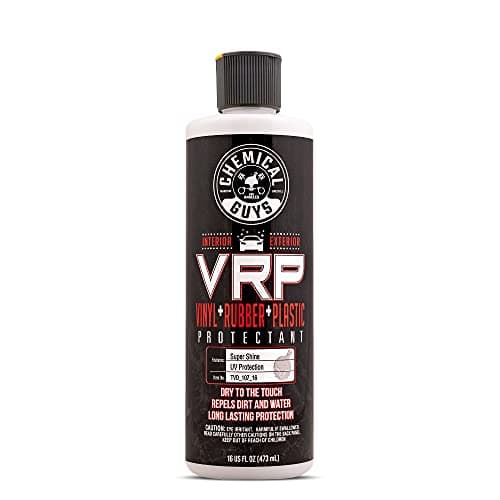
Featured here: the Chemical Guys Chemical Guys VRP Vinyl, Rubber and Plastic Dressing.
How this is funded: we earn an Amazon commission when you buy through our links, at no extra cost to you. We sell nothing and stock nothing, so a pick is never a product we are trying to move. Prices are pulled live from Amazon and were last checked October 5, 2026; where we cannot verify a price we say so rather than print an old one. Full disclosure.
Research-basedPicked from published specifications and the pattern across verified-purchase reports. We have not used these ourselves and do not pretend otherwise.How we pick
The verdict
Water-based if you want the factory satin look and the least mess — Chemical Guys VRP dries to the touch and barely slings. Solvent gel if you want the wet look and are prepared to apply it properly. If you want both, a ceramic tire coating gets closest.
02
What is actually different
The three approaches
Water-based
Solvent-based gel
Ceramic tire coating
Finish
Satin, dry to touch
Wet, glossy
Satin to semi-gloss
Sling
Minimal
Moderate to high
None once cured
Durability
A wash or two
Several washes
Months
Application time
Minutes
Minutes
Longer, needs a clean dry tire
Cost per application
Lowest
Low
Higher
Right for
Daily drivers, OEM look
Show gloss, car meets
Set and forget
03
Both chemistries, plus the ceramic option
A water-based satin dressing, two solvent gels and a ceramic tire coating. Prices are live from Amazon.
Chemical GuysSpec-verified
Chemical Guys VRP Vinyl, Rubber and Plastic Dressing
Best for: One bottle for tires, trim and interior plastic
VRP is water-based and dries to the touch, so it slings far less than a solvent gel, and the same bottle works on tires, exterior trim and interior plastic. The finish is satin rather than wet, which is closer to how a car left the factory.
Who should skip it. Maximum shine. If you want the wet look, this is deliberately not that, and no amount of extra coats will get it there.
Gloss
6.5
Durability
7.0
Sling resistance
9.5
Value
9.5
What works
Dries to the touch, so sling is barely an issue
Works on tires, trim and interior plastic
Satin finish looks factory-correct
What does not
Not a wet-look product
Washes off faster than a solvent gel
Chemical Guys does not publish a durability figure we could verify
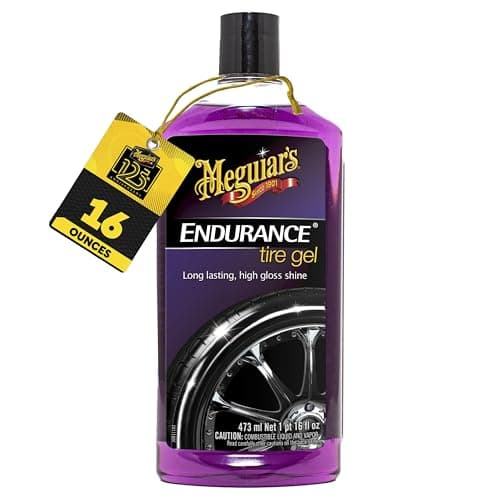
Endurance is the benchmark glossy tire dressing: it survives several washes, which most wet-look products do not. It slings if you apply it thickly and drive straight away — two thin coats with ten minutes between essentially eliminates that.
Who should skip it. A satin, factory look. This is a gloss product and it looks like one, which some people dislike on a modern car.
Gloss
9.5
Durability
8.5
Sling resistance
6.5
Value
9.5
What works
Lasts through several washes, unlike most glossy dressings
The reference wet-look finish
Cheap and available everywhere
What does not
Slings if applied thickly or driven before it flashes
Gloss finish is not to everyone's taste
Meguiar's does not publish a volume we could verify
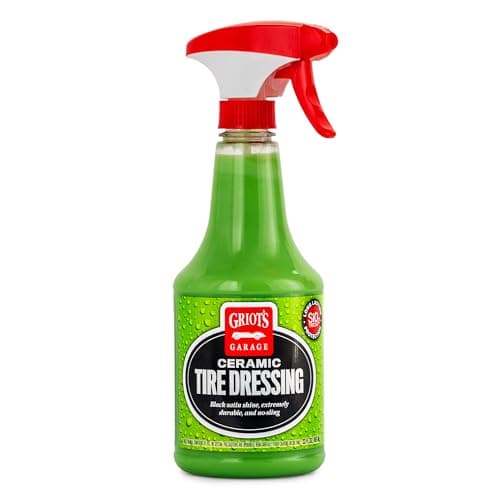
A ceramic tire coating rather than a dressing, which means it bonds to the rubber and survives washes that strip conventional products. Application takes longer and needs a genuinely clean tire; the pay-off is months rather than weeks.
Who should skip it. A quick tidy. If the tires need to look good in ten minutes, a conventional dressing is the correct choice.
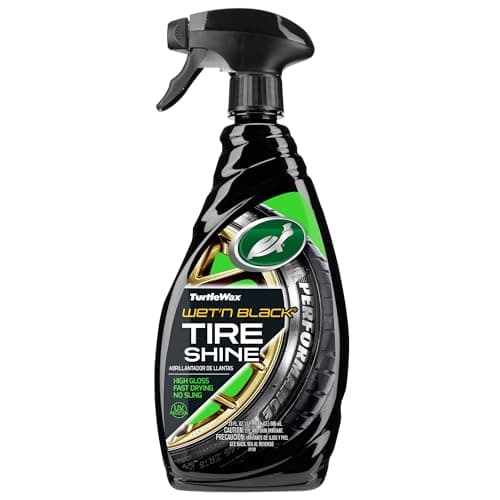
The wettest-looking finish here and the cheapest product on the page. It slings more than anything else listed, and if you apply it thinly and let it flash properly that is manageable.
Who should skip it. Anyone who hates cleaning dressing off their paint. It is a solvent-heavy gloss product and the sling risk is genuinely the highest here.
Less than people think. A solvent gel applied as two thin coats with a pad, ten minutes apart, on a genuinely clean tire, slings very little. The same product applied thickly with a spray and driven immediately slings badly.
So the honest framing is: water-based products are more forgiving of bad technique, and solvent gels reward good technique with a better look. If you are going to apply it properly either way, choose on finish rather than on sling. How to apply tire shine without sling is the method.
05
The ceramic option
A ceramic tire coating bonds to the rubber rather than sitting on it, which means essentially no sling and months of durability. The costs are a longer application, a genuinely clean and dry tire as a prerequisite, and a cure period.
For someone who finds reapplying dressing after every wash tedious, it is the most sensible purchase in this whole category — and it is the one people do not know exists. See the tire shine roundup.
06
Matching the finish to the car
Modern daily driver: satin. The factory look is satin and a wet tire reads as deliberately styled.
Classic or show car: gloss, which suits the era and the setting.
Truck or off-road: satin, because gloss collects dust immediately on anything unpaved.
Car that sits more than it drives: a ceramic coating, because reapplication is the annoying part.
Winter: satin and frequent, since nothing lasts and the wet look will be invisible under salt anyway.
07
Questions people actually ask
Is water-based or solvent-based tire shine better?
Water-based looks satin, dries to the touch and barely slings; solvent gels look wet and last several washes. Neither is better — water-based is more forgiving of technique, and solvent rewards good technique with a better gloss.
What tire shine does not sling?
A water-based dressing applied thinly, or a ceramic tire coating once cured. With either chemistry, two thin coats applied with a pad ten minutes apart on a genuinely clean tire eliminates most sling.
Why do glossy tires look dusty after a week?
Because a solvent-based film stays slightly greasy and picks up dust and brake particles. A water-based dressing dries to the touch and does not, which is a real durability advantage that gets mistaken for a finish preference.
Are ceramic tire coatings worth it?
If reapplying dressing after every wash is the part you dislike, yes — months of durability and essentially no sling. The cost is a longer application on a genuinely clean, dry tire and a cure period before driving.
08
Sources
Every published figure on this page traces to one of these. Where a manufacturer does not publish a number, the page says so rather than estimating it.
Last reviewed October 5, 2026. Think a figure here is wrong? Tell us at contact@detailingandwax.com and we will check it, fix it and date the correction — see our editorial policy.