Featured here: the Chemical Guys Chemical Guys 16-Piece Arsenal Builder Car Wash Kit.
How this is funded: we earn an Amazon commission when you buy through our links, at no extra cost to you. We sell nothing and stock nothing, so a pick is never a product we are trying to move. Prices are pulled live from Amazon and were last checked October 5, 2026; where we cannot verify a price we say so rather than print an old one. Full disclosure.
Research-basedPicked from published specifications and the pattern across verified-purchase reports. We have not used these ourselves and do not pretend otherwise.How we pick
Every page on this site shows a live Amazon price, so rather than printing numbers that would go stale, this page sets out what each tier of kit consists of and what each level of work takes in hours. The prices on the picks below are current when you load the page.
Sixteen pieces including a foam gun, soaps, towels and a bucket — genuinely everything needed for a safe wash, which is the setup that prevents more paint damage than any other purchase. Buying this once beats assembling it over six months.
Who should skip it. Anyone who owns half of it already. Kits are only good value when you need essentially all of the contents.
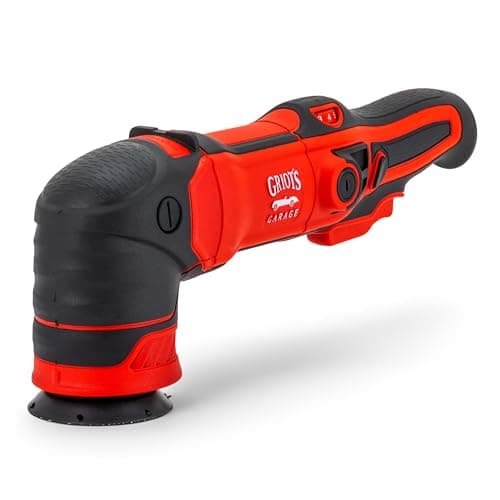
The G8 is the G9's shorter, lighter sibling, and for a lot of people it is the better buy. An 8mm throw is slower across a hood and considerably more forgiving within an inch of an edge, which is exactly where beginners do damage.
Who should skip it. Correcting a full-size truck with an 8mm throw is a long afternoon. If most of your work is big flat panels, the extra throw of the G9 genuinely saves time rather than just sounding better.
Correction speed
7.0
Control
9.5
Ergonomics
8.5
Build
9.0
Value
8.5
What works
Lighter than the G9 and easier to hold against a door for an hour
8mm throw is the most forgiving option near edges and badges
Same lifetime warranty as the rest of the Griot's line
What does not
Slower on large flat panels — this is the real trade-off
Griot's does not publish a wattage figure we could verify
Priced close enough to the G9 that the decision is genuinely about throw
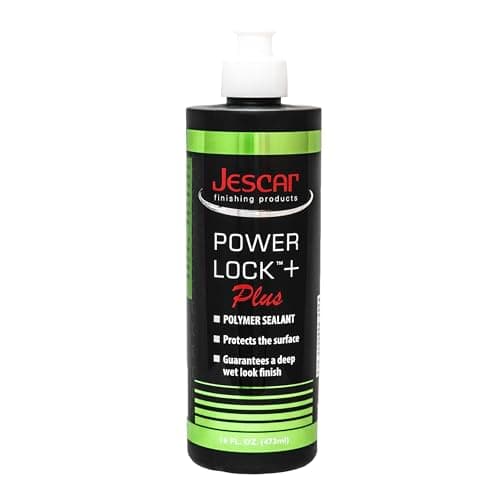
Power Lock Plus is the durability benchmark among consumer sealants, and it applies as easily as anything here — thin coat, short cure, wipe off. If the goal is to protect a car properly and not think about it for six months, this is the product.
Who should skip it. Carnauba warmth. A polymer sealant looks sharp and glassy, and on dark paint some people genuinely prefer the softer carnauba look.
Durability
9.5
Gloss
8.0
Ease of use
8.5
Value
8.5
What works
The longest-lasting sealant in this roundup
Easy, forgiving application for its durability class
Works by hand or by machine
What does not
Glassy rather than warm on dark paint
Needs a properly clean, bare surface to bond
Costs more than the mass-market sealants
Published specifications
Type
Polymer sealant
Claimed durability
Up to 12 months, per Jescar
Volume
16 oz
Form
Liquid
Coating safe
No — a sealant replaces a coating, it does not top one
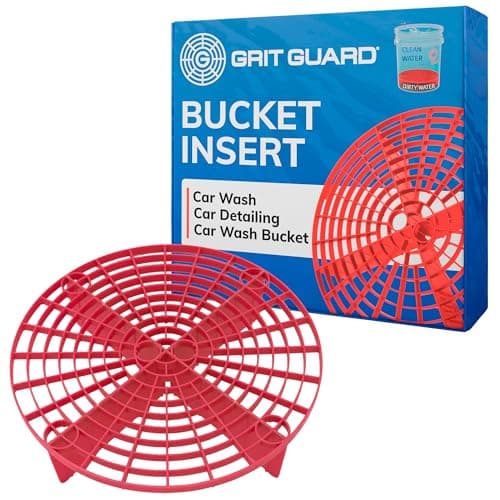
A plastic grid that sits in the bottom of the bucket, keeps settled grit down there, and gives you something to scrub the mitt against. It costs almost nothing and it prevents more paint damage per dollar than any product we have written about.
Who should skip it. Nothing. Buy two — one for the wash bucket and one for the rinse bucket. There is no scenario where a single grit guard is the right answer.
Effectiveness
9.0
Durability
9.5
Fit
9.0
Value
10.0
What works
The cheapest meaningful paint-safety upgrade available
Across a year, a car washed fortnightly with two decontaminations and two sealant applications is roughly thirty to forty hours. That is the number to weigh, and it is the one nobody publishes.
05
Against paying someone
A professional single-stage correction typically runs several hundred dollars; a professional ceramic coating with correction runs into four figures on many cars. DIY is clearly cheaper in materials, and the gap narrows considerably once you value your own weekend.
DIY wins decisively on routine washing and protection, which are quick, easy and expensive to outsource repeatedly.
DIY wins on correction if you will do it more than once, because the tools are a one-time purchase that then covers every car you own.
Professional wins on a single ceramic coating install if you were never going to correct the paint yourself — the correction is most of what you are paying for.
Professional wins on time-critical work, like preparing a car for sale next week.
06
Where the money is genuinely wasted
01Buying a polisher before fixing the wash routine. You will correct the same car again in eighteen months.
02Buying a sampler of four pads instead of four of one. A saturated pad stops cutting and you have no spare.
03Buying a foam cannon without a pressure washer. It will not work at all.
04Buying a multi-year coating for a leased car. You are coating the next owner's car.
05Buying the deluxe version of a consumable you have not yet established you will use.
In materials, clearly. A professional single-stage correction costs several hundred dollars and the DIY tools are a one-time purchase covering every car you own. The gap narrows once you count your own hours, which is the cost nobody publishes.
How many hours does DIY detailing take per year?
Around thirty to forty for a car washed fortnightly with two decontaminations and two sealant applications. A correction year adds another full day on top of that.
What should you buy first for detailing?
Two buckets, two grit guards, a good wash mitt and a plush drying towel. That tier prevents the damage every more expensive tier exists to repair, and it costs a fraction of a polisher.
Is professional ceramic coating worth paying for?
If you were never going to correct the paint yourself, yes — the correction is most of what you are paying for and it is what determines how the coating looks for years. If you will correct it, the same coatings are available to you for a fraction of the cost.
08
Sources
Every published figure on this page traces to one of these. Where a manufacturer does not publish a number, the page says so rather than estimating it.
Last reviewed October 5, 2026. Think a figure here is wrong? Tell us at contact@detailingandwax.com and we will check it, fix it and date the correction — see our editorial policy.