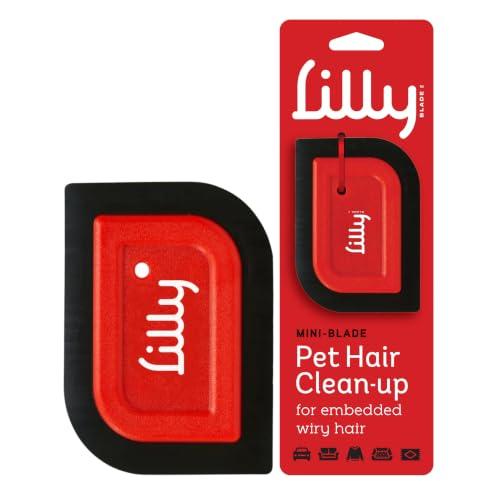
Our top pick: the Lilly Brush Mini Pet Hair Detailer.
How this is funded: we earn an Amazon commission when you buy through our links, at no extra cost to you. We sell nothing and stock nothing, so a pick is never a product we are trying to move. Prices are pulled live from Amazon and were last checked November 19, 2026; where we cannot verify a price we say so rather than print an old one. Full disclosure.
Research-basedPicked from published manufacturer specifications and the consistent pattern across verified-purchase owner reports. Every product here scores 8.4 or better on our rubric.How we pick
Best for embedded pet hairLilly Brush
Lilly Brush Mini Pet Hair Detailer
A small plastic paddle with a flexible rubber blade around its edge, and it does the one thing a vacuum cannot: it reaches under the nap and lifts embedded hair out in rolls.
Tap any row for the full write-up. Prices come straight from Amazon and are never typed in by hand.
The verdict
The Lilly Brush Mini Pet Hair Detailer is the pick: a rubber-bladed hand paddle that reaches under the fabric nap and lifts embedded hair out in rolls, which is the one thing a vacuum physically cannot do. For carpet and floor mats, a soft nylon drill brush does the same job ten times faster. A ChomChom Roller clears whole seats quickly but only reaches the surface layer.
02
Why your vacuum keeps failing
Dog and cat hair does not sit on upholstery. It works its way between the fibers of the weave, and because it is fine and slightly barbed it ends up lying almost parallel to the fabric surface, hooked under the nap. A vacuum pulls perpendicular to that — straight up — which is the one direction the hair is anchored against.
So you vacuum, the seat looks better, and a week later the hair is back. It never left. It was pulled a few millimeters toward the surface and then settled again. This is why every tool on this page works the same way: it rakes the hair out sideways, breaking it free of the weave so a vacuum can finally pick it up.
That also sets the correct order of operations, and it is the opposite of what most people do. Rake first, vacuum second. Vacuuming first wastes the pass, and shampooing first is worse — how to deep clean car carpet covers why wet hair in a weave is dramatically harder to remove than dry hair.
Five approaches, and the only two that reach hair woven into the weave
Tool type
How it works
Reaches embedded hair
Speed over a seat
Rubber-blade hand paddle
Rakes sideways under the nap
Yes — the best at it
Slow
Reusable roller
Collects surface hair into a chamber
Surface and near-surface only
Fast
Drill-mounted nylon brush
Agitates the nap at speed
Yes, on carpet and mats
Very fast
Vacuum alone
Pulls perpendicular to the hair
No
Fast but ineffective
Adhesive lint roller
Sticks to what is on top
No
Fast, and wasteful
03
The ranked pet hair tools
Ranked on the hard part of the job — hair woven into fabric — and then on how fast each tool covers real area. You want two of these, not one. Prices are live from Amazon.
No. 01Lilly BrushCategory-definingSpec-verified
Lilly Brush Mini Pet Hair Detailer
Best for: Hair that is genuinely woven into cloth seats and carpet
A small plastic paddle with a flexible rubber blade around its edge, and it does the one thing a vacuum cannot: it reaches under the nap and lifts embedded hair out in rolls. On woven cloth upholstery nothing else on this page comes close, and at 3 x 4 inches it gets into seat bolsters and the gap behind a seat base.
Embedded hair
Exceptional
Speed
Adequate
Area coverage
Trade-off
Durability
Exceptional
Value
Exceptional
Why we picked it
Lifts hair woven into the nap, which a vacuum physically cannot
Small enough for bolsters, seat gaps and floor edges
Safe to work right up against leather, wood and plastic trim
Good to know. Slow over large areas — this is a detail tool
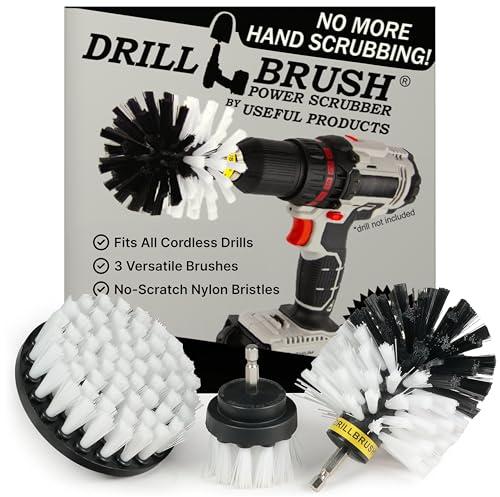
Chuck a soft nylon brush into a cordless drill and it stands the carpet nap up, breaking hair free of the weave far faster than any hand tool. Pair it with a shop vacuum and this is how a professional gets a dog's floor mats back to looking new — agitate a section, extract, move on.
Embedded hair
Exceptional
Speed
Exceptional
Area coverage
Strong
Durability
Strong
Value
Exceptional
Why we picked it
Fastest way to break hair out of a carpet weave
The same brushes do carpet shampooing and mat cleaning
Costs less than most hand tools and lasts for years
Good to know. Needs a drill and a vacuum to be any use at all
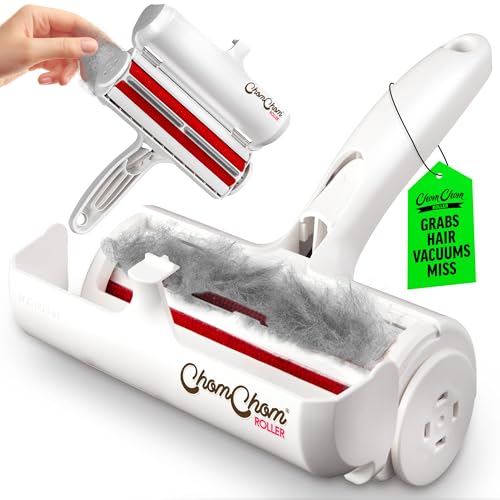
Roll it back and forth and the hair collects in an internal chamber you empty with a button — no adhesive sheets, no batteries, nothing to buy again. It is the fastest way to clear the surface layer of hair off a rear bench or a cargo liner, which is usually most of the visible problem.
Embedded hair
Adequate
Speed
Exceptional
Area coverage
Exceptional
Durability
Strong
Value
Strong
Why we picked it
Collects the hair instead of leaving it in piles
No sticky sheets or batteries to replace, ever
Covers a seat in a fraction of the time a hand paddle takes
Good to know. The body is bulky for footwells and under seats
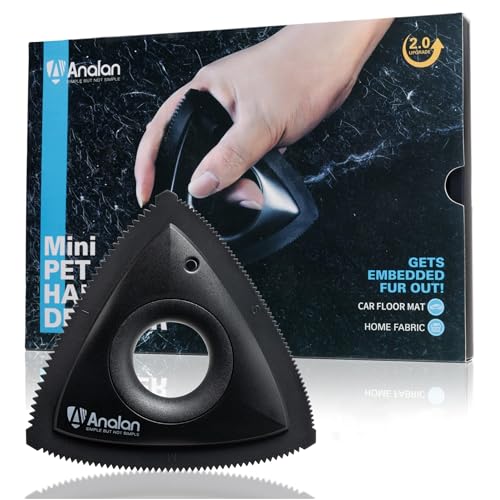
A small rubber-edged hand tool built for the same job as the Lilly Brush at a lower price, and in use the difference is edge quality and how long it stays sharp rather than whether it works. If you need a hair tool once a season, this is the sensible amount to spend.
Embedded hair
Strong
Speed
Adequate
Area coverage
Trade-off
Durability
Adequate
Value
Exceptional
Why we picked it
Does the embedded-hair job for the least money here
Small enough for seat gaps and footwell edges
Nothing to wear out but the edge itself
Good to know. Edge dulls faster than the Lilly Brush under regular use
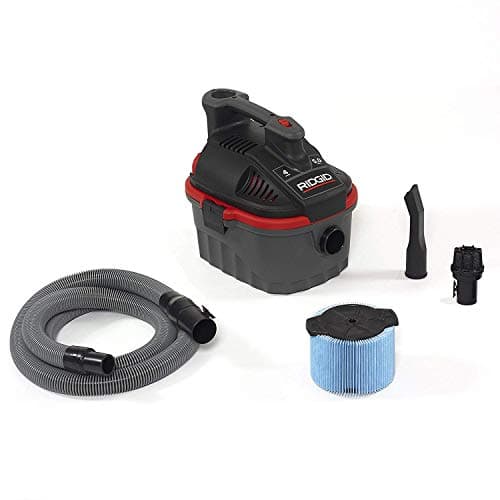
Four gallons, 5.0 peak horsepower, and a hose narrow enough to concentrate airflow where car work needs it. Wet capability matters if you ever extract carpets, and the compact size means it lives in the garage rather than the way.
Suction
Exceptional
Reach
Strong
Attachments
Strong
Value
Strong
Why we picked it
Genuine suction with a car-appropriate hose diameter
Wet pickup for carpet extraction
Built to survive a garage
Good to know. Corded, which is the real limitation
A rubber or silicone edge, not bristles. The edge is what gets under the nap. Nylon bristles sweep the surface; a flexible rubber blade digs.
Small enough for the real problem areas. Most of the hair is in the seat bolsters, the gap behind the seat base and the carpet edge under the sill — none of which a large tool can reach.
Nothing to buy again. Adhesive lint rollers are a subscription to a problem. Every tool here is reusable indefinitely.
Something that collects rather than scatters. Rake tools leave hair in piles you still have to vacuum; a roller puts it in a chamber. On a dark interior, piles you miss are worse than hair you never lifted.
A drill you already own. A drill brush set is the cheapest large jump in effectiveness on this page, and it is useless without a drill and a vacuum.
05
The sequence that actually clears a car
01Pull the floor mats out and do them outside the car. Most of the hair in any vehicle is in the mats, and they are vastly easier to work on the ground.
02Dry-rake the seats with a rubber-bladed tool, working in one direction, pulling hair toward a corner where you can grab it.
03Drill-brush the carpet and the mats, in overlapping passes, until the nap stands up.
04Vacuum everything, including the seat seams and under the seat rails. Use a crevice tool on the rails — hair collects there in ropes.
05Roll the seats with a ChomChom to lift the surface layer the raking released and the vacuum missed.
Done in this order a badly furred car takes about ninety minutes and the result lasts. Done in the usual order — vacuum, shampoo, give up — it takes the same ninety minutes and the hair is back next week.
06
Short hair is harder than long hair
This surprises people. A long-haired retriever leaves hair that tangles into clumps, sits loose on the surface and comes off with almost anything — a roller clears a seat in two minutes. A short-haired breed leaves stiff, straight, needle-like hairs a quarter of an inch long, and those behave like tiny splinters: they drive point-first into the weave and lodge there.
If you own a short-haired dog or a cat, the tool that matters is the one with a rubber edge, and you will be doing the slow version of this job. A roller will barely touch it. That is not a defect in the roller — it is the wrong physics for the problem, and it is the single most common reason people conclude that pet hair tools do not work.
Match the tool to the surface — the wrong one here does visible damage
Fabric
Best first tool
Why
Woven cloth seats
Rubber-blade hand paddle
Only thing that gets under the nap
Carpet and floor mats
Soft nylon drill brush
Speed, and mats can take the agitation
Velour or loose-weave trim
Rubber-blade hand paddle, light pressure
A drill brush will fuzz it
Leather and vinyl
Damp microfiber towel
Nothing for the hair to grip
Perforated leather
Soft detailing brush plus vacuum
A rake edge catches in the holes
Headliner
Vacuum with a soft brush head only
Adhesive-backed and easily ruined
07
The part that is not about looks
Pet hair carries dander, and dander is the actual allergen — not the hair itself. In a sealed cabin with the recirculation on, a furred interior is a concentrated dose for anyone in the car who reacts to it. That is a reason to do this job properly rather than cosmetically, and a reason to pull the cabin air filter and look at it while you are in there.
There is also a resale argument. A visibly furred interior reads as a neglected car to a buyer or an appraiser even when the mechanicals are perfect, and it is one of the few interior faults that is cheap and fast to fix before a sale. Ninety minutes with the tools on this page is the highest-return hour and a half of pre-sale work on most cars.
08
Leather, vinyl and the easy half of the car
None of these tools are for leather or vinyl, and none are needed there. Hair has nothing to grip on a smooth surface, so a damp microfiber towel removes all of it in one pass. Work from the top of the seat down so you are not dropping hair onto a surface you already cleaned, and finish with an interior cleaner if the seats need it.
The awkward in-between is perforated leather, where hair settles into the holes. A soft detailing brush and a vacuum nozzle held close is the answer — see the best detailing brushes. Do not rake perforated leather with a rubber-edged tool; the edge catches on the holes.
The air vents nobody checks
Pet hair ends up in the cabin air filter and in the vent louvers, which is why a thoroughly cleaned car can still smell like a dog and still shed hair onto a clean dashboard. A long soft brush through the vents and a look at the cabin filter is five minutes that changes the result.
09
Keeping it from coming back
Every tool on this page is remedial. The thing that actually works is a barrier: a fitted seat cover or a cargo liner the dog travels on, washed rather than detailed. A car used weekly by a shedding dog will never stay clear of hair, and the realistic goal is making the recovery a fifteen-minute job rather than a ninety-minute one.
Brushing the dog before a trip helps more than most people expect, and so does a single dedicated blanket. The full interior routine, pets or not, is in the car interior detailing guide.
10
Our recommendation
Buy this one
Lilly Brush Mini Pet Hair Detailer
A small plastic paddle with a flexible rubber blade around its edge, and it does the one thing a vacuum cannot: it reaches under the nap and lifts embedded hair out in rolls.
The Lilly Brush Mini Pet Hair Detailer, because its flexible rubber blade reaches under the fabric nap and lifts out hair woven into the weave — the part of the job a vacuum cannot do. For carpet and floor mats, a soft nylon drill brush does the same thing far faster.
Why won't my vacuum pick up dog hair from car seats?
Because the hair is hooked under the fabric nap, lying almost parallel to the surface, and a vacuum pulls straight up — the one direction it is anchored against. You have to rake it out sideways first, then vacuum.
Should you vacuum before or after using a pet hair brush?
After. Raking breaks the hair free of the weave and leaves it loose on the surface, which is what a vacuum is actually good at collecting. Vacuuming first mostly wastes the pass.
Does a drill brush damage car upholstery?
A soft nylon brush is safe on carpet, floor mats and durable woven upholstery, and it will fuzz delicate fabric or a loose weave. Never use one on a headliner. Test it for five seconds somewhere hidden and inspect closely before touching a visible panel.
How do you get pet hair out of car carpet?
Take the mats out and work them outside the car, agitate the nap with a soft drill brush or a rubber-edged rake until the hair stands up, then vacuum with a crevice tool along every edge and seam. Do this dry — wet hair in a weave is much harder to remove.
Do rubber pet hair brushes work on leather seats?
They are not needed. Hair has nothing to grip on smooth leather or vinyl, so a damp microfiber towel removes it in one pass. On perforated leather use a soft detailing brush with a vacuum nozzle close by, and keep rubber-edged tools away from the holes.
12
Sources
Every published figure on this page traces to one of these. Where a manufacturer does not publish a number, the page says so rather than estimating it.
Last reviewed October 12, 2026. Think a figure here is wrong? Tell us at contact@detailingandwax.com and we will check it, fix it and date the correction — see our editorial policy.