Independent picks for detailing your own car. We stock nothing, so we have nothing to move.
01
Polishers & correction
The best backing plates
The cheapest part of a polisher is the part that decides whether the pad turns. Here is which diameter you need, which thread your machine takes, and why a worn plate feels exactly like a worn machine.
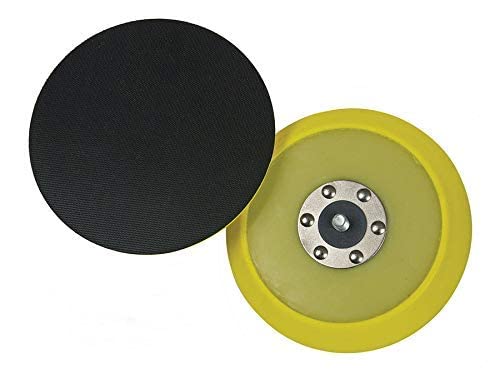
Our top pick: the Lake Country Dual-Action 5 in Flexible Backing Plate.
How this is funded: we earn an Amazon commission when you buy through our links, at no extra cost to you. We sell nothing and stock nothing, so a pick is never a product we are trying to move. Prices are pulled live from Amazon and were last checked November 19, 2026; where we cannot verify a price we say so rather than print an old one. Full disclosure.
Research-basedPicked from published manufacturer specifications and the consistent pattern across verified-purchase owner reports. Every product here scores 8.4 or better on our rubric.How we pick
Best backing plateLake Country
Lake Country Dual-Action 5 in Flexible Backing Plate
The plate most detailers end up on, and for a structural reason rather than a brand one: Lake Country build a flexible urethane face over an inner steel core, so the face conforms to a curved panel while the hub stays rigid where the spindle loads it.
Tap any row for the full write-up. Prices come straight from Amazon and are never typed in by hand.
The verdict
The Lake Country 5 in plate is the pick: a flexible urethane face over an inner steel core, on the 5/16 in thread almost every dual action polisher sold today uses, for less than the premium plates. Meguiar's DBP5 is the one to buy if you want the fit published by the manufacturer rather than by retailers, and it adds a rotation indicator that tells you at a glance whether the pad has stalled. The Chemical Guys 3 in is the plate that actually changes what your machine can do, because it reaches the panels a 5 in pad cannot sit flat on. The Maxshine 5 in is the budget pick and the only plate here with a published speed ceiling. Buy the RUPES 125 mm plate only if you own a RUPES — it is M8, not 5/16 in.
02
What a backing plate does, and why a worn one feels like a worn machine
A dual action polisher drives a spindle. Everything that touches your paint hangs off a disc screwed onto that spindle, and that disc is the backing plate. It carries the pad, it transfers the orbit and the rotation into the foam, and it is the only part of the drivetrain that flexes on purpose.
That last point is the one people miss. A backing plate is a compliant component. The face is meant to deform so a flat disc can follow a curved fender, and the hub is meant to stay rigid so the spindle load does not wander. When a plate is past its life, the face has gone stiff or the hub has gone loose, and in both cases the symptom is the same: the machine vibrates, the pad stops rotating under light pressure, and the correction rate falls off a cliff. Almost everyone who concludes their polisher is tired has a tired plate instead, and it is the cheapest part on the machine.
The second thing a plate decides is reach. A 5 in plate cannot sit flat on an A-pillar, and a 6 in plate is a handful on a door. A plate is therefore not an accessory you buy once — it is the part you change to match the panel, which is why the sensible answer for most people is two plates rather than the best one.
03
The criteria, in the order they decide the purchase
This category is small, cheap and almost completely undocumented, so the ranking below is built on what is actually verifiable about each plate rather than on marketing language that is identical across all six.
01Thread, before anything else. Most dual action polishers take a 5/16 in spindle accessory. RUPES machines take an M8 bolt. A plate on the wrong thread is not a compromise, it is a return, so this criterion is a gate rather than a score.
02Diameter, matched to the pad and the panel. A 5 in plate takes 5.5 in pads, a 6 in plate takes 6.5 in, and a 3 in plate takes 3.5 in. Overhang of about half an inch is the design intent; more than that and the pad edge is unsupported.
03Face flex over hub rigidity. The two have to be separate. A plate that flexes everywhere wanders; a plate that flexes nowhere fights the panel. A steel or composite core under a compliant face is the structure to look for.
04Whether the maker publishes anything at all. One plate here publishes a speed ceiling, one publishes the spindle fit on the maker's own site, and one ships the correct bolt in the box. The rest leave all of it to retailers.
05Price, last and genuinely last. The spread across this whole page is smaller than the price of one decent compound, and a plate that does not fit your machine is expensive at any price.
04
Thread: the one specification that is a gate, not a preference
Dual action polishers settled on a 5/16 in spindle thread years ago, and that is why a Lake Country plate fits a Griot's, a Porter-Cable, a Chemical Guys TORQ and most of the cordless machines sold today. It is not a universal standard, though, and the exception matters because it belongs to the most desirable machines in the category: RUPES BigFoot polishers mount on an M8 bolt.
What threads onto what — check your machine before you order
Mount
Machines
Plates here
5/16 in spindle accessory
Griot's G8 and G9, Porter-Cable 7424XP, Chemical Guys TORQX, Meguiar's DA, most cordless DA machines
Lake Country 5 in, Meguiar's DBP5, Maxshine 5 in
M8 bolt
RUPES BigFoot 125 mm machines
RUPES 125 mm
Not published by the maker
Chemical Guys sell the TORQ R5 plates for their own machines and for DA polishers generally, but publish no thread figure
Chemical Guys 6 in, Chemical Guys 3 in
If you do not know what your machine takes, the fastest answer is the plate already on it: unscrew it and look at the hole, or check the manual's accessory list. A 5/16 in plate will start onto an M8 bolt and bind, and forcing it damages both parts. Two of the plates here come from a maker who publishes no thread figure at all, which is why they sit mid-page despite being good plates — an unpublished fit is a real risk to the buyer, not a rounding error.
05
The ranked backing plates
Ordered on fit and structure first, then on what the maker actually publishes, then on price. Prices are live from Amazon.
No. 01Lake CountryCategory-definingOwner reports
Lake Country Dual-Action 5 in Flexible Backing Plate
Best for: The default 5 in plate for almost any DA polisher
The plate most detailers end up on, and for a structural reason rather than a brand one: Lake Country build a flexible urethane face over an inner steel core, so the face conforms to a curved panel while the hub stays rigid where the spindle loads it. That combination is what keeps a plate from going eccentric after a season of correction work, and it is why this is the plate sold as the replacement part for half the machines in this category.
Flex
Exceptional
Build
Exceptional
Compatibility
Exceptional
Value
Exceptional
Why we picked it
Flexible face over a steel core — conforms to curves without losing hub rigidity
Fits the 5/16 in spindle used by most DA polishers sold today
The de facto replacement plate for several machines, so it is always in stock somewhere
Cheaper than the Meguiar's plate it competes most directly with
Good to know. It is a 5 in plate for 5.5 in pads — check your machine takes a 5/16 in spindle accessory before ordering.
Published specifications
Diameter
5 in
Pad size
5.5 in pads
Thread
5/16 in — fits any polisher taking a 5/16 in spindle accessory
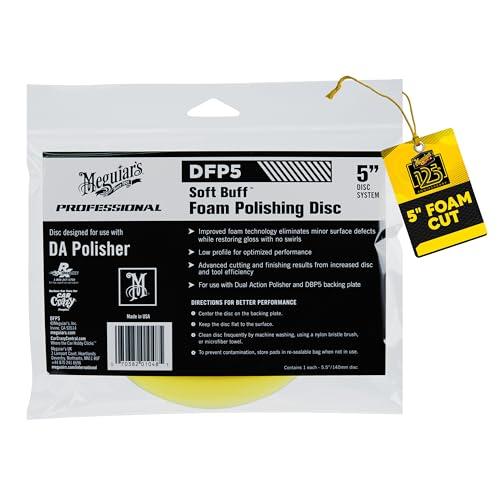
The one plate in this group whose maker publishes the fit on their own site rather than leaving it to retailers: Meguiar's state the 5/16 in spindle, and the plate carries a printed rotation indicator so you can see at a glance whether the pad is still turning. That sounds like a detail until you are working a vertical panel at speed three and cannot tell whether the pad has stalled, which is the most common reason a dual action quietly stops cutting.
Flex
Strong
Build
Exceptional
Compatibility
Exceptional
Value
Strong
Why we picked it
Meguiar's publish the spindle fit on their own product page
Rotation indicator makes a stalled pad obvious without stopping the machine
Designed around the Soft Buff pad line, so pad-to-plate overhang is correct
Sold at auto parts counters as well as online, so a same-day replacement is realistic
Good to know. You are paying a premium over the Lake Country plate for documentation and the rotation marking, not for a different build.
Published specifications
Diameter
5 in
Pad size
5.5 in Soft Buff pads
Thread
5/16 in spindle (listed by retailers as 5/16 in-24)
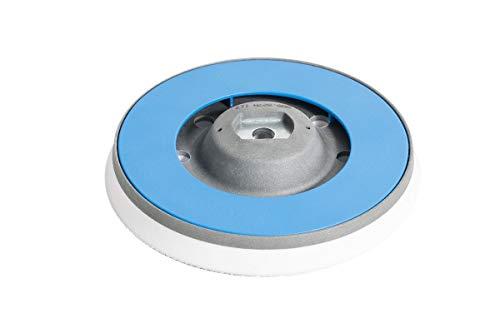
The correct replacement plate for a 125 mm BigFoot, and the only plate here that does not use the 5/16 in thread the rest of the category standardized on — RUPES machines mount on an M8 bolt, which ships with the plate. On a long-throw machine the plate is a balance component as much as a mount, so this is one of the few cases where the original part is the sensible purchase rather than a brand tax.
Flex
Strong
Build
Exceptional
Compatibility
Good
Value
Good
Why we picked it
The right plate for a 125 mm BigFoot, balanced for a long-throw machine
M8 bolt is in the box — no hunting for the fastener separately
Hook-and-loop face takes the same pads as every other plate on this page
On a 15 mm machine, plate balance is a real performance factor rather than a detail
Good to know. M8, not 5/16 in — this plate fits RUPES machines and will not thread onto most other polishers.
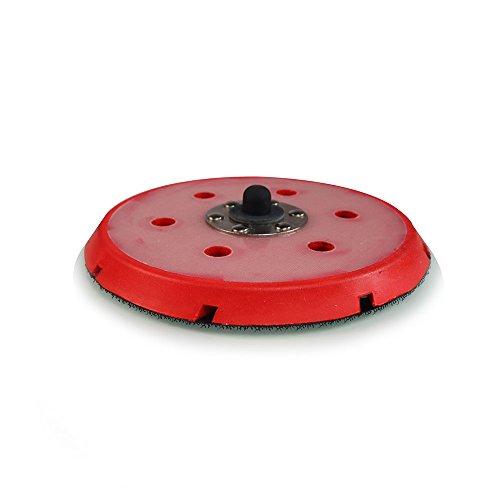
The plate you need if you have decided to cover ground with 6.5 in pads rather than chase precision with small ones. Chemical Guys call the face Hyper Flex and it is noticeably softer than the 5 in plates here, which is the right call at this diameter — a stiff 6 in face would fight every curve on the car. Expect to feel the extra leverage in your wrists by the end of a hood.
Flex
Exceptional
Build
Strong
Compatibility
Good
Value
Exceptional
Why we picked it
Covers meaningfully more paint per pass than a 5 in plate
Softest face of the full-size plates here, which suits the larger diameter
The same plate family is sold in 3 in and 6 in, so one system covers the whole car
Among the cheapest full-size plates in the category
Good to know. Six inches is only an upgrade on a machine with the power to turn it — on an entry-level polisher it is a downgrade.
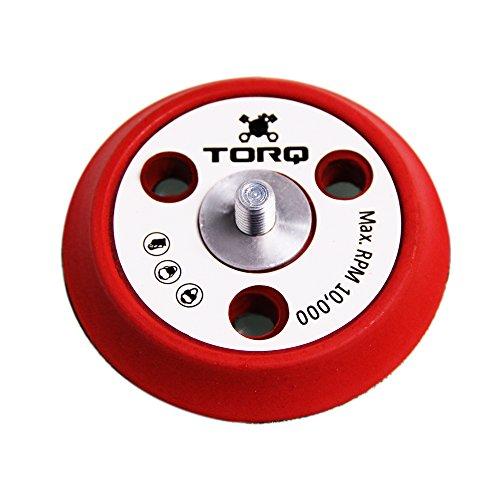
The second plate most people should own, and the one that turns a full-size dual action into a machine that can actually finish a whole car. A 3 in plate with a 3.5 in pad gets onto A-pillars, mirror caps, the strip under a door handle and the narrow panel behind a rear wheel arch — all places where a 5 in pad either will not sit flat or will catch an edge.
Flex
Strong
Build
Strong
Compatibility
Good
Value
Exceptional
Why we picked it
Reaches the panels a full-size pad physically cannot sit flat on
The least expensive way to add a capability the machine does not otherwise have
Same Hyper Flex family as the 6 in, so pads and feel carry over
Makes a long-throw machine usable near badges and trim
Good to know. A 3 in plate is an addition to a 5 in plate, not an alternative to one.
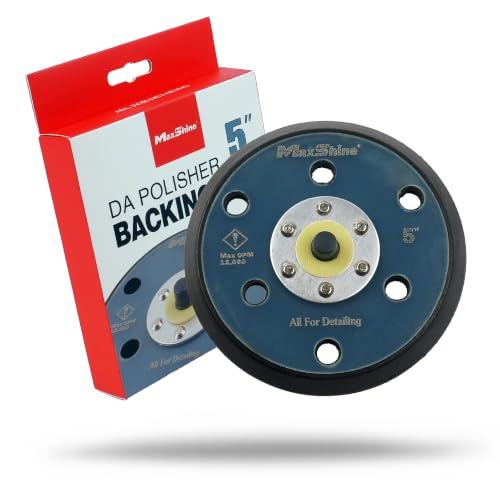
The cheapest full-size plate here and, unusually for the price, the only one that publishes a speed limit: Maxshine list it as supporting up to 12,000 OPM on a 5/16 in thread. A published ceiling is worth more than it looks on a spec sheet, because the way a cheap plate fails is at speed — the hub works loose, the plate runs eccentric, and the vibration arrives before you work out the cause.
Flex
Strong
Build
Good
Compatibility
Exceptional
Value
Exceptional
Why we picked it
Cheapest 5 in plate on this page by a clear margin
The only plate here with a published OPM ceiling
5/16 in thread covers most dual action polishers sold today
Cheap enough to own two, which is how you keep a cutting pad and a finishing pad ready
Good to know. Treat it as a spare or a second plate rather than the one plate you keep for years.
The honest answer for a home detailer correcting their own cars is two: a full-size plate for panels and a 3 in plate for everything else. The reason is geometry rather than preference.
Plate diameters and the panels they suit
Plate
Pad
What it is for
Where it fails
3 in
3.5 in
A-pillars, mirror caps, bumper corners, behind wheel arches, under door handles
Hoods and roofs — too slow, and heat builds on a small contact patch
5 in
5.5 in
The default: doors, fenders, quarters, hood, roof
Nothing much, which is why it is the default
6 in
6.5 in
Large flat panels on big vehicles, where coverage per pass is the constraint
Curves, vertical panels, and underpowered machines
Going up from 5 in to 6 in buys coverage and costs control. The pad is heavier, the leverage against your wrist is longer, and a curved panel loads the outer edge of the foam first, which is where a long-throw machine starts hopping. Going down from 5 in to 3 in costs coverage and buys access, and access is the thing most people are short of — the panels that look wrong after a correction day are almost always the ones a 5 in pad could not sit flat on. What size polishing pad should you use? works through the pad side of the same decision.
One rule holds in both directions: match the pad to the plate, not to the machine. A 6.5 in pad on a 5 in plate leaves three quarters of an inch of unsupported foam that will tear at the edge and will not transfer the orbit cleanly. A 5.5 in pad on a 6 in plate exposes the plate's hook-and-loop face to the paint, which is exactly as bad as it sounds.
07
How a backing plate actually dies
Plates fail in three ways, and all three are gradual enough to be mistaken for something else.
The hook-and-loop face wears. Hooks flatten with heat and use, and a pad that can be twisted off by hand is a pad that is slipping under load. This is the most common failure and the easiest to check: mount a pad, hold the plate, and try to rotate the pad by hand. It should not move.
The hub loosens. The plate still looks fine and the machine now vibrates at every speed. On a plate with a steel core this takes years; on a cheap plate it can happen in a season of heavy correction work.
The face goes stiff or distorts. Heat is the culprit, usually from working a small pad on a large plate or from leaning on the machine in one spot. A distorted plate will not run true, and a plate that does not run true transmits vibration into the paint instead of orbit.
The test for all three takes a minute. Spin the plate by hand with the machine unplugged and look along the face for wobble. Mount a pad and try to twist it. Then run the machine at a low speed with no pressure and watch the pad: it should rotate steadily. If it stalls with nothing but its own weight on it, the plate is done — and replacing it is cheaper than any other fix you could try.
How long should one last?
Nobody publishes a figure, so we will not invent one. What is verifiable is the failure order: on every plate here, the hook-and-loop face is the first thing to go, which means the practical life of a plate is the life of its hooks. That is also why the price spread on this page is rational rather than cosmetic — the Lake Country plate's steel core protects the hub, and the Maxshine's low price makes the face disposable. Both are reasonable answers to the same problem.
08
Fitting and removing a plate without damaging the spindle
01Unplug the machine, or take the battery out. A polisher that starts while your hand is on the plate is a hospital visit.
02Lock the spindle if the machine has a lock. If it does not, hold the plate firmly — never jam a screwdriver into the fan or the housing to stop it turning.
03Thread the plate on by hand until it seats, then nip it up. Hand tight plus a firm turn is correct; a plate torqued down with a wrench is a plate you will have to destroy to remove.
04On a RUPES, fit the supplied M8 bolt rather than a substitute. The bolt is part of the balance of the assembly on a long-throw machine.
05Spin it by hand and look for wobble before you put a pad on. A plate that wobbles unloaded will wobble worse loaded.
09
What this means for the rest of your setup
A plate is the cheapest upgrade in this category and the one most likely to be mistaken for a machine problem, so it is worth saying plainly: if your polisher has started to feel slow, change the plate before you shop for a polisher. If it still feels slow afterwards, the problem is the pad and compound pairing rather than the hardware, and the best polishing pads and the best polishing compounds are where that decision gets made.
If you are buying a plate because you are buying a machine, buy the plate with the machine and buy a 3 in alongside it. The full-size plate in the box is usually adequate; the small one is the part that will not be in the box and the part that makes the difference on the panels people notice. The best dual action polishers covers the machine side, and how many polishing pads do you need? covers how many pads each plate wants behind it.
10
Our recommendation
Buy this one
Lake Country Dual-Action 5 in Flexible Backing Plate
The plate most detailers end up on, and for a structural reason rather than a brand one: Lake Country build a flexible urethane face over an inner steel core, so the face conforms to a curved panel while the hub stays rigid where the spindle loads it.
The one plate in this group whose maker publishes the fit on their own site rather than leaving it to retailers: Meguiar's state the 5/16 in spindle, and the plate carries a printed rotation indicator so you can see at a glance whether the pad is still turning.
The Lake Country 5 in plate, for most people and most machines. It uses the 5/16 in thread almost every dual action polisher takes, the face is flexible urethane over an inner steel core so it conforms to curves without the hub wandering, and it costs less than the premium alternatives. If you would rather have the fit published by the manufacturer than by retailers, Meguiar's DBP5 publishes its 5/16 in spindle fit and adds a printed rotation indicator.
What size backing plate do I need?
A 5 in plate for 5.5 in pads is the default and handles every panel on a normal car. Add a 3 in plate for 3.5 in pads and you can reach A-pillars, mirror caps, bumper corners and the strip under door handles, which is where most correction jobs visibly fall short. A 6 in plate is only worth it on large flat panels and only on a machine with the power to turn it.
Will any backing plate fit my polisher?
No, and this is the one specification to check before ordering. Most dual action polishers take a 5/16 in spindle accessory, which is why one plate fits a Griot's, a Porter-Cable and a Chemical Guys TORQ. RUPES BigFoot machines mount on an M8 bolt instead and need a RUPES plate. A 5/16 in plate will start onto an M8 bolt and bind, so forcing it damages both parts.
How do I know when a backing plate is worn out?
Three checks, all of which take a minute. Mount a pad and try to twist it by hand: if it moves, the hook-and-loop face is finished. Spin the plate by hand with the machine off and look along the face for wobble. Then run the machine slowly with no pressure and watch the pad: if it stalls under its own weight, the plate is done. A worn plate feels exactly like a worn machine, and it is the cheapest part to replace.
Can you use a 5.5 inch pad on a 6 inch backing plate?
You can mount it, but you should not use it. The pad needs to overhang the plate by roughly half an inch so the plate's edge never touches paint. A 5.5 in pad on a 6 in plate leaves the hook-and-loop face exposed at the rim, which will mark paint the moment the machine tips. Match the pad to the plate: 3.5 in on a 3 in plate, 5.5 in on a 5 in, 6.5 in on a 6 in.
How tight should a backing plate be?
Hand tight plus a firm turn, with the spindle locked or the plate held. A plate torqued down with a wrench, or tightened while the machine is hot, is a plate that binds as it cools and often has to be destroyed to remove. If one has already seized, let the machine cool fully and use steady pressure with a strap wrench rather than a shock load.
Does a backing plate affect how well a polisher cuts?
Yes, more than most people expect. The plate transfers the orbit into the foam, so a stiff, distorted or loose plate turns machine movement into vibration instead of pad rotation, and a pad that stops rotating stops cutting. That is why a tired plate is the first thing to check when a polisher starts to feel slow, and why it is worth replacing before buying pads or a new machine.
Do I need a separate backing plate for a 3 inch pad?
Yes. A 3.5 in pad on a 5 in plate leaves the plate's rim unsupported and exposed, and the pad will tear at the edge. A 3 in plate is also among the cheapest items on this page, so there is no good reason to improvise — and it is the addition that most changes what a full-size machine can reach.
12
Sources
Every published figure on this page traces to one of these. Where a manufacturer does not publish a number, the page says so rather than estimating it.
Last reviewed November 17, 2026. Think a figure here is wrong? Tell us at contact@detailingandwax.com and we will check it, fix it and date the correction — see our editorial policy.