Independent picks for detailing your own car. We stock nothing, so we have nothing to move.
01
Washing & decon
What PSI pressure washer do you need for a car?
Between 1200 and 1900 PSI is plenty, and anything over 2200 is a liability near trim. The number that actually matters is GPM, and almost nobody checks it.
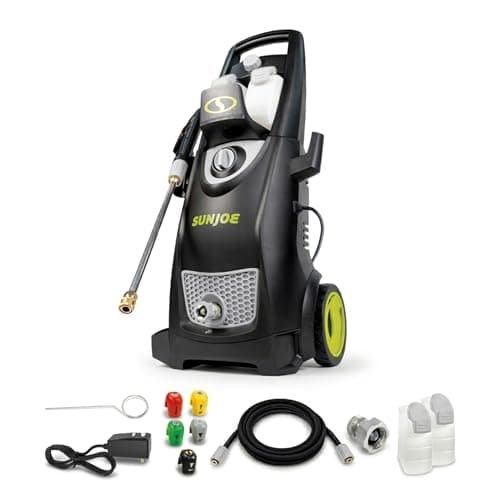
Featured here: the Sun Joe SPX3000 Electric Pressure Washer.
How this is funded: we earn an Amazon commission when you buy through our links, at no extra cost to you. We sell nothing and stock nothing, so a pick is never a product we are trying to move. Prices are pulled live from Amazon and were last checked November 19, 2026; where we cannot verify a price we say so rather than print an old one. Full disclosure.
Research-basedPicked from published manufacturer specifications and the consistent pattern across verified-purchase owner reports. Every product here scores 8.4 or better on our rubric.How we pick
Top pickSun Joe
Sun Joe SPX3000 Electric Pressure Washer
2500 max PSI, dual detergent tanks, and a price that has made this the most common car-detailing pressure washer in American driveways.
Our score9.1Best for: the default first pressure washer for car work
For washing a car, 1200 to 1900 PSI at the nozzle is plenty, and 1.2 GPM or more is the specification that actually determines whether the machine is any good at it. Most consumer electric washers rated 1800 to 2000 PSI are the right class. Pressure above about 2200 PSI buys nothing on paint and starts to be a genuine risk around trim, badges and failing clear coat.
02
The honest answer, and the number nobody checks
Pressure washers are sold on PSI because it is the biggest number on the box. For car washing it is the less important of the two specifications. PSI is force; GPM is volume. Rinsing a car is a volume job — you are carrying dirt off the surface in moving water, not blasting it off — and a high-pressure, low-flow machine does that worse than a moderate-pressure, higher-flow one.
It matters twice over, because a foam cannon is also a flow device. The cannon mixes air, water and soap in a chamber and the thickness of the foam it produces depends far more on flow through that chamber than on raw pressure. A 2300 PSI machine at 1.0 GPM will make thinner foam than an 1800 PSI machine at 2.0 GPM.
The two numbers that matter, and the four that help
Specification
What it does
What to look for on a car
PSI
Force at the nozzle
1200 to 1900 at the nozzle; up to 2000 rated is fine
GPM
Water volume per minute
1.2 minimum, 1.4 or more is better, 2.0 is plenty
Nozzle angle
Spreads or concentrates the force
40 degree white or a 25 degree green; never 0 degree red
Motor type
Induction motors run cooler and longer
Induction over universal if the budget allows
Hose length
How far you move the machine
25 ft or more saves repositioning
Foam cannon fitting
Whether your cannon connects
Confirm the quick-connect standard before buying either
03
Machines in the right class for a car
Four electric washers whose published pressure and flow suit car washing and foam cannon use. Prices are live from Amazon.
Sun JoeOutstandingSpec-verified
Sun Joe SPX3000 Electric Pressure Washer
Best for: The default first pressure washer for car work
2500 max PSI, dual detergent tanks, and a price that has made this the most common car-detailing pressure washer in American driveways. For washing a car it is more than enough machine — car work is about flow and consistency rather than raw pressure.
Pressure
Strong
Flow
Good
Build
Adequate
Value
Exceptional
Why we picked it
Far more machine than car washing requires
Two detergent tanks for soap and pre-wash
The cheapest credible entry into pressure washing
Good to know. Sun Joe's listed flow rate was not verifiable
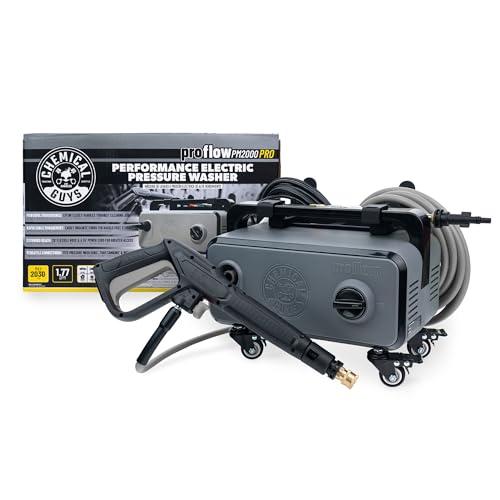
1.77 GPM is the highest flow rate in this group, and flow is what carries grit off the paint and feeds a foam cannon. The 2030 PSI sits in the range a car actually wants rather than above it, and the 25 ft hose and casters decide how often you move the machine instead of the car.
Pressure
Strong
Flow
Exceptional
Build
Good
Value
Strong
Why we picked it
1.77 GPM is the highest flow rate of any machine here
2030 PSI is in the range a car wants rather than above it
25 ft hose and 360-degree casters, so the machine follows you round the car
Good to know. Still under the 2.0 GPM that makes cannon foam noticeably thicker
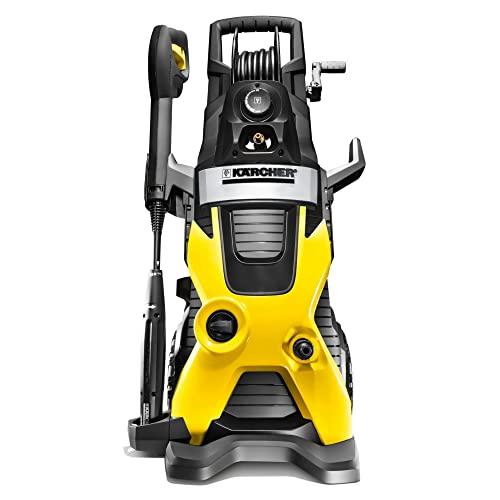
Karcher builds the water-cooled induction motors that outlast the universal motors in budget machines, and the K5 Premium is where that starts in their consumer range. 2000 PSI at 1.43 GPM, a non-corrosive N-COR pump, and the best build quality of anything here.
Pressure
Good
Flow
Strong
Build
Exceptional
Value
Adequate
Why we picked it
Water-cooled induction motor built to last years
1.43 GPM clears the foam-cannon minimum comfortably
Onboard hose reel and detergent tank, and the best build quality in this group
Good to know. Roughly twice the price for no better car washing
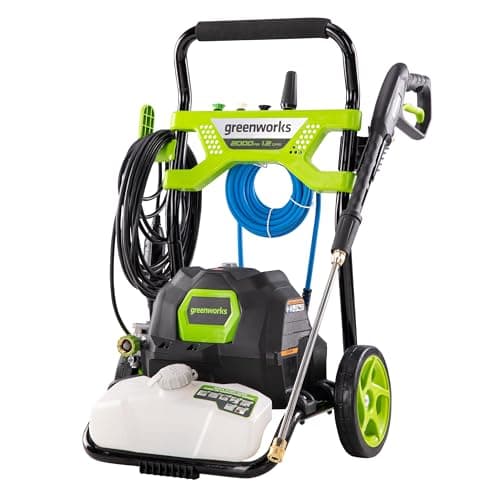
2000 PSI and 1.2 GPM is the common middle ground: enough pressure for general cleaning, enough flow for a foam cannon to work properly. If this machine has to do more than cars, this is the sensible shape.
Pressure
Strong
Flow
Good
Build
Strong
Value
Strong
Why we picked it
Genuinely useful for jobs other than cars
Reliable brand with real parts availability
Priced between the budget and detailing machines
Good to know. No published detergent tank specification
Healthy, intact clear coat tolerates the pressures above without trouble. What gets damaged is everything that is already compromised: lifting clear coat, stone-chipped edges, aged badge adhesive, perished window and door seals, and plastic trim that has gone brittle. A 0 degree red nozzle held close will also mark sound paint, which is why that nozzle has no place in car washing at all.
Use a `40` degree (white) or `25` degree (green) nozzle. Never the 0 degree red one.
Keep roughly `12` inches of distance from paint, more around badges and emblems.
Never aim into a panel gap, a seal, or a wheel arch liner from close range.
Keep the lance moving. A stationary jet concentrates everything in one spot.
Stay off chipped and flaking areas. High pressure will lift a failing edge further.
05
Gas or electric
Electric, for a car. Gas pressure washers start around 2700 PSI and go up sharply, they are noisy, they need fuel and servicing, and the extra pressure is of no use on paint. Their advantage is flow and duty cycle, which matters for driveways and siding rather than vehicles. If you need one machine for both jobs, an electric unit around 2000 PSI and 1.4 GPM is the better compromise than a gas unit throttled down.
Check the water supply, too. Electric washers draw from a garden tap and an under-supplied pump cavitates — the symptom is pulsing pressure and poor foam. A full-bore tap and a decent inlet hose fix more foam problems than a different cannon does.
06
What this means for a foam cannon
A foam cannon needs a pressure washer. On a garden hose it will produce thin suds that run straight off, which is what foam cannon vs foam gun exists to explain. With a machine in the class above, the limiting factors become soap concentration and the cannon's orifice size rather than the washer.
No, and it is worth being honest about that before spending the money. A careful two-bucket hand wash with a good mitt and a pre-rinse from a hose will keep a car's paint in better condition than a pressure washer used carelessly. The machine buys you one specific thing: the ability to remove most of the grit before anything touches the paint.
That is a real benefit and it is the main reason pressure washers appear on a detailing site at all. The pre-rinse and the foam stage between them mean the contact wash starts on a far cleaner surface, and the contact wash is where essentially all swirl marks are created — see how to wash a car without scratching it.
08
Accessories worth budgeting for
A foam cannon, which is the main reason most people buy the machine in the first place.
A `40` degree nozzle, if the machine ships with an adjustable lance rather than separate tips.
A longer hose, because a 20 foot hose means moving the machine three times per car.
A brass quick-connect adapter, since several brands use proprietary fittings and a cannon bought separately may not fit.
A hose filter, if your water supply carries grit. A pump damaged by inlet debris is not a warranty claim.
Check the fitting standard before buying either the washer or the cannon. The single most common complaint about foam cannons is that the cannon does not attach to the machine, and that is nearly always a quick-connect mismatch rather than a fault in either product.
09
Our recommendation
Buy this one
Sun Joe SPX3000 Electric Pressure Washer
2500 max PSI, dual detergent tanks, and a price that has made this the most common car-detailing pressure washer in American driveways.
Between 1200 and 1900 PSI at the nozzle is plenty for washing a car. Most consumer electric machines rated 1800 to 2000 PSI sit in the right class. Above about 2200 PSI you gain nothing on paint and start risking trim, badges and any clear coat that is already failing.
Is 2000 PSI too much for a car?
No, used sensibly. A 2000 PSI rating is pump output under test conditions, and with a 40 degree nozzle at about a foot of distance the pressure reaching the panel is far lower. What causes damage is a narrow nozzle held close, not the rating on the box.
Does GPM matter more than PSI for washing a car?
Yes. Rinsing is a volume job and a foam cannon is a flow device, so gallons per minute determines both how well the machine rinses and how thick its foam is. Look for 1.2 GPM as a minimum and 1.4 or more if you can.
What PSI does a foam cannon need?
Most foam cannons are specified from around 1000 PSI upward, but flow matters more: 1.2 GPM or better is what produces thick, clinging foam. A high-pressure, low-flow machine makes disappointing foam no matter what the pressure rating says.
Can a pressure washer damage car paint?
Intact clear coat handles sensible car-washing pressures fine. What gets damaged is already-compromised paint, chipped edges, old badge adhesive and perished seals. The real rule is never to use a 0 degree nozzle and never to hold the lance close and still.
11
Sources
Every published figure on this page traces to one of these. Where a manufacturer does not publish a number, the page says so rather than estimating it.
Last reviewed October 11, 2026. Think a figure here is wrong? Tell us at contact@detailingandwax.com and we will check it, fix it and date the correction — see our editorial policy.