How this is funded: we earn an Amazon commission when you buy through our links, at no extra cost to you. We sell nothing and stock nothing, so a pick is never a product we are trying to move. Prices are pulled live from Amazon and were last checked October 5, 2026; where we cannot verify a price we say so rather than print an old one. Full disclosure.
Research-basedPicked from published specifications and the pattern across verified-purchase reports. We have not used these ourselves and do not pretend otherwise.How we pick
A foam cannon lays a thick layer of soap over the car so that loose grit is softened and floated off before a wash mitt touches the paint. Used well it removes most of what would otherwise cause swirl marks. Used badly it makes a mess and achieves very little.
02
Setting it up
01Check the fitting. Most consumer cannons use a 1/4 in quick connect. Karcher machines need an adapter — buy it with the cannon.
02Add [snow foam](/washing/best-snow-foams) to the empty bottle first, then fill with warm water. Water first gives you a bottle of bubbles and a weak mix.
03Start at the manufacturer's ratio — typically a few ounces in a one-liter bottle.
04Set the cannon's ratio dial to maximum for the first run, then dial back if the foam is excessive.
05Set the fan wide rather than narrow. You want coverage, not pressure.
03
What this needs
A cannon, a dedicated snow foam, and the pressure washer behind both. Prices are live from Amazon.
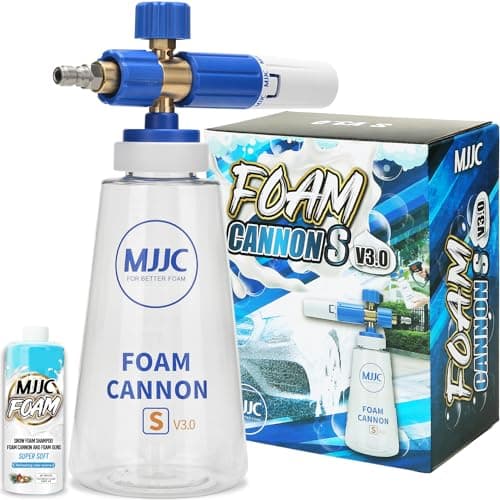
MJJC make the cannon that the rest of the market is measured against, and the S V3.0 produces foam that genuinely clings rather than sliding. Brass internals and a quarter-inch quick connector mean it fits almost any consumer pressure washer.
Who should skip it. Anyone without a pressure washer. A cannon needs the pressure and flow a machine produces, and on a garden hose it does nothing at all.
Foam thickness
9.5
Build
9.0
Adjustability
9.0
Value
7.5
What works
The thickest, longest-clinging foam in this group
Brass internals rather than plastic
Universal quarter-inch fitting
What does not
Useless without a pressure washer
Most expensive cannon here
MJJC does not publish a bottle capacity we could verify
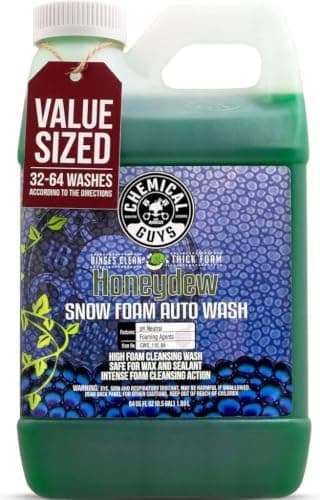
Honeydew is built for a foam cannon rather than a bucket, and the difference shows: it clings to vertical panels long enough to actually lift grit rather than sliding off in thirty seconds. That dwell time is the entire value of a pre-wash.
Who should skip it. Contact washing. It is a pre-wash product, and using it as your bucket soap wastes both the foam and the money.
Lubricity
7.5
Cleaning
8.5
Suds
9.5
Coating safe
9.0
Value
8.0
What works
Clings to vertical panels, which is what buys dwell time
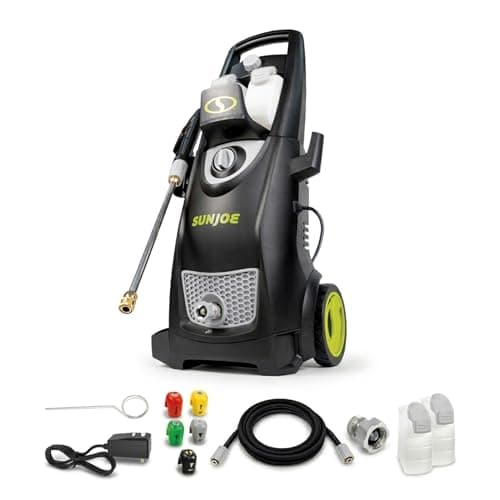
2500 max PSI, dual detergent tanks, and a price that has made this the most common car-detailing pressure washer in American driveways. For washing a car it is more than enough machine — car work is about flow and consistency rather than raw pressure.
Who should skip it. Heavy or continuous use. The induction motor and plastic fittings are built to a price, and owner reports describe the hose connections as the first thing to fail.
Pressure
8.5
Flow
7.0
Build
6.5
Value
9.5
What works
Far more machine than car washing requires
Two detergent tanks for soap and pre-wash
The cheapest credible entry into pressure washing
What does not
Plastic hose fittings are the common failure point
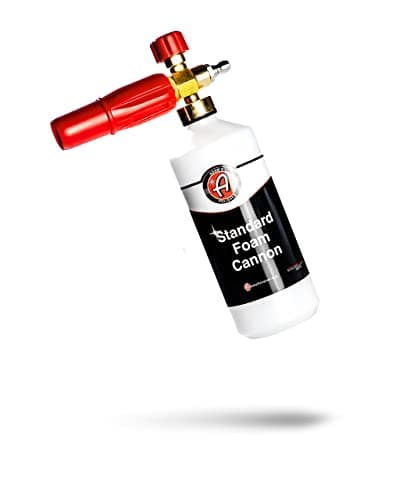
Solid, predictable foam and the best customer support in the category — which matters for a product with seals and o-rings that eventually need replacing. Adam's will send you parts, which the generic brands will not.
Who should skip it. Chasing maximum foam thickness. MJJC makes thicker foam, and if that is your measure you should buy that instead.
Foam thickness
8.0
Build
8.5
Adjustability
8.0
Value
7.5
What works
Parts and support actually available years later
Consistent, predictable foam
Standard quarter-inch fitting
What does not
Not as thick as the MJJC foam
Adam's does not publish internals or bottle capacity
Rinse the whole car before foaming, top to bottom. It removes the loosest material and, more importantly, it wets the surface so the foam clings rather than soaking straight into dry dust. Thirty seconds, and the foam performs noticeably better.
05
Foam bottom to top
This is the part people get backwards. Foam the lower panels first and work upward, for two reasons: the lower third is dirtiest and benefits from the longest dwell, and foam applied to the roof runs down over the panels below and re-coats them anyway.
01Start at the rockers and lower doors.
02Work up the sides, then the hood and trunk.
03Roof last, letting it run down.
04Cover the whole car, including the glass and the gaps.
05Do not foam the wheels with your paint soap — they get a dedicated cleaner and they go first in the overall sequence.
06
Rinse top to bottom
The reverse of the application order, because you want dirty water running down over panels that are still to be rinsed rather than over clean ones. Hold the nozzle about a foot away and use a wide fan.
Then the contact wash, with two buckets and a deep-pile mitt. The foam made that wash safer; it did not replace it — see foam cannon vs hand wash.
Bottom to top when applying, so the dirtiest panels get the longest dwell and the roof's foam runs down to re-coat them. Then rinse top to bottom, so dirty water runs over panels you have not rinsed yet rather than ones you have.
How long should foam sit on a car?
Three to five minutes, and never until it dries. The dwell is where the soap softens dirt and floats grit off. Dried soap is harder to remove than the dirt it was working on, so work in the shade on a cool car.
Do you put water in a foam cannon?
Yes — soap into the empty bottle first, then fill with warm water. Doing it the other way round gives you a bottle of bubbles and a weaker mix. The pressure washer supplies the rest of the water through the cannon.
Why is my foam cannon not foaming?
Most often flow rate — a cannon needs around 1.4 GPM. After that, check that you are using a dedicated snow foam rather than bucket soap, that the ratio dial is turned up, that the water is warm, and that the mesh insert is not clogged.
09
Sources
Every published figure on this page traces to one of these. Where a manufacturer does not publish a number, the page says so rather than estimating it.
Last reviewed October 5, 2026. Think a figure here is wrong? Tell us at contact@detailingandwax.com and we will check it, fix it and date the correction — see our editorial policy.