Independent picks for detailing your own car. We stock nothing, so we have nothing to move.
01
Polishers & correction
The best detailing inspection lights
Your polisher is fine. Your compound is fine. You cannot see what either of them did, which is why the paint still looks the same in the garage and terrible in a parking lot.
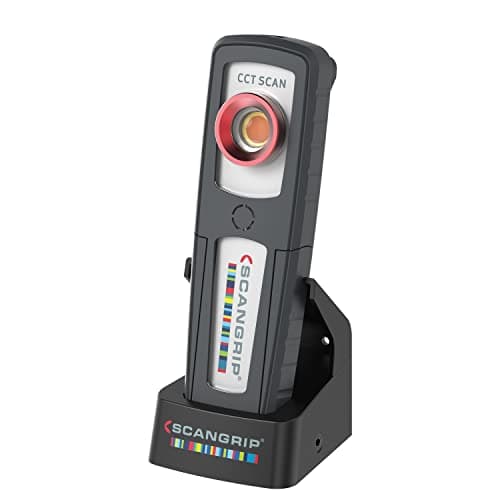
Our top pick: the SCANGRIP SUNMATCH 4 Rechargeable Handheld LED Work Light.
How this is funded: we earn an Amazon commission when you buy through our links, at no extra cost to you. We sell nothing and stock nothing, so a pick is never a product we are trying to move. Prices are pulled live from Amazon and were last checked November 19, 2026; where we cannot verify a price we say so rather than print an old one. Full disclosure.
Research-basedPicked from published manufacturer specifications and the consistent pattern across verified-purchase owner reports. Every product here scores 8.4 or better on our rubric.How we pick
Best inspection lightSCANGRIP
SCANGRIP SUNMATCH 4 Rechargeable Handheld LED Work Light
The reference light in this category, and the only one here with a stepless color temperature sweep: SCANGRIP publishes 2500K to 6500K across the main panel with a CRI above 95, 50-500 lumen on the main light and a separate 200 lumen 4000K spot.
Tap any row for the full write-up. Prices come straight from Amazon and are never typed in by hand.
The verdict
The Astro Pneumatic 50SL for most people: it publishes CRI 97, which is the highest color-rendering figure here from a brand that states one, at well under half the price of the reference light. Buy the SCANGRIP SUNMATCH 4 instead if you want the stepless 2500K to 6500K sweep — being able to run the same panel at warm, neutral and cool is the only way to be certain a mark is real and not a reflection.
02
Why a $15 flashlight is not enough
A defect in clear coat is visible because it scatters light differently from the surface around it. Whether you can see that scatter depends on three properties of your light source, and brightness is the least important of them.
01Color rendering (CRI). How faithfully a light source reproduces color compared with daylight, on a 0-100 scale. A cheap white LED sits around 70-80 and renders a whole band of the spectrum badly, which is why paint that looks uniform under a work light looks blotchy outdoors. Above 90 is useful. Above 95 is what the lights designed for this job publish.
02Color temperature. Warm light at 2700K and cool light at 6500K reveal different defects on the same panel: holograms often hide at one and jump out at the other. A light you can change is a light that catches both.
03Beam shape. A round beam shows you a defect you are already looking at. A strip of light shows you where defects are, because orange peel, buffer trails and holograms appear as distortions in the long edge of the reflection.
03
The criteria, in buying order
What to buy on, in order
Criterion
What to look for
Why it is ranked here
Published CRI
Above 90, and stated as a number
The difference between seeing a defect and not
Color temperature control
Stepless, or at least two or three fixed settings
Holograms hide at one temperature and show at another
Beam shape
A strip to find defects, a spot to examine one
Changes what the light is for
Hands-free mounting
Magnetic base, hook, or a stand
You need both hands on the polisher
Ingress rating
IP65 or IPX7
A detailing bay is a wet place
Lumens
500 is plenty
Least important. More can be worse.
Three of the seven lights below publish no CRI figure at all, and they are ranked accordingly — but they are still on the page, because each does something the color-accurate ones cannot. One carries UV. One is a strip rather than a spot. One costs less than a bottle of polish.
04
The ranked picks
Seven lights sorted by overall score, with each one's published CRI figure — or the absence of it — in the spec table. Prices are live from Amazon.
No. 01SCANGRIPCategory-definingSpec-verified
SCANGRIP SUNMATCH 4 Rechargeable Handheld LED Work Light
Best for: Seeing a defect the way daylight will show it
The reference light in this category, and the only one here with a stepless color temperature sweep: SCANGRIP publishes 2500K to 6500K across the main panel with a CRI above 95, 50-500 lumen on the main light and a separate 200 lumen 4000K spot. Being able to run the same panel at warm, neutral and cool in sequence is what finds holograms a single fixed white hides, and it is why bodyshops buy these.
Color accuracy
Exceptional
Defect finding
Exceptional
Runtime
Strong
Value
Adequate
Why we picked it
Stepless 2500-6500K sweep — the one feature that separates an inspection lamp from a work light
Published CRI above 95, so a color judgment made under it holds up in daylight
Separate 4000K spot for raking light across a panel at a low angle
IP65 rated, which matters in a wet detailing bay
Good to know. 500 lumen is modest next to a general-purpose flashlight at half the price
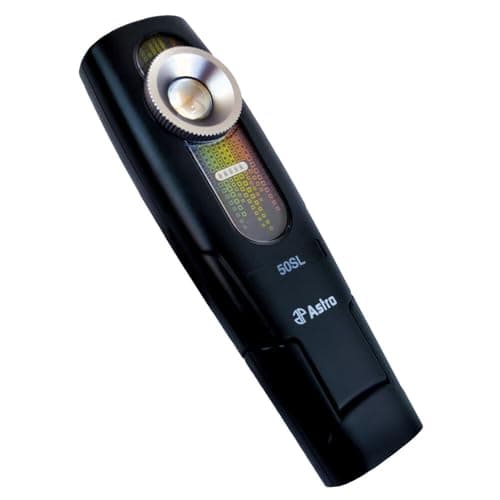
Astro publishes CRI 97 at 400 lumen, which is the highest color-rendering figure on this page from a brand that states one — and it costs well under half what the SUNMATCH does. You lose the color temperature sweep: this is a single fixed daylight output. For most home detailers that is the right trade, because the sweep is a bodyshop color-matching feature and finding swirls only needs one accurate white.
Color accuracy
Exceptional
Defect finding
Strong
Runtime
Strong
Value
Exceptional
Why we picked it
Highest published CRI figure on this page — 97
Well under half the price of the SCANGRIP for the same core job
Handheld and rechargeable, no cord in the way
A real tool brand with parts and service behind it
Good to know. One fixed color temperature — no sweep, so no color matching
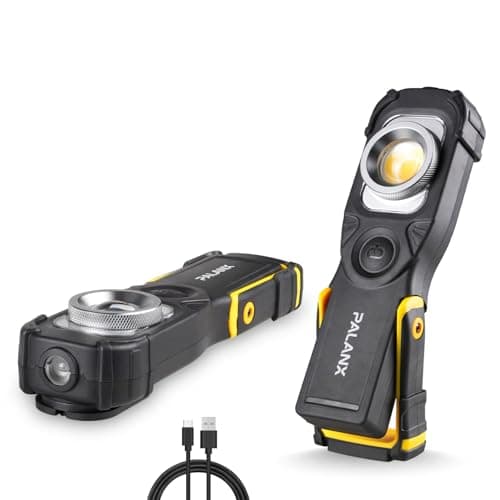
The value pick, and the only light here under $40 that publishes both a CRI figure and switchable color temperatures: the listing states CRI 95+, 650 lumen, and 2700K, 4500K and 6500K settings, on a 4400 mAh cell with a magnetic base and a hook. Three fixed temperatures is not a stepless sweep, but it is most of the benefit of one, and swapping between warm and cool is genuinely how you confirm a defect is real.
Color accuracy
Strong
Defect finding
Strong
Runtime
Strong
Value
Exceptional
Why we picked it
Three switchable color temperatures at a fraction of the SCANGRIP price
Brighter on paper than either the SCANGRIP or the Astro
Magnetic base and hook free up a hand while you polish
4400 mAh cell is a published figure, not a vague runtime claim
Good to know. No manufacturer data sheet — all figures come from the retail listing
Published specifications
Published CRI
95+
Output
650 lumen
Color temperatures
2700K / 4500K / 6500K
Battery
4400 mAh
Mounting
Magnetic base and hook
Rotation
180 degrees
No. 04MaxshineOutstandingOwner reports
Maxshine Foldable Paint Inspection Light (40 LED Strip)
Best for: Sweeping a whole panel instead of a spot
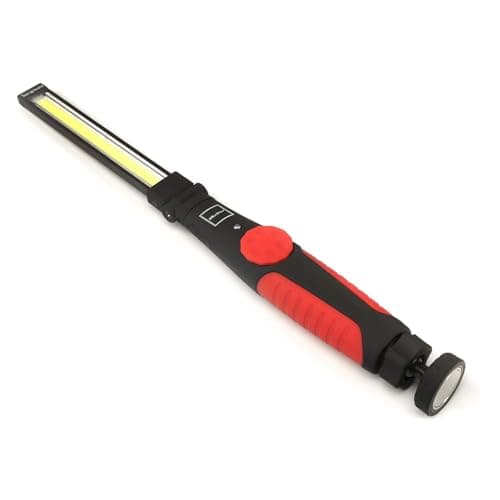
The only light here that is a strip rather than a point. A 5 in, 40-LED bar throws a long even band across a panel, and a band of light reveals orange peel, holograms and buffer trails in a way a round beam does not — the defect shows as a distortion in the edge of the reflection. Folding, swiveling 360 degrees and magnetic, so it sits on the roof while you work the hood.
Color accuracy
Trade-off
Defect finding
Exceptional
Runtime
Good
Value
Strong
Why we picked it
A light band shows holograms and orange peel that a round beam hides
Folds and swivels, so you can set the angle and leave it
Magnetic, and sits on a roof or a fender out of the way
Cheapest way to get strip-light geometry rather than a spot
Good to know. Small enough that a full flank needs several passes
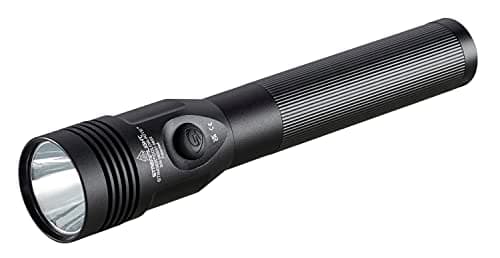
Streamlight builds duty gear, and the Color-Rite is that build quality with a color-accurate emitter in it: 500 lumen, IPX7 waterproof, impact-resistance tested, with a 120 V and 12 V DC charger in the box. Of everything here it is the one that survives being dropped on a concrete floor, which is a specification that matters more in practice than any number on the box.
Color accuracy
Good
Defect finding
Good
Runtime
Strong
Value
Good
Why we picked it
Built like duty equipment — the only light here you would trust to a concrete floor
IPX7 waterproof, so a wet bay is not a problem
Ships with both a mains and a 12 V vehicle charger
Genuinely useful outside detailing, which spreads the cost
Good to know. Dearer than two of the purpose-built inspection lights here
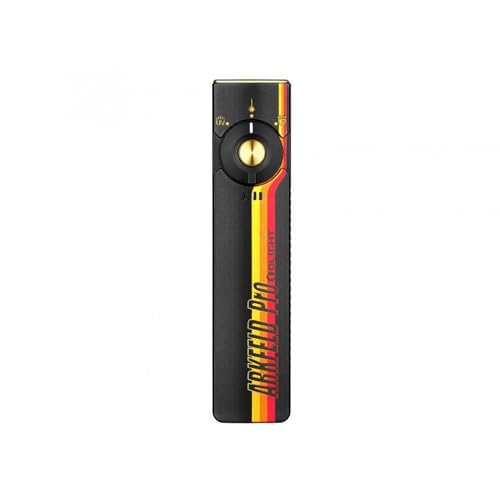
A flat pocket light that happens to be the only thing here with a UV emitter in it, alongside 1300 lumen of white and a green laser. The UV is the interesting part for detailing: it shows up body filler, some adhesive residues and organic staining in upholstery that white light walks straight past. The flat body also sits flush on a panel instead of rolling off it.
Color accuracy
Trade-off
Defect finding
Good
Runtime
Strong
Value
Good
Why we picked it
Only light here with UV, which finds filler and organic staining nothing else shows
Flat body lies on a panel without rolling away
1300 lumen white is the brightest output on the page
Magnetic charging and a pocket clip — it actually gets carried
Good to know. UV output should not be aimed at eyes or skin, which needs care in a shared bay
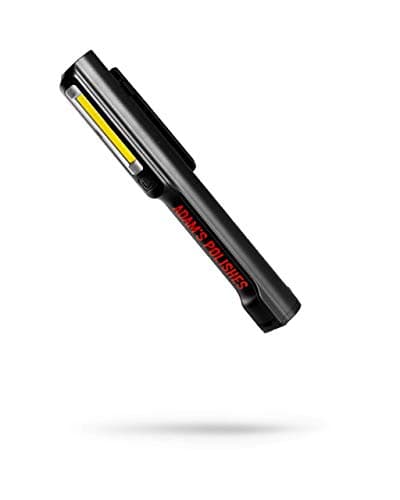
A 170 lumen mini light sold for exactly one job, at a price where owning one is not a decision. It will find swirls. It will not find the fine hologram left by a rotary on black paint, and it will not help you judge whether a polish has finished down. As a first step into inspection lighting — and as the light that lives in a door pocket — it is the honest entry point.
Color accuracy
Trade-off
Defect finding
Adequate
Runtime
Good
Value
Exceptional
Why we picked it
Cheapest light here by an order of magnitude
Small enough to live in a door pocket permanently
Does find ordinary swirl marks, which is most of what people are looking for
Sold for this one job rather than repurposed from another category
Good to know. No published CRI or color temperature
The SCANGRIP and the Astro, and nothing else here. These are the two that publish a CRI figure from a manufacturer data sheet, and they are the only lights on this page under which a judgment about gloss, haze or color will hold up in daylight. The SCANGRIP adds the stepless temperature sweep, which is a bodyshop color-matching feature that happens to be excellent at confirming defects.
Finding defects across a panel
The Maxshine strip, by a clear margin. A 5 in bar of 40 LEDs throws a long even band, and a band of light is a measuring instrument: a straight reflection edge means a flat panel, a wavy one means orange peel, and a feathered one means buffer trails. It publishes no CRI, so it finds defects without helping you judge them — which is exactly the right division of labor if you also own one of the two above.
Working where there is no power
The Streamlight, which is built like duty equipment and ships with both a mains and a 12 V vehicle charger, and the Olight, which is flat enough to lie on a panel and carries a UV emitter alongside its white. Neither publishes a CRI figure. Both are better general-purpose lights than inspection lamps.
Finding out whether you care about this
The Adam's Swirl Finder. 170 lumen, no published CRI, and it will show you ordinary swirl marks — which is most of what people are looking for the first time. It will not show a hologram on black paint and it will not help you plan a correction. If you are buying a polisher in the same order, skip it and buy a real light.
06
The UV question
The Olight is the only light here with a UV emitter, and UV does something no white light does: it fluoresces materials that visible light treats as identical to their surroundings. In practice that means body filler under paint, some adhesive and sealant residues, and organic staining in upholstery that reads as clean under white.
It is a diagnostic trick rather than an inspection method, and it comes with a real caution: UV output should not be aimed at eyes or skin, and a bay with other people in it is not the place to wave it around. Useful on a car you are buying. Not a reason to choose a light for correction work.
07
How to actually use one
Most people hold a light perpendicular to the paint, which is the one angle that reveals the least. Defects show at a low angle, where the light rakes across the surface and the scatter has something to contrast against.
01Work in the dark, or as close as you can get. Ambient light fills in the shadows the defect is casting. A garage with the door shut beats a driveway at noon.
02Hold the light low and to the side, so the beam rakes across the panel rather than hitting it face on. Move it, do not move your head.
03Change the angle before you conclude anything. A mark that disappears when you move the light 20 degrees was a reflection, not a defect.
04Change the color temperature if you can. A hologram that is invisible at 6500K often shows clearly at 2700K, and the reverse happens too.
05Check after every stage, not at the end. Finding marring after you have waxed the car means doing the whole job again. Paint correction steps has the order.
08
Our recommendation
Buy this one
SCANGRIP SUNMATCH 4 Rechargeable Handheld LED Work Light
The reference light in this category, and the only one here with a stepless color temperature sweep: SCANGRIP publishes 2500K to 6500K across the main panel with a CRI above 95, 50-500 lumen on the main light and a separate 200 lumen 4000K spot.
Astro Pneumatic Tool 50SL Sunlight Rechargeable Color Match Light
Astro publishes CRI 97 at 400 lumen, which is the highest color-rendering figure on this page from a brand that states one — and it costs well under half what the SUNMATCH does.
The Astro Pneumatic 50SL for most home detailers — it publishes CRI 97 at 400 lumen, the highest color-rendering figure here from a brand that states one, at well under half the price of the SCANGRIP. If you want to change color temperature as well, the SCANGRIP SUNMATCH 4 publishes a stepless 2500K to 6500K sweep with CRI above 95. Live prices are in the ranked picks above.
What CRI do I need for paint inspection?
Above 90, and ideally above 95. CRI measures how faithfully a light reproduces color against daylight on a 0-100 scale; a cheap white LED sits around 70-80 and renders part of the spectrum badly, which is why paint that looks uniform under a work light looks blotchy outside. Three of the seven lights on this page publish no CRI figure at all, and the spec tables say so.
Can I just use a flashlight to check my paint?
It will show you ordinary swirl marks and nothing finer. A general-purpose flashlight has no published CRI, a fixed cool color temperature and a focused beam, which is the combination least likely to reveal holograms, fine marring or the haze a finishing pass left behind. The $15 pick on this page is exactly that light, honestly described.
Why does changing the color temperature reveal different defects?
Because a defect is visible through how it scatters light, and different wavelengths scatter differently off the same mark. A hologram that is invisible under 6500K daylight-white frequently shows clearly under 2700K warm white, and the reverse also happens. A light with a stepless sweep lets you check both on the same panel without moving the car.
Is a strip light better than a spot light for detailing?
They do different jobs. A strip throws a long even band whose reflection edge acts as a measuring instrument — a wavy edge means orange peel, a feathered one means buffer trails — so it is how you find where defects are. A spot is how you examine one you have already found. If you only buy one, buy the color-accurate spot; the strip is the second purchase.
Do I need an inspection light if I only wash and wax?
No. An inspection light earns its place when you are correcting paint, because correction is a process whose results you cannot judge by eye in ordinary light. If you wash, decontaminate and protect without polishing, the light will mostly tell you about defects you are not planning to fix. How to polish a car is the point at which it becomes necessary.
10
Sources
Every published figure on this page traces to one of these. Where a manufacturer does not publish a number, the page says so rather than estimating it.
Last reviewed November 2, 2026. Think a figure here is wrong? Tell us at contact@detailingandwax.com and we will check it, fix it and date the correction — see our editorial policy.