Independent picks for detailing your own car. We stock nothing, so we have nothing to move.
01
Polishers & correction
Griot's G9 vs RUPES LHR15
A 9mm throw against a 15mm one, at very different prices. The long throw is genuinely faster on a full car - and genuinely less forgiving near an edge.
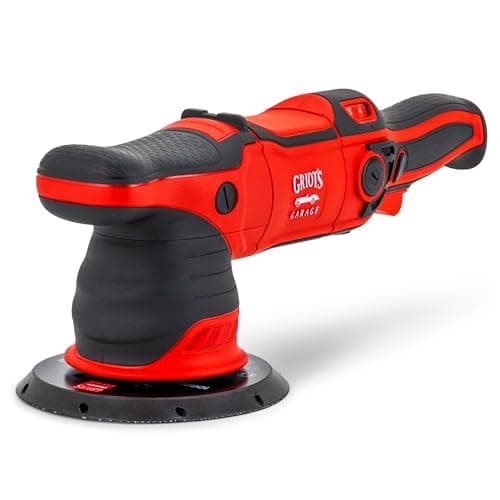
Featured here: the Griot's Garage G9 Random Orbital Polisher.
How this is funded: we earn an Amazon commission when you buy through our links, at no extra cost to you. We sell nothing and stock nothing, so a pick is never a product we are trying to move. Prices are pulled live from Amazon and were last checked November 19, 2026; where we cannot verify a price we say so rather than print an old one. Full disclosure.
Research-basedPicked from published manufacturer specifications and the consistent pattern across verified-purchase owner reports. Every product here scores 8.4 or better on our rubric.How we pick
Top pickGriot's Garage
Griot's Garage G9 Random Orbital Polisher
A 9mm throw and a 1000W motor put the G9 exactly where most home detailers should be: fast enough to finish a car in an afternoon, short enough in the throw to stay predictable near badges and body lines.
Our score9.4Best for: the default answer for a first serious machine
Buy the Griot's G9 unless you are correcting whole cars regularly. The RUPES LHR15's 15mm throw covers more paint per pass and will finish a full correction noticeably faster, but it costs multiples of the G9, ships as a bare tool, and punishes an unsteady hand near edges. For one car, a few times a year, the G9 is the better machine and the far better value.
02
The one specification that separates them
Both machines are random orbital polishers: the pad spins and the whole spindle orbits. The orbit diameter is the throw, and it is the number that decides how much paint you correct per pass. The G9 runs a 9mm throw. The RUPES LHR15 Mark V runs 15mm.
A longer throw sweeps a wider arc, so each pass covers more area and generates correction faster. It also moves the outer edge of the pad further per revolution, which is why a long-throw machine is less forgiving within an inch of a body line, a badge or a panel edge — the pad reaches further than you expect.
Published specifications, with Not published where the manufacturer gives no figure
Griot's G9
RUPES LHR15 Mark V
Throw
9mm
15mm
Motor
1000W, per Griot's
Not published
Backing plate
5 in
Not published
Speed control
Variable, 6 positions
Variable
In the box
Tool
Tool only — no pads or liquids
Warranty
Lifetime, per Griot's Garage
Per RUPES
Correction speed on a full car
Steady
Noticeably faster
Forgiveness near edges
High
Lower — the pad reaches further
Price class
Mid
Premium, several times the G9
03
The two machines, plus the cheaper Griot's
The G9 and the LHR15 side by side, with the 8mm G8 included because it is the honest third option for anyone not sure they will use a polisher twice. Prices are live from Amazon.
Griot's GarageOutstandingSpec-verified
Griot's Garage G9 Random Orbital Polisher
Best for: The default answer for a first serious machine
A 9mm throw and a 1000W motor put the G9 exactly where most home detailers should be: fast enough to finish a car in an afternoon, short enough in the throw to stay predictable near badges and body lines. It is the machine we would buy if we were buying one machine.
Correction speed
Strong
Control
Exceptional
Ergonomics
Good
Build
Exceptional
Value
Strong
Why we picked it
9mm throw is the best general-purpose compromise on the market
1000W does not bog down under pressure on a cutting pad
Griot's lifetime warranty is the strongest in the category
Takes the same 5 in plate and 5.5 in pads as everything else
Good to know. Heavier than the G8, which shows on doors and quarters
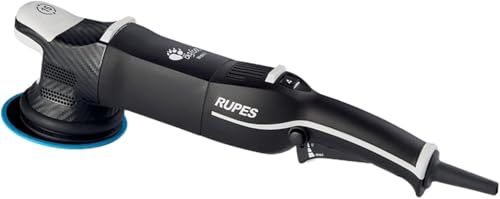
A 15mm throw machine from the company that popularized long-throw polishing. It corrects a full car in meaningfully less time than a 9mm machine, and the balance is the best in the category. Sold here as a tool only.
Correction speed
Exceptional
Control
Good
Ergonomics
Exceptional
Build
Exceptional
Value
Adequate
Why we picked it
15mm throw genuinely halves the time on large flat panels
Best-balanced machine in this roundup by a clear margin
The long-throw design RUPES is known for, from the originator
Good to know. Several times the price of machines that do 80% of the job
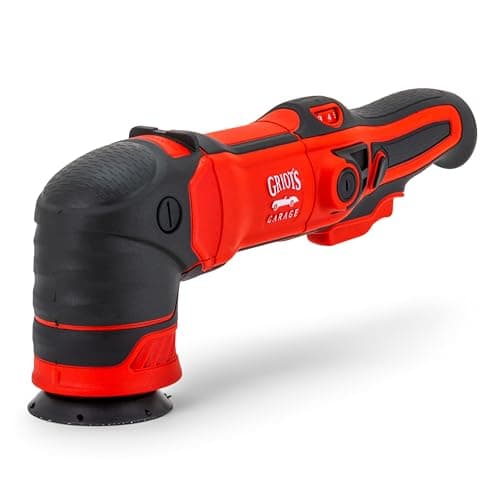
The G8 is the G9's shorter, lighter sibling, and for a lot of people it is the better buy. An 8mm throw is slower across a hood and considerably more forgiving within an inch of an edge, which is exactly where beginners do damage.
Correction speed
Good
Control
Exceptional
Ergonomics
Strong
Build
Exceptional
Value
Strong
Why we picked it
Lighter than the G9 and easier to hold against a door for an hour
8mm throw is the most forgiving option near edges and badges
Same lifetime warranty as the rest of the Griot's line
Good to know. Priced close enough to the G9 that the decision is genuinely about throw
Anyone correcting their own car. One or two cars, once or twice a year, is exactly what a 9mm machine is for.
Anyone working on a car with tight panels — pillars, spoilers, mirror caps, small hatchbacks.
Anyone whose first polisher this is. A short throw forgives the mistakes everybody makes in their first two hours.
Anyone on a budget, because the money saved buys good pads and a better compound, which affect the result more than the machine does.
05
Who should buy the LHR15
Anyone polishing cars for other people, where hours per car is the metric that matters.
Anyone correcting large, flat vehicles — estates, trucks, vans — where a long throw's area advantage compounds.
Anyone who already owns a short-throw machine and wants a second tool rather than a replacement.
Anyone with the budget and the patience to learn edge discipline, because the machine will not supply it.
06
What neither throw fixes
Machine choice is the third most important variable in paint correction, behind the pad and the liquid. A G9 with the right pad and a modern one-step will out-correct an LHR15 with a worn pad and the wrong compound every time. If the budget is finite, spend it in this order: liquids, pads, then machine. The best polishing pads and the best polishing compounds are where the result actually comes from.
Pad size interacts with throw, too. A 15mm machine with a large pad is awkward on anything curved, and many long-throw owners run smaller pads for exactly that reason — what size polishing pad covers the matching rule.
Technique is the other half. How to use a dual action polisher covers section size, pass count, speed and pressure — all of which matter more than throw on a first correction.
07
The total cost, not the tool price
Both of these are tool-only listings, which makes the sticker price misleading in the same direction for both — but the gap between them is large enough that it changes the shape of the purchase rather than just the total.
With the G9, a realistic first-correction kit is the machine, a pad set, a one-step compound and a finishing polish. The machine is the largest single line but not the dominant one.
With the LHR15, the machine dominates everything else combined, and you still need the same pads and liquids. The accessories become a rounding error.
Both need a `3` inch plate and small pads for pillars and mirrors, which is a small outlay either way.
Neither includes a light. A single bright inspection light is the cheapest accessory that improves results, on either machine.
Put in those terms, the G9 route is a kit purchase and the LHR15 route is a tool purchase. If this is a one-off project on your own car, the kit framing is the right one and it argues for the G9 every time.
08
What the G8 is doing in this comparison
It is the honest third answer. A great many people buy a polisher, correct one car, discover that the real fix was the wash routine, and never use it again. An 8mm machine does that job perfectly well for less money, and if the hobby takes hold the G9 or a long-throw machine is a straightforward later upgrade.
Griot's G8 vs G9 runs that comparison properly. The pattern worth noticing is that every step up the throw ladder buys speed rather than quality of finish — a short-throw machine with good pads and a good liquid will finish paint as well as anything here, it simply takes longer. There is a middle option between these two, and RUPES vs Adam's covers whether a 12mm machine gets you most of the way for far less.
09
Our recommendation
Buy this one
Griot's Garage G9 Random Orbital Polisher
A 9mm throw and a 1000W motor put the G9 exactly where most home detailers should be: fast enough to finish a car in an afternoon, short enough in the throw to stay predictable near badges and body lines.
Only if you correct cars often. The 15mm throw is genuinely faster on a full car, but it costs several times the G9, ships bare and is less forgiving near edges. For one car a couple of times a year the G9 is the better buy, and the money is better spent on pads and compound.
What is the difference between a 9mm and a 15mm throw?
The throw is the orbit diameter. A 15mm throw sweeps a wider arc, so it covers more paint per pass and corrects faster. It also moves the pad edge further than you expect, which makes it less forgiving within an inch of a body line or badge.
Can a beginner use the RUPES LHR15?
Yes, with care, but it is not the machine to learn on. A long throw punishes unsteady pressure and poor edge discipline faster than a short throw does, and those are exactly the two things a first correction gets wrong.
Which polisher corrects paint faster?
The LHR15, by a clear margin on large flat panels. On tight panels the advantage narrows or disappears, because a long-throw pad arc is awkward around mirrors, pillars and spoilers where a 9mm machine sits comfortably.
11
Sources
Every published figure on this page traces to one of these. Where a manufacturer does not publish a number, the page says so rather than estimating it.
Last reviewed October 11, 2026. Think a figure here is wrong? Tell us at contact@detailingandwax.com and we will check it, fix it and date the correction — see our editorial policy.