Independent picks for detailing your own car. We stock nothing, so we have nothing to move.
01
Polishers & correction
The best cordless car polishers
Cordless correction is finally real, but only two of the five machines here publish the one number that tells you whether a polisher can correct paint at all.
Our top pick: the Adam's Cordless 15mm Swirl Killer Polisher.
How this is funded: we earn an Amazon commission when you buy through our links, at no extra cost to you. We sell nothing and stock nothing, so a pick is never a product we are trying to move. Prices are pulled live from Amazon and were last checked November 19, 2026; where we cannot verify a price we say so rather than print an old one. Full disclosure.
Research-basedPicked from published manufacturer specifications and the consistent pattern across verified-purchase owner reports. Every product here scores 8.4 or better on our rubric.How we pick
Best cordless correctionAdam's Polishes
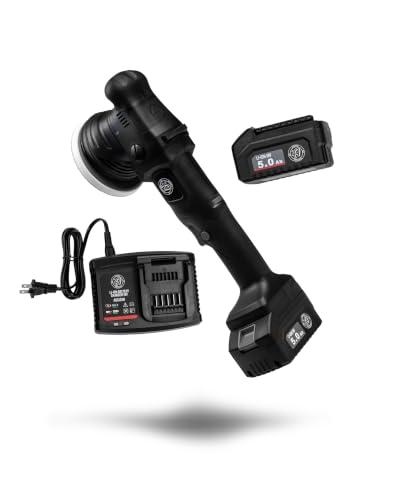
Adam's Cordless 15mm Swirl Killer Polisher
This is the one cordless polisher on the list designed by a detailing company rather than a tool company, and it shows in the number that matters: a 15 mm throw on a 5 in plate, which is genuine correction geometry rather than a sander repurposed for paint.
Our score9.2Best for: the only cordless machine built for paint correction first
Tap any row for the full write-up. Prices come straight from Amazon and are never typed in by hand.
The verdict
Adam's Cordless 15mm Swirl Killer is the pick, because it is the only machine here that publishes a mm throw — 15 mm on a 5 in plate, which is genuine correction geometry — and still arrives ready to work, with the battery and charger in the box. Milwaukee's 2684-20 publishes the same 15 mm figure and costs a fraction of it as a bare tool, so that is the better buy if there are already M18 packs on the shelf. The Milwaukee 2738-20 is a cordless rotary and belongs to professionals only.
02
Why cordless was a bad idea until recently
A polisher is a tool that runs at full load for twenty minutes at a stretch. That is the opposite of how a drill or an impact driver is used, and it is why cordless polishers spent years being either toys or sanders with a polishing pad bolted on. Two things changed: brushless motors stopped wasting energy as heat, and 4.0 Ah and larger packs made a session long enough to be worth starting.
What has not changed is the geometry. A polisher's ability to remove defects is set almost entirely by its throw — how far the pad's center travels in each orbit — and that is a mechanical decision made at the factory. An 8 mm machine and a 15 mm machine with identical motors do completely different amounts of work per pass. Going cordless does not change that, and no amount of battery capacity compensates for a short throw.
This is the awkward part of the category and the reason this page is ranked the way it is: two of these five machines do not publish a throw figure at all. RYOBI publishes no orbit figure of any kind, and Makita publishes OPM and RPM but no orbit. Adam's and Milwaukee both publish 15 mm — Milwaukee put it in the model number — and the Milwaukee rotary has no orbital throw to publish. We have not guessed the two blanks, and you should be suspicious of any page that does.
What each manufacturer actually publishes. Blanks are blanks, not estimates.
Machine
Published throw
Published speed
Battery in the box
Adam's Cordless 15mm Swirl Killer
15 mm
4,500 / 5,200 / 6,000 OPM
Yes — 21V 4.0 Ah
Milwaukee 2684-20
15 mm
2,650-5,100 RPM
No
RYOBI ONE+ 5 in DA kit
Not published
3,000-7,500 OPM
Yes — 18V 4.0 Ah
Makita XOP02Z
Not published
1,600-6,800 OPM
No
Milwaukee 2738-20
Rotary — no orbital throw
0-2,200 RPM
No
03
The ranked cordless polishers
Ordered on published correction geometry first, then on what the machine costs to actually run — a tool-only price is not the real price if you own no batteries. Prices are live from Amazon.
No. 01Adam's PolishesOutstandingSpec-verified
Adam's Cordless 15mm Swirl Killer Polisher
Best for: The only cordless machine built for paint correction first
This is the one cordless polisher on the list designed by a detailing company rather than a tool company, and it shows in the number that matters: a 15 mm throw on a 5 in plate, which is genuine correction geometry rather than a sander repurposed for paint. The low-profile battery sits close to the body so the machine still balances like a polisher.
Correction ability
Exceptional
Runtime
Adequate
Ergonomics
Strong
Build
Strong
Value
Adequate
Why we picked it
15 mm throw is real correction geometry, not a sander orbit
Three fixed speeds means you can repeat a setting exactly
Battery and charger are in the box — no platform to buy into
Good to know. The most expensive machine here by a wide margin
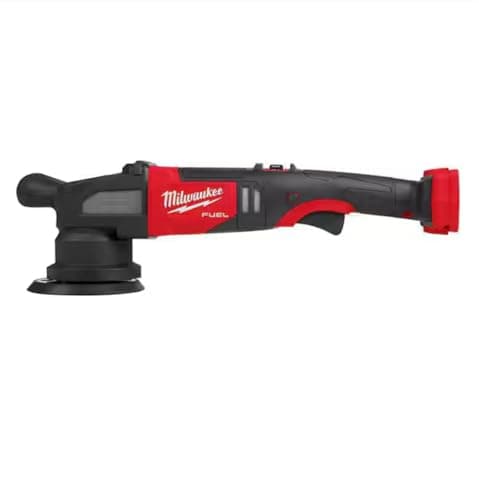
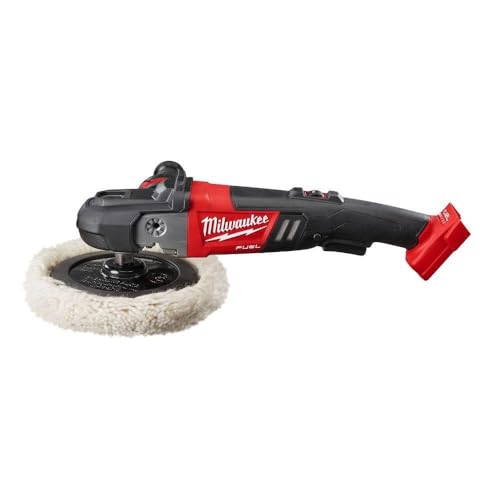
Milwaukee put the number that matters in the model name: 15 mm, on a 5 in pad capacity, from a POWERSTATE brushless tool Milwaukee rate for heavy correction. An eight-position dial covers 2,650-5,100 RPM with a variable trigger on top of it, so a spreading speed and a correction speed are both repeatable settings rather than guesses — and at 5.16 lb bare it is lighter than the Makita by a wide margin.
Correction ability
Exceptional
Runtime
Good
Ergonomics
Strong
Build
Exceptional
Value
Good
Why we picked it
15 mm published throw — correction geometry, not a sander orbit
POWERSTATE brushless, with an eight-position dial and a variable trigger over it
Shares batteries with any M18 tool already in the garage
Good to know. Bare tool: no battery, no charger, nothing but the 5 in plate
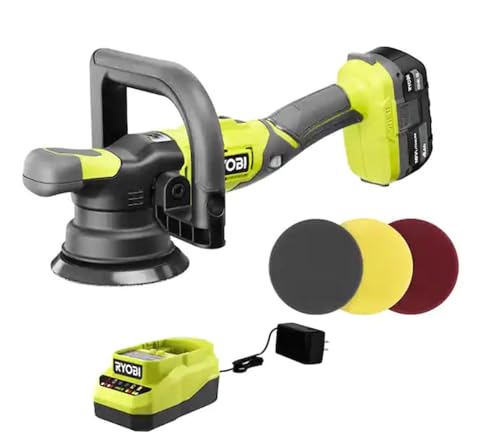
RYOBI's dual action polisher is the only kit here that arrives ready to use — tool, 4.0 Ah battery and charger — and at 3.75 lb it is by some distance the lightest machine on the page. RYOBI rates it for a full-size vehicle on one charge, which is a bolder runtime claim than anyone else makes.
Correction ability
Adequate
Runtime
Strong
Ergonomics
Exceptional
Build
Good
Value
Exceptional
Why we picked it
Battery and charger included — nothing else to buy
3.75 lb, the lightest machine here, which matters on a roof
RYOBI claims a full-size vehicle on one charge
Good to know. RYOBI publishes no throw figure, so correction ability is unknowable from the spec sheet
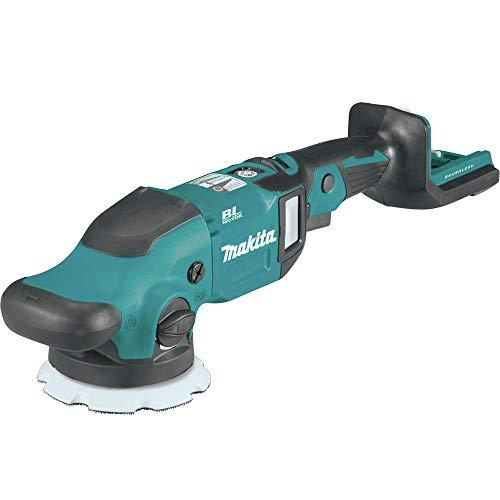
The only machine here that lets you select forced rotation or free-spin random orbit, which in practice means one tool that behaves like a gear-driven polisher when you need cut and like a DA when you need to finish. Makita publishes 1,600-6,800 OPM and 0-780 RPM, and the brushless motor holds speed under pad load.
Correction ability
Strong
Runtime
Good
Ergonomics
Adequate
Build
Exceptional
Value
Adequate
Why we picked it
Selectable forced rotation or free-spin — two machines in one
Brushless with constant speed control under load
Takes both 5 in and 6 in plates
Good to know. 7.9 lb bare is heavy, and that is before a battery goes on it
Milwaukee calls this the first cordless full-size rotary polisher, and that word rotary is the whole story: 0-2,200 RPM on a 7 in pad is body-shop cutting power, not weekend correction. If you already sand and buff for a living and want the cord gone, this is the machine.
Correction ability
Exceptional
Runtime
Good
Ergonomics
Trade-off
Build
Exceptional
Value
Strong
Why we picked it
The only cordless machine here with true rotary cutting power
Cheapest tool-only price on the page
M18 platform, so the batteries have 200+ other homes
Good to know. 7 in pad is far too large for most panels on a modern car
A published throw figure, in millimeters. If the maker will not print one, assume the machine was designed as a sander. That is not always disqualifying, but it tells you where correction sat on the priority list.
A brushless motor. Brushed motors lose speed as you lean into the pad, and a polisher that slows under load is a polisher that stops cutting exactly when you need it to cut.
Battery platform you already own. A dearer tool-only machine is cheaper than a complete kit if there are already four compatible packs on the shelf. This is the single biggest cost variable on the page, and it is invisible in the sticker price.
Weight at the business end. You will hold this above your head on a roof. The spread here runs from 3.75 lb to 7.9 lb bare, which is the difference between a comfortable afternoon and a sore shoulder.
A low-profile battery. A pack that sticks straight down limits how close you can get to a steeply raked windshield or a tight bumper curve.
05
Cordless versus corded, honestly
A corded machine of the same quality costs less, never runs out, and does not slow down as the pack drains. If the car lives in a garage with an outlet, a corded polisher is still the rational purchase — the best dual action polishers covers that side of the shelf, and the best budget car polishers covers the entry tier.
Cordless earns its premium in three specific situations. Working on a car parked away from power — the same apartment-and-parking-garage problem that a waterless car wash solves at the washing stage. Working around a vehicle you have to walk all the way around, where a cord snags on wheels and drags across paint you just corrected. And spot work — picking a machine up for a four-minute fix without unspooling anything. If none of those describe your situation, the money is better spent on pads and liquids.
The cord is also a paint hazard
This is underrated. A 25 ft cord dragged across a dusty lower panel is sandpaper on a string, and the marring it leaves is the same marring you are standing there trying to remove. People who go cordless rarely mention runtime as the reason they stayed; they mention never thinking about the cord again.
06
Dual action, forced rotation, and the rotary trap
Three of these machines are free-spinning random orbitals, which stall the pad rather than burn the paint when they bog down. That forgiveness is why a dual action is the right machine for anyone correcting their own car — see dual action vs rotary polisher for why the distinction matters more than any brand difference.
The Makita is the interesting case: it offers selectable forced rotation or free spin, so one tool can behave like a gear-driven machine for cut and a DA for finishing. That is genuinely two machines in one. The cost is weight — 7.9 lb bare, before a battery.
The Milwaukee 2738-20 is the trap, and it is not to be confused with the 15mm random orbital higher up the page. It is a 7 in rotary at 0-2,200 RPM, and Milwaukee are clear about that: they call it the first cordless full-size rotary polisher. A rotary will strike through an edge in the time it takes to notice you are near one. It is on this page because it is the best cordless machine for a body shop, and explicitly not because it is a good first cordless polisher.
The one mechanical difference that decides whether a mistake is recoverable
Machine type
What happens when it bogs down
Who it is for
Free-spin random orbital
The pad stops rotating. Paint is unharmed.
Anyone correcting their own car
Selectable forced rotation
Keeps cutting — faster, less forgiving
Someone who already finishes with a DA
Rotary
Keeps cutting, generates heat, can strike through
Trained professionals only
07
What else you need before any of these is useful
A machine is roughly a third of a correction setup. The pads matter at least as much — a heavy compound on a soft finishing pad finishes better than a light polish on a cutting pad, which is why the best polishing pads and what size polishing pad should you use are worth reading before the second liquid purchase.
Then the liquids, and then the technique. How to use a dual action polisher has the pass-by-pass method, and paint correction steps has the full sequence including the decontamination work that has to happen before a pad touches the car. Polishing contaminated paint grinds the contamination into it.
Pad size and battery drain
A 5 in plate on a cordless machine is the sensible maximum. Every extra inch of pad is more load, and more load is less runtime.
Prime a new pad properly. A dry pad drags, and drag is the fastest way to flatten a battery.
Clean the pad between sections. A saturated pad is heavier, grabbier and slower, and it costs you minutes of runtime per panel.
Work at the lowest speed that is doing the job. The top of a 7,500 OPM range exists for stubborn defects, not as the default.
08
Where the SPTA-style mini fits
A 12V cordless mini polisher with a 3 in pad is not competing with anything on this page. It cannot correct a panel and nobody should buy one as their only machine, but it reaches A-pillars, mirror caps and the area around badges that a 5 in plate physically cannot sit flat on. If you own a corded full-size machine, a cordless mini is a better next purchase than a cordless full-size one.
09
Our recommendation
Buy this one
Adam's Cordless 15mm Swirl Killer Polisher
This is the one cordless polisher on the list designed by a detailing company rather than a tool company, and it shows in the number that matters: a 15 mm throw on a 5 in plate, which is genuine correction geometry rather than a sander repurposed for paint.
Milwaukee 2684-20 M18 FUEL 15mm Random Orbital Polisher
Milwaukee put the number that matters in the model name: 15 mm, on a 5 in pad capacity, from a POWERSTATE brushless tool Milwaukee rate for heavy correction.
Adam's Cordless 15mm Swirl Killer, because it publishes a 15 mm throw on a 5 in plate — real correction geometry — and it is the only machine in this group that publishes a throw figure and still arrives with a battery and charger in the box. Milwaukee's 2684-20 publishes the same 15 mm figure and costs far less as a bare tool, so it is the better answer if you already own M18 batteries.
Are cordless polishers powerful enough for paint correction?
The brushless ones are. Correction ability is set by throw and by whether the motor holds speed under pad load, not by whether there is a cord. A 15 mm brushless cordless machine will out-correct a short-throw corded one. Where cordless still loses is session length: one battery is roughly one car.
Can I use a cordless drill or sander instead of a polisher?
No. A drill has no orbital action and spins far too fast for a foam pad, and a random orbit sander has the wrong orbit for paint and no low-speed control. Both will leave marring that then needs a real polisher to remove.
How long does a battery last on a cordless polisher?
Adam's rate roughly 45 minutes at maximum speed on their 21V 4.0 Ah pack; RYOBI claim a full-size vehicle on one charge. Those claims are measured differently and are not comparable. Plan on one serious session per battery and buy a second pack if the budget allows.
Is the Milwaukee 2738-20 a good cordless polisher for a beginner?
No. It is a rotary at 0-2,200 RPM on a 7 in pad, which is body-shop cutting power — Milwaukee describe it as the first cordless full-size rotary polisher. In untrained hands a rotary will leave holograms or strike through an edge. A free-spinning dual action is the correct first machine.
Why do some polisher makers not publish a throw figure?
Usually because the tool was engineered as a sander platform and polishing is a secondary application, so orbit is either specified the way the sanding industry specifies it or left out altogether. RYOBI and Makita publish nothing comparable, while Adam's and Milwaukee both publish 15 mm. That is a reason for caution, not proof the machine is bad.
11
Sources
Every published figure on this page traces to one of these. Where a manufacturer does not publish a number, the page says so rather than estimating it.
Last reviewed October 12, 2026. Think a figure here is wrong? Tell us at contact@detailingandwax.com and we will check it, fix it and date the correction — see our editorial policy.