Independent picks for detailing your own car. We stock nothing, so we have nothing to move.
01
Washing & decon
One bucket vs two bucket car wash
A second bucket is the cheapest meaningful upgrade in detailing. A grit guard in one bucket is the second cheapest, and it is not a substitute for the first.
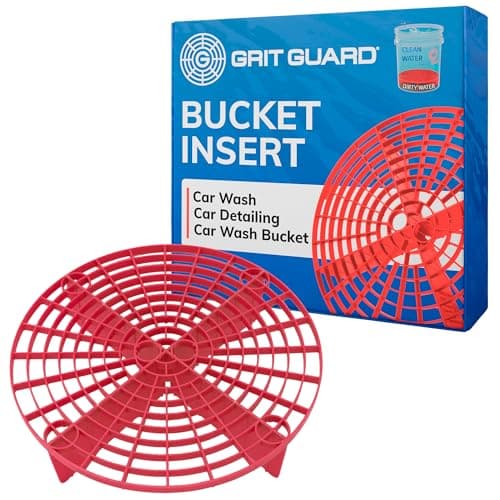
Featured here: the Grit Guard Original Bucket Insert.
How this is funded: we earn an Amazon commission when you buy through our links, at no extra cost to you. We sell nothing and stock nothing, so a pick is never a product we are trying to move. Prices are pulled live from Amazon and were last checked November 19, 2026; where we cannot verify a price we say so rather than print an old one. Full disclosure.
Research-basedPicked from published manufacturer specifications and the consistent pattern across verified-purchase owner reports. Every product here scores 8.4 or better on our rubric.How we pick
Top pickGrit Guard
Grit Guard Original Bucket Insert
A plastic grid that sits in the bottom of the bucket, keeps settled grit down there, and gives you something to scrub the mitt against.
Two buckets, with a grit guard in each. The second bucket exists so that the grit your mitt just lifted off the car ends up in rinse water rather than back in your soap — and because every swirl mark on your paint was put there by grit being dragged across it, that is not a marginal improvement. A second bucket and two guards cost very little and are the highest-return purchase on this entire site.
02
What the second bucket actually does
One bucket means a single loop: mitt to paint, mitt back into the soap, mitt to paint again. Every pass deposits the grit you just removed into the water you are about to reload the mitt from. By the back half of the car you are washing with a slurry of the dirt from the front half.
Two buckets break that loop. One bucket holds clean soapy water; the other holds plain rinse water. The mitt goes paint, rinse, soap, paint — so the grit is deposited in the rinse bucket and the soap stays clean. That is the entire mechanism, and it is why the method is so widely recommended.
The four setups, ranked by what happens to the grit you remove
Setup
Where the grit ends up
Swirl risk
One bucket, no guard
Back in the soap, then on the paint
Highest
One bucket with a grit guard
Mostly settled below the guard
Moderate — a real improvement
Two buckets, no guards
In the rinse bucket
Low
Two buckets with guards in both
Trapped below the guards in both
Lowest
Rinseless in one bucket
Encapsulated by the chemistry
Low, with enough towels
03
What a two bucket setup actually costs
A grit guard, a bucket that includes one, a higher-structure alternative and the mitt that does the work. Prices are live from Amazon.
Grit GuardCategory-definingSpec-verified
Grit Guard Original Bucket Insert
Best for: The single cheapest upgrade on this entire site
A plastic grid that sits in the bottom of the bucket, keeps settled grit down there, and gives you something to scrub the mitt against. It costs almost nothing and it prevents more paint damage per dollar than any product we have written about.
Effectiveness
Exceptional
Durability
Exceptional
Fit
Exceptional
Value
Exceptional
Why we picked it
The cheapest meaningful paint-safety upgrade available
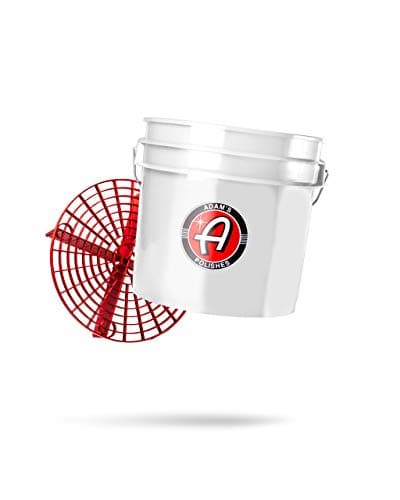
A 3.5 gallon bucket with the grit guard already in it. Buying two of these is the complete two-bucket setup in a single order, which removes the most common reason people never get around to it.
Effectiveness
Strong
Durability
Strong
Fit
Exceptional
Value
Good
Why we picked it
Complete setup in one purchase
Grit guard sized correctly for the bucket
Sturdier than a hardware-store bucket
Good to know. 3.5 gallons is less water than a standard 5 gallon bucket
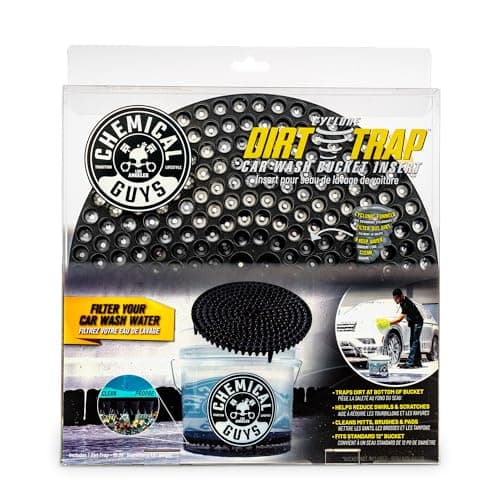
Same idea as the original grit guard with deeper vanes that encourage the water to swirl rather than just settle. Whether that is a real improvement or a marketing flourish is hard to prove, but it is the same money and it does no harm.
Deep, dense microfiber with enough pile to pull grit up and away from the paint rather than trapping it against the surface. Two in the pack, which matters — a mitt that hits the ground is finished, and having a spare stops people picking it up and carrying on.
Grit release
Exceptional
Capacity
Exceptional
Durability
Strong
Value
Strong
Why we picked it
Deep pile pulls grit away from the panel
Two in the pack, so a dropped mitt is not a crisis
A grit guard is a plastic grid that sits in the bottom of the bucket. It does two things: it gives you a surface to scrub the mitt against to release trapped grit, and it creates a calm zone underneath where settled dirt stays put instead of being stirred back up.
In a single bucket that is a genuine improvement, and it is a worthwhile purchase even if you refuse to buy a second bucket. But it is not equivalent. A guard reduces how much grit gets re-suspended; a second bucket means the grit was never in the soap to begin with. The two are complementary, which is why the best setup is a guard in each bucket.
The scrub is the part people skip
A grit guard only works if you use it. Push the mitt down onto the grid and work it against the ribs for a few seconds in the rinse bucket before going back to the soap. Dipping the mitt gently in and out achieves very little — the grit is held in the pile and needs mechanical help to come out.
05
When one bucket is genuinely fine
The car is barely dirty. A week of dust on a garaged car is not generating enough grit for the loop to matter much.
You are doing a rinseless wash.Rinseless chemistry encapsulates dirt and the technique uses towel faces rather than repeated mitt dips — one bucket is the standard method.
You have pre-washed thoroughly with foam.A foam cannon removes a large share of the loose grit before the mitt touches the car, which reduces what the buckets have to handle.
Space genuinely does not allow it. One bucket with a guard and frequent water changes beats not washing the car.
You are washing wheels. Those get their own bucket and their own tools regardless — never the paint buckets.
06
The things that beat both setups
Bucket discipline is one input among several, and two of the others matter more. The first is the pre-wash: grit removed by foam or a pressure rinse never reaches your mitt at all, so it cannot be dragged anywhere. The second is the mitt — a plush microfiber mitt holds grit away from the paint inside its pile, where a sponge presses it flat against the clear coat.
Yes, and the reasoning is mechanical rather than a matter of opinion. Swirl marks are grit dragged across clear coat under pressure. Anything that reduces the amount of grit in contact with the paint reduces the rate at which they accumulate, and keeping your soap bucket clean does exactly that.
What two buckets will not do is undo existing damage or compensate for a sponge, a dirty towel or washing in direct sun. The two bucket method has the full step-by-step technique once you have decided to do it.
08
Our recommendation
Buy this one
Grit Guard Original Bucket Insert
A plastic grid that sits in the bottom of the bucket, keeps settled grit down there, and gives you something to scrub the mitt against.
Is the two bucket car wash method really better than one?
Yes. With one bucket, grit lifted off the car goes straight back into the water you reload the mitt from, so the back of the car is washed with the dirt from the front. Two buckets send that grit into rinse water instead and keep the soap clean.
Do you need a grit guard if you use two buckets?
You do not need one, but a guard in each bucket is the best setup and the guards are cheap. A guard gives you a surface to scrub trapped grit out of the mitt and creates a calm zone where settled dirt stays put instead of being stirred back up.
Is a grit guard enough on its own with one bucket?
It is a real improvement, and worth buying even if you only have one bucket. It is not equivalent to a second bucket though — a guard reduces how much grit gets re-suspended, while a second bucket means the grit never entered the soap at all.
When is one bucket enough to wash a car?
On a barely dirty garaged car, when doing a rinseless wash where one bucket is the standard method, or after a thorough foam pre-wash has already removed most of the loose grit. One bucket with a guard also beats not washing the car at all.
What is the third bucket for in a three bucket wash?
Wheels, with their own brushes and mitt that never touch paint. Brake dust is embedded metal particles, so keeping wheel tools permanently separate matters more than adding another paint bucket would.
Does the two bucket method prevent swirl marks?
It reduces the rate at which they accumulate, because swirls are grit dragged across clear coat and keeping the soap clean means less grit in contact with paint. It does not undo existing swirls, and it cannot compensate for using a sponge or washing in direct sun.
How often should you change the water?
When the rinse bucket starts to look like mud. Buckets have a finite capacity for dirt, and continuing past that point defeats the purpose of having two of them. On a very dirty car expect to change water partway through.
10
Sources
Every published figure on this page traces to one of these. Where a manufacturer does not publish a number, the page says so rather than estimating it.
Last reviewed October 17, 2026. Think a figure here is wrong? Tell us at contact@detailingandwax.com and we will check it, fix it and date the correction — see our editorial policy.