Independent picks for detailing your own car. We stock nothing, so we have nothing to move.
01
Washing & decon
The best rinseless washes
A rinseless wash makes washing possible in an apartment parking space or in winter. It also has a dirt ceiling, and exceeding it causes exactly the damage it prevents.
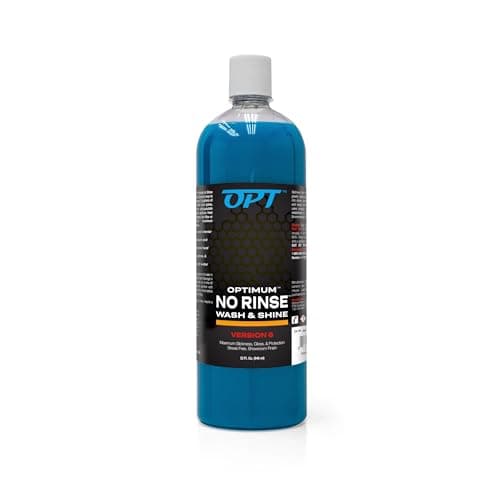
Our top pick: the Optimum Optimum No Rinse Wash and Shine.
How this is funded: we earn an Amazon commission when you buy through our links, at no extra cost to you. We sell nothing and stock nothing, so a pick is never a product we are trying to move. Prices are pulled live from Amazon and were last checked October 5, 2026; where we cannot verify a price we say so rather than print an old one. Full disclosure.
Research-basedPicked from published specifications and the pattern across verified-purchase reports. We have not used these ourselves and do not pretend otherwise.How we pick
Quick picks — Best rinseless wash
#
Product
Best for
Our score
Price
01
Optimum No Rinse Wash and Shine
Washing a car with two gallons of water and no hose
Tap any row for the full write-up. Prices come straight from Amazon and are never typed in by hand.
The verdict
Optimum No Rinse. It is the product that established the category, it costs less per wash than anything else here, and it doubles as a clay lubricant and a drying aid. P&S Absolute is slicker and costs more; whether that is worth it depends on how often you do this.
02
How a rinseless wash works
The solution contains polymers that encapsulate dirt particles — surrounding them so they lift off the surface and stay suspended rather than dragging. You wipe a panel with a soaked towel, the encapsulated dirt comes with it, and you fold to a clean side.
Done properly, it is genuinely safe. Done with one towel across a whole car, it is a swirl machine, because once that towel is loaded you are wiping the dirt you removed back onto the next panel.
03
The ranked picks
Two rinseless solutions, plus the towels the technique depends on and a conventional shampoo for comparison. Prices are live from Amazon.
No. 01OptimumSpec-verified
Optimum No Rinse Wash and Shine
Best for: Washing a car with two gallons of water and no hose
ONR is the product that makes washing possible in an apartment parking space, in winter, or anywhere a hose is not an option. The polymers encapsulate grit so it slides off the paint rather than dragging, and used properly the result is genuinely safe.
Who should skip it. A genuinely filthy car. Rinseless washing has a dirt ceiling, and above it you are moving grit around with a towel. Pre-rinse heavy mud or wait for a hose.
Lubricity
9.0
Cleaning
7.0
Suds
4.0
Coating safe
9.0
Value
9.0
What works
Makes washing possible where a hose is not
Genuinely safe within its dirt ceiling
Doubles as a clay lubricant and drying aid
What does not
Has a real dirt ceiling, and exceeding it causes marring
Needs multiple towels — one towel for the car is the classic failure
Optimum does not publish a volume figure we could verify
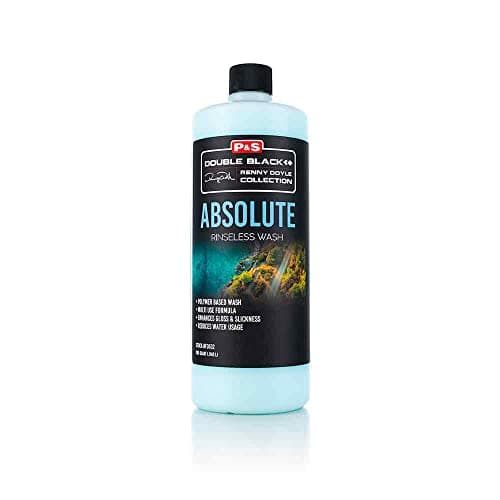
Absolute is the slicker of the two mainstream rinseless washes, and lubrication is the only thing that matters in a rinseless product. It costs more per wash than ONR and it feels noticeably safer on the panel, which is a reasonable trade.
Who should skip it. Anyone on a budget doing this weekly. ONR does the same job for less, and the gap is a refinement rather than a transformation.
Lubricity
9.5
Cleaning
7.0
Suds
4.0
Coating safe
9.0
Value
7.5
What works
Noticeably more lubricated than ONR on the panel
Pleasant to use, which matters for a weekly job
Works as a clay lubricant too
What does not
More expensive per wash than ONR for a similar outcome
Same dirt ceiling as any rinseless product
P&S does not publish a dilution figure we could verify
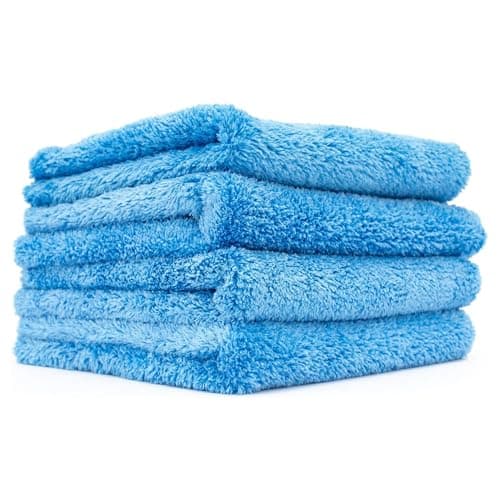
500 GSM, edgeless, and the towel most detailers end up buying in bulk. Edgeless matters more than the GSM figure: a stitched border is the single most common source of a scratch on an otherwise careful job.
Who should skip it. Drying a whole car. At 16 x 16 in these are buffing and detailing towels, and you would need a stack of them to dry a sedan.
Absorbency
8.5
Softness
9.0
Edge safety
10.0
Value
8.0
What works
Edgeless, which removes the most common scratch source
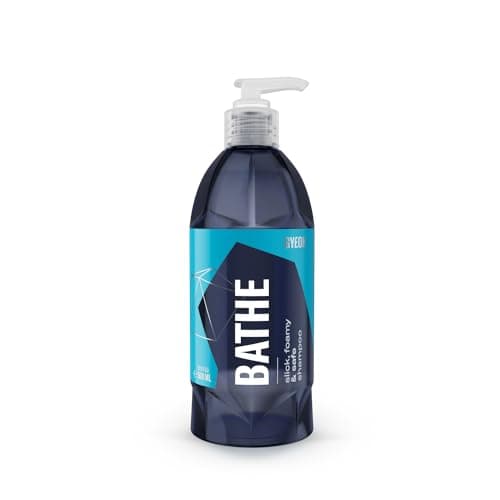
Bathe exists to wash coated cars without leaving anything behind, and that narrow purpose is exactly why it is the right answer if your car is coated. High lubricity, no gloss agents, no conditioners — the beading you paid for is still there afterwards.
Who should skip it. Uncoated paint, where a cheaper soap with some conditioner in it genuinely gives a better-looking result for less money.
Lubricity
9.5
Cleaning
8.0
Suds
8.0
Coating safe
10.0
Value
7.5
What works
Leaves nothing on the paint that could block a coating
Very high lubricity for a residue-free soap
Works in a cannon and a bucket
What does not
Costs more per wash than a general-purpose soap
Pointless on uncoated paint
GYEON does not publish a bottle volume we could verify
The technique, which matters more than the product
01Dilute into a bucket at the manufacturer's stated ratio — typically a capful in two gallons.
02Use eight to sixteen towels. This is the non-negotiable part. Fold each into quarters: eight clean surfaces per towel.
03Soak a towel, lay it flat on a panel, and pull it toward you in one direction. No scrubbing, no circles.
04Fold to a clean side after every pull. When all eight surfaces are used, that towel is done.
05Dry immediately with a separate plush towel before moving to the next panel.
06Top down, and leave the lower panels last. They carry the most grit.
07Never do the wheels with rinseless solution or these towels.
05
Where rinseless genuinely wins
Apartments and parking garages with no hose access at all — this is the main case and it is a real one.
Winter, where a hose is frozen and a proper wash is not happening.
Water restrictions, where two gallons against forty is a meaningful difference.
A lightly dusty car that does not justify a full wash setup.
As a clay lubricant, which both products here do well and cheaply.
06
What it is not
A rinseless wash is not a waterless wash. A waterless wash is sprayed onto a dry panel and wiped — far riskier, and only appropriate on a genuinely dusty rather than dirty car. A rinseless wash uses a bucket and a soaked towel, and the water volume is what makes it safer.
Neither replaces a proper two bucket wash when you have the facilities for one. Rinseless is a solution to a constraint, not an upgrade.
07
Questions people actually ask
Is a rinseless wash safe for car paint?
Used properly, yes — the polymers encapsulate grit so it lifts rather than drags. The failure mode is using too few towels. Eight to sixteen, folded into quarters, with a clean surface for every pull. One towel across a whole car causes exactly the damage it prevents.
How much water does a rinseless wash use?
Around two gallons for a whole car, against roughly forty for a hose wash. That is the main reason people use it, alongside having no hose access at all.
What is the difference between rinseless and waterless wash?
A rinseless wash is diluted in a bucket and applied with a soaked towel; a waterless wash is sprayed onto dry paint and wiped. The rinseless method carries far more water to the panel, which is what makes it safer on anything beyond light dust.
Can you use a rinseless wash on a very dirty car?
No. There is a real dirt ceiling: beyond light to moderate soiling there is more contamination than the polymers can encapsulate, and you are moving grit around with a towel. Pre-rinse a heavily soiled car or wait until you can wash it properly.
08
Sources
Every published figure on this page traces to one of these. Where a manufacturer does not publish a number, the page says so rather than estimating it.
Last reviewed October 5, 2026. Think a figure here is wrong? Tell us at contact@detailingandwax.com and we will check it, fix it and date the correction — see our editorial policy.