Independent picks for detailing your own car. We stock nothing, so we have nothing to move.
01
Washing & decon
Can you use dish soap to wash a car?
It will not destroy your clear coat. It will strip every bit of protection off it, dry out your trim, and leave the paint bare — which is occasionally exactly what you want.
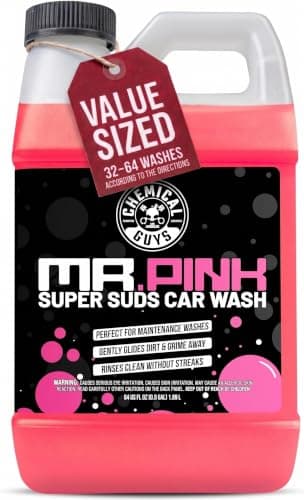
Featured here: the Chemical Guys Mr. Pink Car Wash Soap.
How this is funded: we earn an Amazon commission when you buy through our links, at no extra cost to you. We sell nothing and stock nothing, so a pick is never a product we are trying to move. Prices are pulled live from Amazon and were last checked November 19, 2026; where we cannot verify a price we say so rather than print an old one. Full disclosure.
Research-basedPicked from published manufacturer specifications and the consistent pattern across verified-purchase owner reports. Every product here scores 8.4 or better on our rubric.How we pick
You can, and it will not ruin your paint — but it strips wax and sealant completely, it offers almost no lubrication, and it dries out rubber and plastic trim with repeated use. There is exactly one good reason to use it: deliberately stripping old wax off a car before polishing, claying or applying a coating. For a normal wash it is the wrong tool, and the reason is lubrication rather than chemistry.
02
What dish soap is designed to do
Dish soap is a degreaser. Its job is to break the bond between grease and a hard surface and carry it away, and it is very good at that. It is formulated for ceramic plates and stainless pans, surfaces with nothing on them that you want to keep.
Car paint is the opposite situation. The thing sitting on top of your clear coat — wax, sealant or coating — is the thing you spent money on, and a degreaser does not distinguish between road film and protection. It removes both.
The practical differences, use case by use case
Dish soap
Car wash shampoo
Designed for
Cutting grease off hard surfaces
Lifting road film without stripping protection
Effect on wax or sealant
Strips it
Preserves it
Lubrication
Very little
High — the main reason it costs more
pH
Alkaline, to degrease
Typically neutral
Effect on rubber and plastic trim
Dries it out over time
Formulated to be safe
Foam for a cannon
Big bubbles, poor cling
Dense clinging foam
Cost per wash
Lower
Often similar, concentrates are cheaper
03
Lubrication is the real problem, not chemistry
The damage people blame on dish soap is usually not chemical at all. It is marring, and it comes from the fact that dish soap provides almost no lubrication between your wash mitt and the paint.
A proper car shampoo is formulated to be slippery. That slickness lets the mitt glide while suspended dirt is carried away rather than dragged. Without it, every particle of grit on the panel is pressed against the clear coat by the mitt and pulled across it — which is precisely how swirl marks are made. How to wash a car without scratching covers why this stage matters more than any other.
Which is why the scratches show up weeks later
Nobody washes a car with dish soap once and sees damage. The marring accumulates over a season of washes and then becomes obvious in direct sunlight — fine spiderweb swirls that were not there in spring. By then the cause is invisible, and the fix is a polisher: how to remove swirl marks.
04
The one time dish soap is the right choice
Stripping. When you are about to polish, clay or apply a coating, you want the paint genuinely bare — any wax left behind interferes with claying, contaminates polishing pads, and stops a coating bonding. A degreasing wash is the fast way to get there.
01Before a clay bar treatment, so the clay works against contamination rather than sliding over wax.
02Before paint correction, so pads do not load up with wax residue.
03Before a ceramic coating, as the first stage — though a dedicated panel wipe is still needed afterwards. See ceramic coating application mistakes.
04When you want to see the paint honestly, with no wax filling or hiding anything.
Even here, use it once and deliberately — not as a routine. And re-protect the car afterwards, because stripped paint is unprotected paint: the best car waxes covers what goes back on.
05
What to use instead for a normal wash
Three pH-neutral shampoos and one classic, chosen because lubrication rather than cleaning power is what you are paying for. Prices are live from Amazon.
Mr. Pink is pH-neutral, extremely slippery, and works in both a bucket and a foam cannon, which is why it ends up on more shelves than anything else in this category. It does not strip wax or sealant, and it suds enough that you can see where you have washed.
Lubricity
Exceptional
Cleaning
Good
Suds
Strong
Coating safe
Exceptional
Value
Strong
Why we picked it
Genuinely slippery, which is what reduces wash marring
Works in a bucket and a cannon equally well
Safe over wax, sealant and ceramic coatings
Good to know. Chemical Guys publishes no dilution ratio we could verify
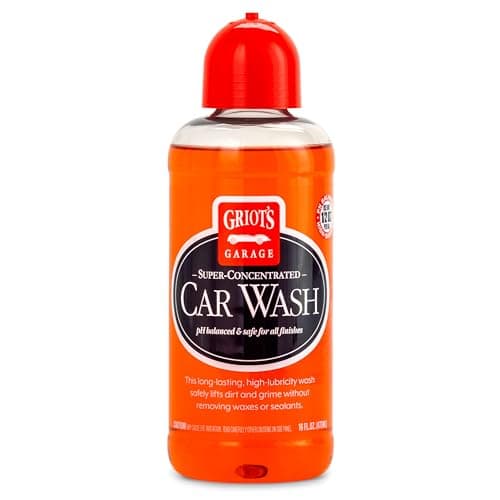
Heavily concentrated, so the small bottle price is misleading in your favor — a capful per bucket means this lasts far longer than the volume suggests. Straightforward pH-neutral chemistry with nothing clever about it.
Lubricity
Strong
Cleaning
Strong
Suds
Good
Coating safe
Exceptional
Value
Exceptional
Why we picked it
By far the cheapest per wash here
Genuinely concentrated, so a bottle lasts a season
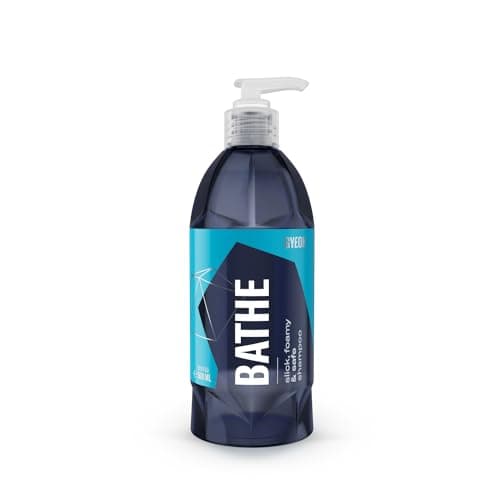
Bathe exists to wash coated cars without leaving anything behind, and that narrow purpose is exactly why it is the right answer if your car is coated. High lubricity, no gloss agents, no conditioners — the beading you paid for is still there afterwards.
Lubricity
Exceptional
Cleaning
Strong
Suds
Strong
Coating safe
Exceptional
Value
Good
Why we picked it
Leaves nothing on the paint that could block a coating
Very high lubricity for a residue-free soap
Works in a cannon and a bucket
Good to know. Costs more per wash than a general-purpose soap
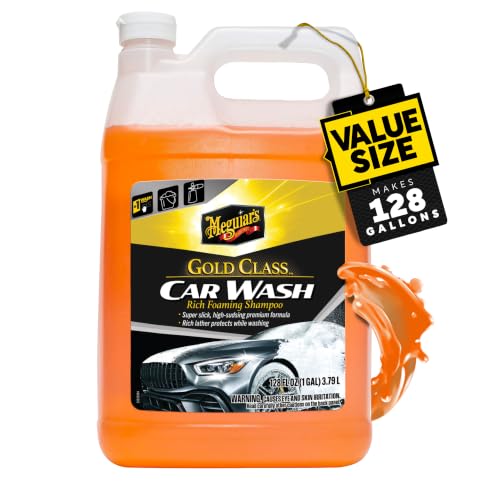
Gold Class is the soap you can buy at 9pm on a Saturday in any town, and that counts for something. It cleans well, it is gentle on existing protection, and a gallon lasts a very long time at normal dilution.
Lubricity
Strong
Cleaning
Strong
Suds
Good
Coating safe
Trade-off
Value
Exceptional
Why we picked it
A gallon at a price that makes rationing pointless
Available in essentially every auto parts store
Gentle on wax and sealant
Good to know. No published dilution ratio we could verify
The sticker price comparison is misleading, because car shampoos are concentrates and dish soap is not. A super-concentrated shampoo uses a very small amount per bucket, and the cost per wash lands close to dish soap — sometimes below it.
The other hidden cost is the one that actually matters: a wash that strips your wax means re-waxing sooner. If dish soap strips a coat of wax that took an hour to apply, the soap was not the cheap option. The best car wash soaps has the full ranking, and the best pH neutral car shampoos covers the coating-safe subset.
07
What about the other household options
Laundry detergent. Worse than dish soap. Harsh, often contains brighteners and abrasive builders, no lubrication at all.
Hand soap or body wash. Poor lubrication, heavy residue, and expensive per bucket. No reason to.
Shampoo (the hair kind). Gentler than dish soap but still no meaningful lubrication, and it leaves conditioning residue on glass.
All-purpose cleaner, diluted. Legitimate for a strip wash, and better suited to it than dish soap. Not for routine washing.
Water alone. Safer than dish soap for routine maintenance on a lightly dusty car, oddly — though a rinseless wash is the proper answer there.
Heavily concentrated, so the small bottle price is misleading in your favor — a capful per bucket means this lasts far longer than the volume suggests.
You can, and it will not ruin the clear coat, but it strips wax and sealant completely, provides almost no lubrication, and dries out rubber and plastic trim with repeated use. The only good reason to use it is to deliberately strip protection before polishing, claying or coating.
Does dish soap damage car paint?
Not chemically, in a single wash. The damage is mechanical: dish soap offers almost no lubrication, so grit on the panel is pressed against the clear coat by the mitt and dragged across it. That marring accumulates over a season and shows up as swirl marks in direct sunlight.
Does dish soap remove car wax?
Yes, completely. It is a degreaser and it does not distinguish between road film and the wax or sealant you applied. That is a problem for a routine wash and an advantage when you are stripping the paint before correction or a coating.
What can I use to wash my car if I have no car soap?
Water alone on a lightly dusty car is safer than dish soap for routine maintenance, though a rinseless wash is the proper answer. A diluted all-purpose cleaner is legitimate for a strip wash. Laundry detergent is worse than dish soap — harsh, with abrasive builders and no lubrication.
Is car wash soap worth the extra money?
Yes, and the price gap is smaller than it appears because shampoos are concentrates. The real cost of a stripping wash is re-waxing sooner — if dish soap removes a coat of wax that took an hour to apply, it was not the cheaper option.
When should you use dish soap on a car?
Once, deliberately, as a strip wash before claying, paint correction or applying a ceramic coating, so that pads do not load with wax and the coating can bond. Re-protect the paint immediately afterwards, because stripped paint is unprotected paint.
10
Sources
Every published figure on this page traces to one of these. Where a manufacturer does not publish a number, the page says so rather than estimating it.
Last reviewed October 17, 2026. Think a figure here is wrong? Tell us at contact@detailingandwax.com and we will check it, fix it and date the correction — see our editorial policy.