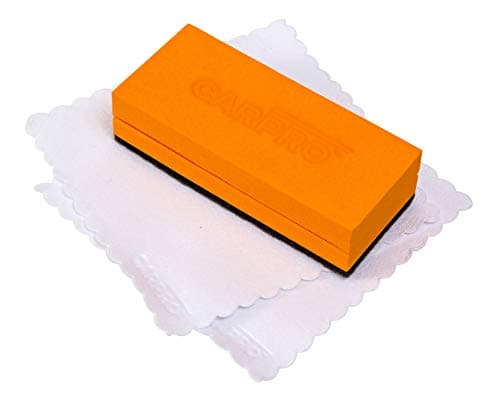
Featured here: the CarPro Ceramic Coating Applicator Kit.
How this is funded: we earn an Amazon commission when you buy through our links, at no extra cost to you. We sell nothing and stock nothing, so a pick is never a product we are trying to move. Prices are pulled live from Amazon and were last checked November 19, 2026; where we cannot verify a price we say so rather than print an old one. Full disclosure.
Research-basedPicked from published manufacturer specifications and the consistent pattern across verified-purchase owner reports. Every product here scores 8.4 or better on our rubric.How we pick
Top pickCARPRO
CarPro Ceramic Coating Applicator Kit
A coating applied with a foam pad soaks into the pad and goes on unevenly; a suede-wrapped block lays it down in a controlled, visible line.
Our score9.0Best for: the only correct way to apply a ceramic coating
The mistake that costs the most is coating over paint you have not corrected — it seals every swirl mark in for years and the only fix is to polish the coating off and start again. The mistake that happens most is leaving the coating unleveled, which cures as a high spot: a hazy, often rainbow-edged patch. Catch a high spot within the product's working window and a clean microfiber removes it. Catch it the next morning and you need a machine.
02
The seven mistakes, by how much they cost to undo
Coating installs do not usually fail because someone used the wrong product. They fail for a small number of procedural reasons, and the useful way to rank them is not by how common they are but by what it takes to put them right.
Only the first two are preventable by planning alone. The rest are technique during the install.
Mistake
Symptom
Fix
Coating over uncorrected paint
Swirls visible under the coating, permanently
Polish the coating off, correct, recoat
Skipping the panel wipe
Coating beads poorly, fails in weeks
Strip, panel wipe, recoat
Too much product, not leveled
Hazy or rainbow high spots
Machine polish the spot, recoat it
Section too large / working in sun
Product flashes before you level it
Machine polish, then smaller sections
Wet during the cure window
Water spots etched into the coating
Usually a machine polish
Dirty or reused applicator
Streaks and embedded grit marks
Polish out, use a fresh applicator
Coating cold or damp panels
Patchy bonding, uneven durability
Strip and recoat in better conditions
03
The consumables that prevent most of these
A suede applicator set, plush leveling towels and a towel stack large enough that you never reach for a used one. Four items, and three of the seven mistakes above are consumable problems. Prices are live from Amazon.
CARPROOutstandingSpec-verified
CarPro Ceramic Coating Applicator Kit
Best for: The only correct way to apply a ceramic coating
A coating applied with a foam pad soaks into the pad and goes on unevenly; a suede-wrapped block lays it down in a controlled, visible line. This kit includes the block, the suede and the leveling towels, which is the complete set for one install.
Coverage
Exceptional
Durability
Good
Versatility
Trade-off
Value
Good
Why we picked it
The correct applicator for a coating, which matters a great deal
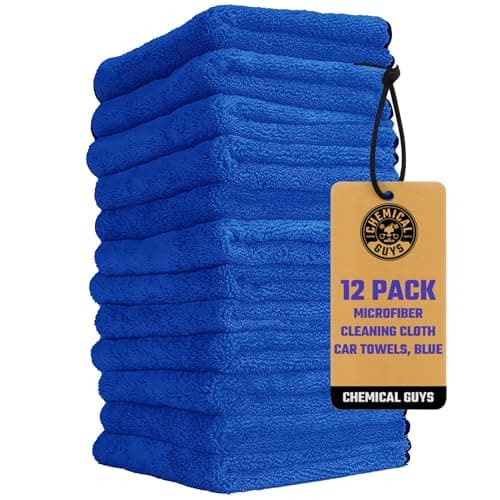
500 GSM, edgeless, and the towel most detailers end up buying in bulk. Edgeless matters more than the GSM figure: a stitched border is the single most common source of a scratch on an otherwise careful job.
Absorbency
Strong
Softness
Exceptional
Edge safety
Exceptional
Value
Strong
Why we picked it
Edgeless, which removes the most common scratch source
500 GSM is the right weight for general work
Survives dozens of wash cycles
Good to know. Costs several times a bulk pack of generic towels
Twelve towels at a price that means you stop rationing them. The single biggest towel mistake is re-using a dirty one because the clean ones are in the wash, and a twelve pack fixes that more effectively than a better towel would.
Absorbency
Strong
Softness
Good
Edge safety
Adequate
Value
Exceptional
Why we picked it
Twelve towels means never re-using a dirty one
Good general-purpose weight
Cheap enough to relegate old ones to wheels
Good to know. Stitched border rather than edgeless
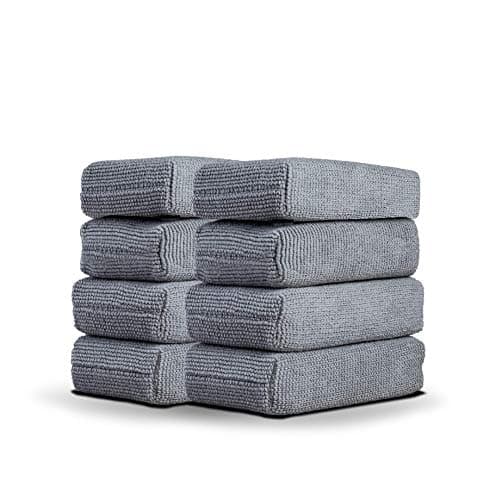
Microfiber applicators absorb far less than foam, which means more of the bottle ends up on the paint instead of inside the pad. Eight in a pack is enough to dedicate one per product and still have spares.
Coverage
Strong
Durability
Strong
Versatility
Strong
Value
Strong
Why we picked it
Absorbs far less product than foam
Eight in the pack
Washes clean and lasts
Good to know. Less effective with heavy paste waxes
A high spot is coating that was applied and never leveled, so it cured thicker than the film around it. It shows as a hazy patch, sometimes with a faint rainbow or oil-slick edge, and it is most visible at a low angle under a single bright light rather than under the sun.
The entire difficulty is that high spots are hard to see at the moment they are easy to fix. Within the leveling window — a minute or two on most coatings — a dry microfiber takes the excess straight off. Once cured, the coating is a hard cross-linked film and nothing short of abrasion removes it.
01Work in sections small enough to inspect, roughly half a panel. Never a whole hood.
02Keep a bright handheld light beside you and look across the panel at a low angle immediately after leveling.
03Level with two towels: one to take the bulk off, a second clean one to finish.
04Look again from a different angle. A high spot invisible from one position is obvious from another.
05Then move on. Re-touching a panel that is already flashing creates the problem you are checking for.
05
The panel wipe, which is the step people skip
After polishing, the paint is covered in polishing oils, and a coating cannot bond through them. A panel wipe — a dedicated solvent wipe-down — removes those oils and leaves bare clear coat for the coating to attach to. Skip it and the coating appears to work for a few weeks, then stops beading.
This failure is particularly frustrating because it looks like a product fault. The install went smoothly, the water beaded beautifully, and a month later the car behaves like it has nothing on it. Do you need to polish before ceramic coating covers the correction stage, and the wipe-down is the step immediately after it.
06
Conditions, which are half the install
Coatings are chemistry with a working window, and temperature and humidity move that window. Hot panels flash the product almost immediately, which is why direct sun is the worst possible condition — you lose the leveling window before you have finished spreading.
Cold or damp is the other failure, and it is less dramatic but just as real: patchy bonding and uneven durability across the car. If your garage is cool and damp, choose a coating formulated for it rather than fighting the conditions — CQUARTZ UK vs Crystal Serum Light is exactly that comparison.
Shade, always. Indoors if at all possible, and never a panel warm to the touch.
Check the forecast for the full cure window, 12 to 24 hours depending on the product.
Decant nothing. Coatings are moisture-sensitive; cap the bottle between panels.
Fresh applicator per install, and change the suede cloth when it stiffens.
Good lighting is a tool, not a luxury. You cannot level what you cannot see.
How to fix a high spot after it has cured
Machine polish the affected area with a light polish on a finishing pad, which abrades the excess coating back level — and inevitably takes some of the surrounding coating with it. Then panel wipe and recoat that section. It is a localised repair rather than a full redo, which is why catching high spots early matters so much.
Six of these seven are conditions-and-habits problems rather than skill problems, which is the honest case for doing it yourself. The one that is not — correcting the paint first — is also the one a shop charges most of the invoice for, and DIY vs professional ceramic coating installation weighs that split line by line.
07
Our recommendation
Buy this one
CarPro Ceramic Coating Applicator Kit
A coating applied with a foam pad soaks into the pad and goes on unevenly; a suede-wrapped block lays it down in a controlled, visible line.
Coating that was applied and never leveled, so it cured thicker than the film around it. It shows as a hazy patch, often with a faint rainbow or oil-slick edge, and it is most visible at a low angle under a single bright light rather than in sunlight.
How do you fix ceramic coating high spots?
Within the leveling window — usually a minute or two — a clean dry microfiber takes the excess straight off. Once cured, you have to machine polish the area with a light polish on a finishing pad, then panel wipe and recoat that section.
What is the most common ceramic coating mistake?
Leaving the coating unleveled, which cures as a high spot. The most expensive mistake is different: coating over paint you have not corrected, which seals every swirl mark under the coating for years and can only be undone by polishing the coating off.
Why did my ceramic coating stop beading after a month?
Most often because the panel wipe was skipped. Polishing leaves oils on the paint, a coating cannot bond through them, and the install looks perfect for a few weeks before the hydrophobic behavior disappears. The fix is to strip, panel wipe and recoat.
Can you apply ceramic coating in the sun?
No. A warm panel flashes the product almost immediately and you lose the leveling window before you have finished spreading the section. Work in shade, indoors if possible, and never on a panel that is warm to the touch.
What happens if a ceramic coating gets wet while curing?
Water sitting on uncured coating etches spots into the film, and removing them generally means a machine polish. Products ask for 12 to 24 hours dry, so the car needs garaged space for that window — check the forecast before you start, not after.
Can you reuse a ceramic coating applicator?
Not between installs. Coating left in the suede cures and stiffens, and a stiff or contaminated applicator drags grit across the paint and leaves streaks. Use a fresh suede cloth per install, and change it mid-install if it hardens.
09
Sources
Every published figure on this page traces to one of these. Where a manufacturer does not publish a number, the page says so rather than estimating it.
Last reviewed October 17, 2026. Think a figure here is wrong? Tell us at contact@detailingandwax.com and we will check it, fix it and date the correction — see our editorial policy.