Independent picks for detailing your own car. We stock nothing, so we have nothing to move.
01
Ceramic & graphene
DIY vs professional ceramic coating installation
A ceramic coating installation is not a bottle. It is correction hours, a controlled space to cure in, and a warranty — and only one of those three is genuinely hard to replace at home.
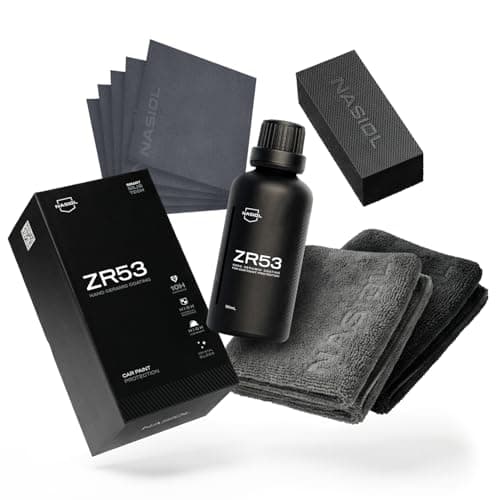
Featured here: the Nasiol ZR53 Nano Ceramic Coating Kit.
How this is funded: we earn an Amazon commission when you buy through our links, at no extra cost to you. We sell nothing and stock nothing, so a pick is never a product we are trying to move. Prices are pulled live from Amazon and were last checked November 19, 2026; where we cannot verify a price we say so rather than print an old one. Full disclosure.
Research-basedPicked from published manufacturer specifications and the consistent pattern across verified-purchase owner reports. Every product here scores 8.4 or better on our rubric.How we pick
Top pickNasiol
Nasiol ZR53 Nano Ceramic Coating Kit
ZR53 arrives as a genuinely complete kit — coating, applicator, surface prep, towels — which makes it the lowest-friction way to install a real coating for the first time.
Our score9.0Best for: a complete first coating kit with everything included
Tap any row for the full write-up. Prices come straight from Amazon and are never typed in by hand.
The verdict
A ceramic coating installation is three things bought together: paint correction, a controlled space to apply and cure in, and a warranty on the result. Install it yourself if you already own a polisher, have a garage you can keep the car in overnight, and are prepared to spend a weekend on it. Pay a professional if the paint needs real correction you are not equipped to do, if you have nowhere dry to park during the cure window, or if you specifically want a warranty — because the bottle is the cheap part of either route and most of a professional invoice is correction labor, not coating.
02
What you are actually paying for
The most common misconception about professional installs is that the shop is using a fundamentally better product. Usually they are not: the same manufacturers sell to both markets, and several of the coatings a professional installs are available in consumer sizes.
What a shop sells is labor and conditions. A full install is dominated by the preparation — washing, chemical decontamination, claying, and then hours of machine polishing to remove the defects the coating would otherwise lock in. The coating application itself is the shortest part of the day.
The line items, and which side of the decision each one falls on
What the install involves
DIY
Professional
Wash and chemical decon
Yours to do
Included
Clay or mechanical decon
Yours to do
Included
Machine paint correction
Needs your polisher and skill
The bulk of the invoice
Panel wipe before coating
Easy to skip by mistake
Standard practice
Controlled temperature and dust
Whatever your garage is
Usually a dedicated bay
Overnight cure space
Your garage, for 12 to 24 hours
Their bay
Warranty on the result
None
Often, with conditions
Coating product itself
Same chemistry available to you
Sometimes installer-only grades
03
Where the money goes, without quoting a figure
Prices vary too much by region, vehicle size and paint condition for a single number to mean anything, so here is the structure instead. A professional install on a car needing genuine correction is a multi-day job dominated by polishing hours, and the invoice scales with those hours rather than with the coating.
That has a practical consequence: the worse your paint, the better value a professional install is, because correction is the part that is genuinely hard to do well and the part you cannot shortcut. Conversely, on a new car with unmarred paint, the correction stage largely disappears and the gap between DIY and professional narrows to the environment and the warranty.
New car, good paint, dry garage. DIY is strong value. Skip heavy correction and install carefully.
Older car, swirled paint, no polisher. A professional is usually better value than buying a machine, pads and liquids and learning on the car you care about.
Older car, swirled paint, you want to learn. DIY, but correct first and accept it will take a weekend. Paint correction steps is the sequence.
No dry overnight parking. Pay a professional, or use a spray instead. The cure window is not negotiable.
You want a documented warranty. Professional. A DIY install has no warranty by definition.
04
Coatings you can legitimately install yourself
A complete first-timer's kit, a forgiving real coating, the longest-claiming consumer coating, and the spray that is the right answer if you are not correcting first. Prices are live from Amazon.
NasiolOutstandingSpec-verified
Nasiol ZR53 Nano Ceramic Coating Kit
Best for: A complete first coating kit with everything included
ZR53 arrives as a genuinely complete kit — coating, applicator, surface prep, towels — which makes it the lowest-friction way to install a real coating for the first time. The chemistry is a conventional silica coating and it behaves like one.
Claimed durability
Good
Ease of application
Strong
Gloss
Strong
Beading
Strong
Value
Good
Why we picked it
The most complete first-coating kit in this roundup
Prep cleaner included, which people routinely forget to buy
Conventional, predictable silica chemistry
Good to know. You pay for kit contents you may already own
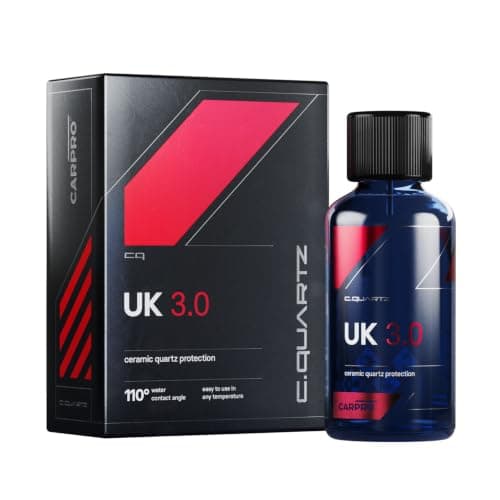
The UK formulation exists specifically because the original CQuartz was difficult to work with in cold, humid conditions — which describes most home garages for half the year. It flashes more predictably at lower temperatures, and that single property makes it the easier real coating to install well.
Claimed durability
Strong
Ease of application
Strong
Gloss
Strong
Beading
Exceptional
Value
Strong
Why we picked it
Formulated for cooler, damper conditions — the real-garage coating
Comes as a kit, so nothing essential is missing
Far more forgiving flash window than the top-tier coatings
Good to know. 50 ml is enough for one car and little margin for error
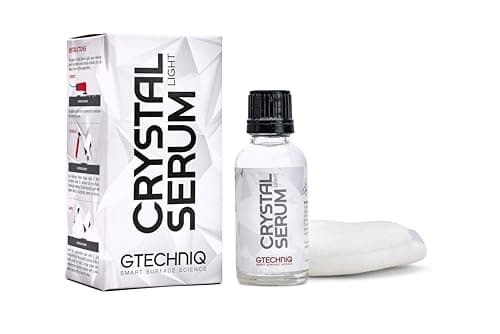
Crystal Serum Light is the consumer version of the coating Gtechniq's accredited installers use, and it is the most durable thing on this page that does not require a trained applicator. It also punishes bad prep more than anything else here — whatever the paint looks like when you apply it is what you are sealing in.
Claimed durability
Exceptional
Ease of application
Adequate
Gloss
Exceptional
Beading
Exceptional
Value
Strong
Why we picked it
The longest claimed life available without installer accreditation
Genuinely hard, slick finish that resists wash marring
Small bottle goes a long way — one car uses a fraction of it
Good to know. Needs a dry, still, temperature-controlled space to cure
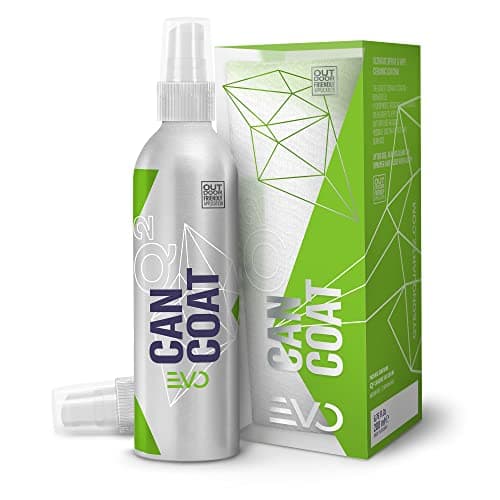
CanCoat sits between a spray and a real coating: it goes on like a spray wax but cures to something closer to a thin coating, and it lasts a season rather than a month. For a daily driver that gets washed regularly, this is the honest sweet spot of this whole category.
Claimed durability
Good
Ease of application
Exceptional
Gloss
Strong
Beading
Exceptional
Value
Strong
Why we picked it
Genuinely close to coating behavior for a fraction of the work
Works on glass, trim and wheels as well as paint
Very hard to apply badly — levels easily
Good to know. Costs more than a conventional spray coating
Yes, and tens of thousands of people do it successfully every year. The application step is not technically difficult — it is a matter of working one panel at a time, spreading thinly in a crosshatch, and leveling within the product's working window. How to apply ceramic coating has the method.
What catches people out is everything either side of that step. The preparation is long and physical. The panel wipe is easy to forget and will stop the coating bonding. And the cure window means the car has to stay dry for 12 to 24 hours, which is a planning problem rather than a skill problem.
The mistakes that cost the most
01Coating over swirled paint, which seals the defects in for years. The expensive mistake, and the most common.
02Skipping the panel wipe, leaving polishing oils that prevent bonding. The coating fails in weeks, not years.
03Applying too much and not leveling it, which cures as a hazy high spot that needs machine polishing to remove.
04Working in the sun or in too large a section, so the product flashes before you can level it.
05Getting it wet during cure, which is the one mistake that is purely about the forecast.
06
The middle option almost nobody considers
You do not have to choose between a weekend of DIY and a professional invoice. A third route works well: pay a shop to do the paint correction only, then install the coating yourself the same week. You buy the hard, skill-intensive part and keep the easy part, and the car never leaves your control during the cure.
The other middle option is to skip semi-permanent coatings altogether. An SiO2 spray gives most of the water behavior for twenty minutes of work and no correction — ceramic spray vs ceramic coating sets that out, and is ceramic coating worth it is the broader value question.
07
Our recommendation
Buy this one
Nasiol ZR53 Nano Ceramic Coating Kit
ZR53 arrives as a genuinely complete kit — coating, applicator, surface prep, towels — which makes it the lowest-friction way to install a real coating for the first time.
The UK formulation exists specifically because the original CQuartz was difficult to work with in cold, humid conditions — which describes most home garages for half the year.
Yes. The application step is a matter of working one panel at a time, spreading thinly and leveling within the product's working window. The harder parts are the preparation beforehand — decontamination and machine correction — and keeping the car dry for the 12 to 24 hour cure.
Is a professional ceramic coating worth it over DIY?
It depends on the paint. Most of a professional invoice is correction labor, so the worse your paint, the better value a professional install is. On a new car with unmarred paint the correction stage largely disappears and DIY becomes strong value.
What does a professional ceramic coating installation include?
Wash, chemical decontamination, clay, hours of machine paint correction, a panel wipe, the coating application itself, a controlled environment, overnight cure space, and often a conditional warranty. The coating application is the shortest part of the job.
How long does a ceramic coating installation take?
The application itself is roughly twenty minutes a panel. What sets the length is the correction in front of it and the cure behind it — a professional installation on paint that needs real correction is a multi-day job dominated by polishing hours, a DIY installation is a weekend, and either route needs the car kept dry for 12 to 24 hours afterwards.
Do professionals use better ceramic coatings?
Sometimes they have access to installer-only grades, but often the chemistry is the same as what you can buy. The real difference is the labor and the controlled environment, not the bottle.
Is ceramic coating hard to apply?
The application itself is not difficult. What makes installs fail is applying too much and not leveling it — which cures as a hazy high spot needing machine polishing — skipping the panel wipe that lets the coating bond, and working in the sun so the product flashes before it can be leveled.
Can I have a shop do the correction and coat it myself?
Yes, and it is an underrated middle route. You pay for the skill-intensive polishing and keep the straightforward part, and the car stays with you through the cure window. Ask the shop to finish with a panel wipe, or do one yourself before coating.
Does a ceramic coating warranty cover scratches?
Usually not. Professional warranties typically cover coating failure rather than physical damage, and they commonly require documented maintenance washes to stay valid. Read the conditions before treating the warranty as the deciding factor.
09
Sources
Every published figure on this page traces to one of these. Where a manufacturer does not publish a number, the page says so rather than estimating it.
Last reviewed November 10, 2026. Think a figure here is wrong? Tell us at contact@detailingandwax.com and we will check it, fix it and date the correction — see our editorial policy.