Independent picks for detailing your own car. We stock nothing, so we have nothing to move.
01
Washing & decon
Microfiber towel GSM explained
GSM is weight per square metre, not quality. A 1200 GSM towel is not twice as good as a 600 - it is twice as thick, which is right for drying and wrong for glass.
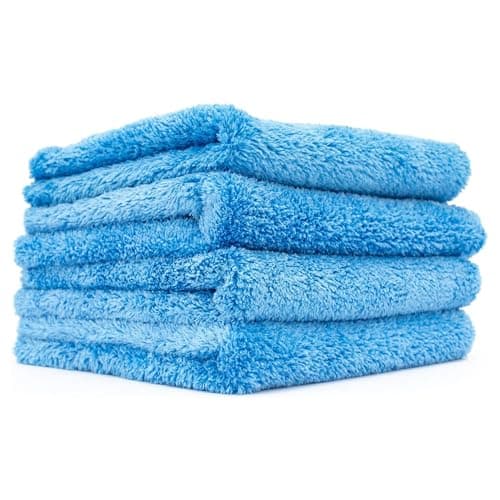
Featured here: the The Rag Company Eagle Edgeless 500 Detailing Towel.
How this is funded: we earn an Amazon commission when you buy through our links, at no extra cost to you. We sell nothing and stock nothing, so a pick is never a product we are trying to move. Prices are pulled live from Amazon and were last checked November 19, 2026; where we cannot verify a price we say so rather than print an old one. Full disclosure.
Research-basedPicked from published manufacturer specifications and the consistent pattern across verified-purchase owner reports. Every product here scores 8.4 or better on our rubric.How we pick
Top pickThe Rag Company
The Rag Company Eagle Edgeless 500 Detailing Towel
500 GSM, edgeless, and the towel most detailers end up buying in bulk.
GSM is grams per square metre — the towel's weight, nothing else. Use roughly 300 to 400 GSM for glass, 350 to 500 GSM for buffing off wax and sealant, and 800 GSM and up (or a twisted-loop drying towel) for drying a whole car. The edge construction and the weave matter more for paint safety than the number does: an edgeless 400 GSM towel is gentler than a 1200 GSM towel with a stitched polyester border.
02
What the number actually measures
GSM stands for grams per square metre. It is a density and weight figure, exactly as it is for paper or fabric. A higher GSM towel has more fibre packed into the same area, so it holds more liquid, feels plusher and is thicker. That is the whole meaning of the number.
It says nothing about fibre quality, the polyester-to-polyamide blend, the weave, or the edge — all of which affect whether the towel marks your paint. A cheap high-GSM towel with coarse fibre and a hard stitched border is a worse towel for paint than a good 400 GSM edgeless one, and it will cost more.
GSM by job, which is the only useful way to read the number
Job
GSM range
Why that weight
Also look for
Glass, inside and out
300 to 400
Thin and low-lint, so it does not smear
Waffle weave or a tight low-pile
Buffing off wax or sealant
350 to 500
Plush enough to be safe, thin enough to control
Edgeless, short to medium pile
Interior and trim
300 to 400
Grabs dust without shedding
A separate colour, kept away from paint
Drying paint
800 and up
Absorbs a whole car without wringing
Twisted loop or a large plush weave
Wheels and exhaust tips
Any, the cheapest
These towels are consumables
Keep them permanently separate
03
Towels at the three weights that matter
A mid-weight edgeless towel for buffing and two drying towels. Prices are live from Amazon.
The Rag CompanyCategory-definingSpec-verified
The Rag Company Eagle Edgeless 500 Detailing Towel
Best for: The general-purpose towel to standardize on
500 GSM, edgeless, and the towel most detailers end up buying in bulk. Edgeless matters more than the GSM figure: a stitched border is the single most common source of a scratch on an otherwise careful job.
Absorbency
Strong
Softness
Exceptional
Edge safety
Exceptional
Value
Strong
Why we picked it
Edgeless, which removes the most common scratch source
500 GSM is the right weight for general work
Survives dozens of wash cycles
Good to know. Costs several times a bulk pack of generic towels
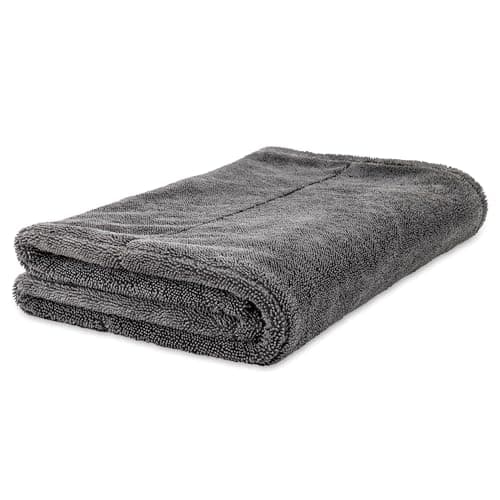
A twisted-loop drying towel absorbs so much water that you can lay it flat and lift it rather than wiping, which is the whole technique. Two in the pack, and two is what a full-size car actually needs.
Absorbency
Exceptional
Softness
Strong
Edge safety
Exceptional
Value
Strong
Why we picked it
Absorbs enough to lay-and-lift rather than wipe
Two in the pack, which a full car genuinely needs
Edges are safe for paint
Good to know. Takes a long time to dry after washing
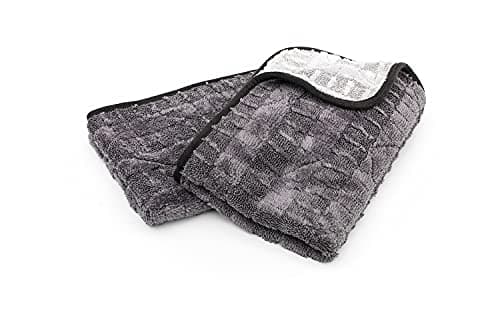
Most big drying towels have stitched borders; this one does not, which removes the usual scratch risk at exactly the moment the paint is clean and vulnerable. Griot's PFM weave is also unusually soft for the size.
The edge. A stitched polyester border is harder than the microfibre around it and it is the part most likely to leave a mark. Edgeless or microfibre-banded towels are the safer buy at any weight.
The weave. Twisted loop absorbs enormously and is ideal for drying. Short pile is controllable and right for buffing. Waffle is the glass weave. Plush long pile is drying and final wipes.
The blend. More polyamide generally means a softer, more absorbent towel. Many manufacturers do not publish the ratio, in which case the honest answer is that you cannot compare on this specification.
How it has been laundered. A towel washed with fabric softener is a ruined towel — softener coats the fibre and kills absorbency permanently.
Whether it has ever touched a wheel. One wheel wipe contaminates a towel with brake-dust grit for good. Segregate by colour and never cross over.
05
How to wash them so they stay safe
01Wash microfibre on its own, never with cotton — cotton lint clogs the fibre.
02Use a plain liquid detergent with no softener, no bleach and no scent beads.
03Warm rather than hot, and skip the fabric softener entirely.
04Tumble on low or air dry. High heat melts the fibre tips and a melted tip scratches.
05Sort by job before washing, so drying towels never share a load with wheel towels.
Retire a towel when it stops absorbing or when the pile feels stiff and slick rather than grabby. A towel that pushes water around instead of taking it up is a towel that is dragging across the paint, and dragging is what puts in fine marring. How to wash a car without scratching it covers where in the process that damage actually happens.
06
How many you need
More than feels reasonable, because the whole point is to stop using a loaded towel. A realistic set for one car is two drying towels, six to eight mid-weight edgeless towels for buffing and wipe-downs, two or three glass towels, two interior towels and a handful of cheap ones permanently assigned to wheels.
Twisted-loop drying towels frequently carry no GSM figure, and that is not a brand being evasive. A twisted loop is a construction rather than a density: the fibre is spun into long loops that hold water in the gaps between them, so the towel's absorbency comes from its structure rather than from how much fibre is packed into the area.
Quoting a GSM for one would be technically possible and practically meaningless, which is why several of the best drying towels on the market simply do not. Where a manufacturer publishes nothing, this site says so rather than estimating — the honest comparison between two towels of different construction is what each is built to do, not a number one of them never published.
08
The polyester and polyamide split
Microfibre for car care is a blend of polyester, which does the scrubbing, and polyamide, which does the absorbing. The ratio is usually quoted as 80/20 or 70/30, with the higher polyamide figure giving a softer, more absorbent and more expensive towel.
It is a genuinely useful specification and most brands do not publish it. Where you can see it, a 70/30 blend is the better choice for anything touching paint and an 80/20 is fine for interiors, engine bays and wheels. Where you cannot, the weave and the edge tell you more than guessing at the blend would.
One practical consequence of the blend: polyamide is what fabric softener ruins. The softener coats the fibre and blocks the capillary action absorbency depends on, so a high-polyamide towel washed once with softener loses most of what you paid extra for. That damage is permanent. Construction decides how many wash cycles a towel survives, and how to wash microfiber towels covers the routine that gets you those cycles.
09
Our recommendation
Buy this one
The Rag Company Eagle Edgeless 500 Detailing Towel
500 GSM, edgeless, and the towel most detailers end up buying in bulk.
Grams per square metre — the towel's weight and density. Higher GSM means more fibre in the same area, so the towel is thicker, plusher and holds more liquid. It says nothing about fibre quality, weave or edge construction.
What GSM microfiber towel is best for cars?
It depends on the job. Roughly 300 to 400 GSM for glass, 350 to 500 GSM for buffing off wax and sealant, and 800 GSM or more for drying a whole car. There is no single best weight, which is why most people need three.
Is a higher GSM microfiber towel better?
Only for absorbency. For drying, higher is genuinely better. For buffing, a mid-weight towel is easier to control, and an edgeless 400 GSM towel is safer on paint than a 1200 GSM one with a hard stitched border.
What GSM is best for drying a car?
800 GSM and up for a plush weave, or any good twisted-loop drying towel, where manufacturers often do not publish a GSM figure at all. The requirement is absorbing a whole car without needing to be wrung out partway through.
Can you ruin a microfiber towel by washing it?
Yes. Fabric softener coats the fibre and permanently kills absorbency, bleach destroys it, and high dryer heat melts the fibre tips so the towel starts scratching. Plain detergent, warm water and a low-heat tumble is the whole routine.
11
Sources
Every published figure on this page traces to one of these. Where a manufacturer does not publish a number, the page says so rather than estimating it.
Last reviewed October 11, 2026. Think a figure here is wrong? Tell us at contact@detailingandwax.com and we will check it, fix it and date the correction — see our editorial policy.