Independent picks for detailing your own car. We stock nothing, so we have nothing to move.
01
Washing & decon
How to wash microfiber towels
No fabric softener, no bleach, no dryer sheets, and never in the same load as cotton. Get those four right and a good towel lasts years instead of months.
Featured here: the The Rag Company Eagle Edgeless 500 Detailing Towel.
How this is funded: we earn an Amazon commission when you buy through our links, at no extra cost to you. We sell nothing and stock nothing, so a pick is never a product we are trying to move. Prices are pulled live from Amazon and were last checked November 19, 2026; where we cannot verify a price we say so rather than print an old one. Full disclosure.
Research-basedPicked from published manufacturer specifications and the consistent pattern across verified-purchase owner reports. Every product here scores 8.4 or better on our rubric.How we pick
Top pickThe Rag Company
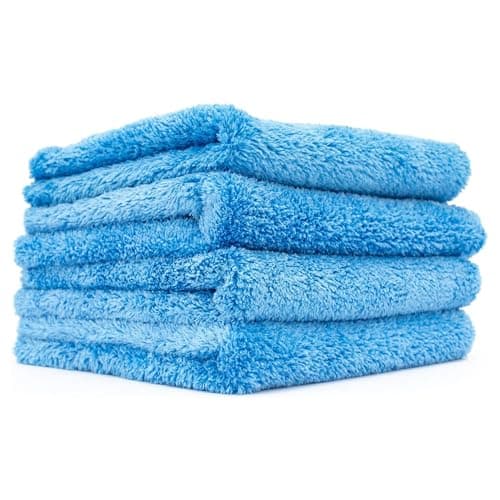
The Rag Company Eagle Edgeless 500 Detailing Towel
500 GSM, edgeless, and the towel most detailers end up buying in bulk.
Wash detailing microfiber separately from everything else, in warm water with a liquid detergent that contains no fabric softener, no bleach and no optical brighteners. Tumble dry on low or no heat, or air dry. Never use fabric softener or dryer sheets on microfiber at any point — they coat the fibers with a waxy film that permanently destroys absorbency, and no amount of rewashing brings it back.
02
Why microfiber is fussy
A microfiber towel works because it is made of split fibers — each strand is divided into far finer filaments, which creates an enormous surface area and tiny channels that pull liquid and grit in and hold them. Absorbency and cleaning ability both come from that structure.
Everything that ruins microfiber ruins it the same way: by filling or coating those channels. Fabric softener deposits a film by design. Cotton lint clogs the gaps. Bleach breaks the fibers down. Heat melts them closed, because microfiber is plastic — polyester and polyamide — not a natural fiber.
The four irreversible mistakes are the ones worth memorising
Do not use
What it does
Reversible?
Fabric softener
Coats fibers with a waxy film
No
Dryer sheets
Same film, applied in the dryer
No
Bleach
Breaks down the fiber structure
No
Optical brighteners
Build up in the fiber channels
Partly, with rewashing
High dryer heat
Melts the split fibers closed
No
Washing with cotton
Fills the channels with lint
Yes, usually
Too much detergent
Leaves residue that reduces absorbency
Yes, with a rinse cycle
03
The routine
01Separate by job before washing. Paint towels, wheel towels, interior towels and anything that touched a coating go in different loads. This is the most important step and the one most often skipped.
02Shake or pre-rinse heavily soiled towels to get loose grit out before it goes into the drum.
03Pre-soak anything with wax, polish or coating residue in warm water with a little all-purpose cleaner for 30 minutes or more.
04Wash warm, not hot. Warm water opens the fibers and releases product; hot water risks the fibers themselves.
05Use a liquid detergent, modestly. Powder does not always dissolve fully and leaves residue in the channels. Half what you would use for clothes is plenty.
06Add a second rinse cycle. Detergent residue is the most common cause of a towel that has gone strangely unabsorbent.
07Tumble dry low or no heat, or air dry. No dryer sheets, ever. Air drying is the safest option and costs nothing.
04
Towels that survive the wash cycle
Plush edgeless towels, a bulk pack for the jobs that eat towels, and a dedicated drying towel — chosen because construction quality is what determines how many wash cycles a towel survives. Prices are live from Amazon.
The Rag CompanyCategory-definingSpec-verified
The Rag Company Eagle Edgeless 500 Detailing Towel
Best for: The general-purpose towel to standardize on
500 GSM, edgeless, and the towel most detailers end up buying in bulk. Edgeless matters more than the GSM figure: a stitched border is the single most common source of a scratch on an otherwise careful job.
Absorbency
Strong
Softness
Exceptional
Edge safety
Exceptional
Value
Strong
Why we picked it
Edgeless, which removes the most common scratch source
500 GSM is the right weight for general work
Survives dozens of wash cycles
Good to know. Costs several times a bulk pack of generic towels
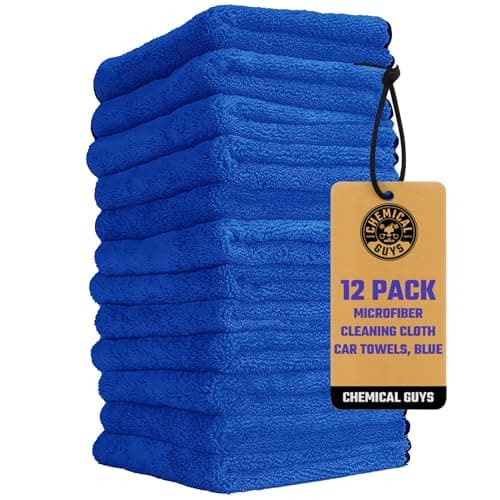
Twelve towels at a price that means you stop rationing them. The single biggest towel mistake is re-using a dirty one because the clean ones are in the wash, and a twelve pack fixes that more effectively than a better towel would.
Absorbency
Strong
Softness
Good
Edge safety
Adequate
Value
Exceptional
Why we picked it
Twelve towels means never re-using a dirty one
Good general-purpose weight
Cheap enough to relegate old ones to wheels
Good to know. Stitched border rather than edgeless
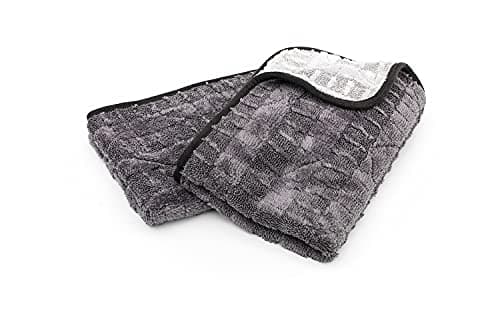
A twisted-loop drying towel absorbs so much water that you can lay it flat and lift it rather than wiping, which is the whole technique. Two in the pack, and two is what a full-size car actually needs.
Absorbency
Exceptional
Softness
Strong
Edge safety
Exceptional
Value
Strong
Why we picked it
Absorbs enough to lay-and-lift rather than wipe
Two in the pack, which a full car genuinely needs
Edges are safe for paint
Good to know. Takes a long time to dry after washing
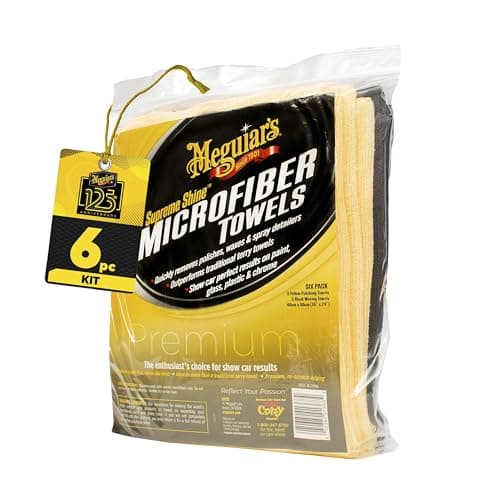
Perfectly good general-purpose towels available in every auto parts store, which is their main advantage. Nothing here is best in class and nothing needs to be — these are for wax removal, interiors and glass.
Absorbency
Good
Softness
Good
Edge safety
Adequate
Value
Exceptional
Why we picked it
Available in any auto parts store
Fine for wax removal, interiors and glass
Cheap per towel
Good to know. Meguiar's publishes neither size nor GSM we could verify
This is the hardest case, and it is why detailers keep a separate pile. Cured wax, polish oils and especially coating residue do not come out in a normal wash cycle — they stay in the fibers, stiffen the towel, and then transfer onto the next panel you use it on.
A long pre-soak in warm water with an all-purpose cleaner recovers most wax-loaded towels. Towels that have leveled a ceramic coating are usually not recoverable, because the residue cures into the fibers the same way it cures on paint — treat those as consumables and bin them after the install.
Wax and sealant residue. Pre-soak in warm water plus APC, then wash normally. Usually recovers fully.
Polish and compound residue. Pre-rinse first to remove abrasives, then pre-soak. Abrasive left in a towel is a scratching risk.
Ceramic coating residue. Generally terminal. Budget coating applicator towels as single-use items.
Tire dressing. Silicone-heavy and hard to remove. Keep dressing towels permanently separate.
Interior cleaner and glass cleaner. Washes out easily. These are the least demanding towels you own.
06
How to tell a towel is finished
Microfiber does not look worn out, which is why people keep using towels long past the point they should. Two tests are reliable, and both take seconds.
The water test: drip water onto the towel. A healthy towel pulls it in instantly; a contaminated or heat-damaged one lets it bead and roll off. The snag test: drag the towel lightly across the back of your hand or a pane of glass. Healthy microfiber grabs slightly. A towel that glides has had its fibers coated or melted closed and is no longer cleaning anything — it is just moving dirt around.
Also check the edges
On a towel with a stitched border, the border is harder than the pile and it is the part that marks paint once it starts to fray. That is the main argument for edgeless construction on anything that touches a panel — microfiber towel GSM explained covers the construction side, and the best microfiber towels for cars has the full ranking.
07
How many towels this routine assumes
More than most people own. The rule that prevents marring is a clean towel face per panel, which means a full detail consumes a sizeable stack — and a stack is also what makes the separate-loads discipline practical rather than theoretical.
Buying in bulk is the cheap way there, and bulk packs are also the right place to spend less: a twelve-pack for interior and general work, plus a smaller number of genuinely good plush towels reserved for paint. The best car drying towels covers the drying stage, which wants a different towel entirely.
08
Our recommendation
Buy this one
The Rag Company Eagle Edgeless 500 Detailing Towel
500 GSM, edgeless, and the towel most detailers end up buying in bulk.
Separately from all other laundry, in warm water with a modest amount of liquid detergent containing no fabric softener, bleach or optical brighteners, with a second rinse cycle. Then tumble dry on low or no heat, or air dry. Never use dryer sheets.
Can you use fabric softener on microfiber towels?
No, and this is the one mistake that cannot be undone. Fabric softener coats the split fibers with a waxy film by design, which destroys the absorbency that makes microfiber work. Dryer sheets do exactly the same thing in the dryer.
Can you put microfiber towels in the dryer?
On low or no heat, yes. Microfiber is polyester and polyamide — a plastic — so high heat melts the split fibers closed and the towel never recovers. Air drying is safer and costs nothing.
How do you get wax out of microfiber towels?
Pre-soak them in warm water with a little all-purpose cleaner for 30 minutes or more, then wash normally. That recovers most wax and sealant loaded towels. Towels used to level a ceramic coating usually cannot be recovered and should be treated as single-use.
Should you wash microfiber towels with other laundry?
No. Cotton sheds lint that clogs the fiber channels and reduces absorbency. Microfiber also needs to be separated by job — paint towels, wheel towels, interior towels and dressing towels should never share a load.
How do you know when a microfiber towel is worn out?
Drip water on it: a healthy towel absorbs instantly, a damaged one lets it bead and roll off. Then drag it across the back of your hand — healthy microfiber grabs slightly, and a towel that glides has had its fibers coated or melted closed.
Can you reuse a towel that cleaned the wheels on paint?
No. Brake dust is embedded metal particles that do not reliably wash out of microfiber, so a wheel towel stays a wheel towel permanently. Buying wheel towels in a different color makes the mistake impossible to make.
10
Sources
Every published figure on this page traces to one of these. Where a manufacturer does not publish a number, the page says so rather than estimating it.
Last reviewed October 17, 2026. Think a figure here is wrong? Tell us at contact@detailingandwax.com and we will check it, fix it and date the correction — see our editorial policy.