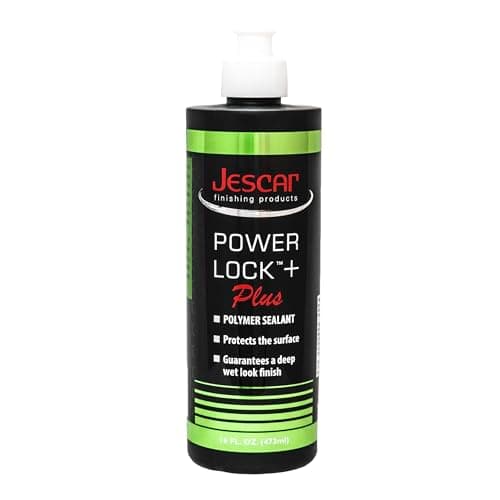
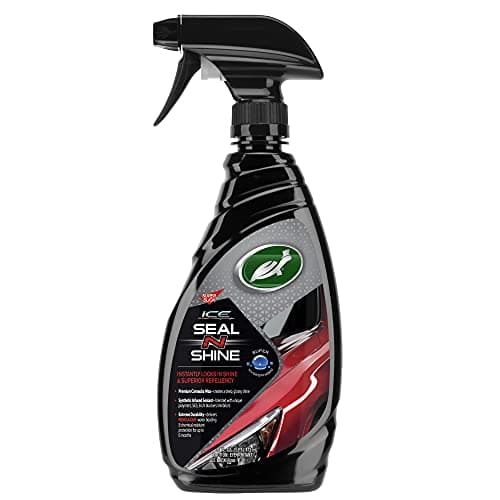
Our top pick: the Jescar Power Lock Plus Polymer Sealant.
How this is funded: we earn an Amazon commission when you buy through our links, at no extra cost to you. We sell nothing and stock nothing, so a pick is never a product we are trying to move. Prices are pulled live from Amazon and were last checked November 19, 2026; where we cannot verify a price we say so rather than print an old one. Full disclosure.
Research-basedPicked from published manufacturer specifications and the consistent pattern across verified-purchase owner reports. Every product here scores 8.4 or better on our rubric.How we pick
Best protection for light paintJescar
Jescar Power Lock Plus Polymer Sealant
Power Lock Plus is the durability benchmark among consumer sealants, and it applies as easily as anything here — thin coat, short cure, wipe off.
Tap any row for the full write-up. Prices come straight from Amazon and are never typed in by hand.
The verdict
Jescar Power Lock Plus is the pick for white paint: a polymer sealant with the longest realistic durability of anything here, and on white the glassy, slick finish a synthetic leaves is exactly what you want. Collinite 845 is the alternative if you prefer a hybrid that still carries some carnauba warmth. Skip the soft carnauba pastes entirely — they are the right answer on black and a waste of money on white.
02
White paint has a different problem
The thing people notice about a black car is its reflections. The thing people notice about a white car is whether it is clean. White shows traffic film, brake dust rust spots, bug residue and water spotting far more clearly than it shows swirl marks, because the contrast runs the other way: dark contamination against a light background.
That inverts the product priority. On white, depth is irrelevant — there are almost no reflections for a carnauba to warm up. What matters is a layer that is slick enough for dirt to rinse off, durable enough to still be there at the next wash, and chemically resistant enough that it does not stain.
The real problems on light paint, and the products that address them
Power Lock Plus is the durability benchmark among consumer sealants, and it applies as easily as anything here — thin coat, short cure, wipe off. If the goal is to protect a car properly and not think about it for six months, this is the product.
Durability
Exceptional
Gloss
Strong
Ease of use
Strong
Value
Strong
Why we picked it
The longest-lasting sealant in this roundup
Easy, forgiving application for its durability class
Works by hand or by machine
Good to know. Needs a properly clean, bare surface to bond
Published specifications
Type
Polymer sealant
Claimed durability
Up to 12 months, per Jescar
Volume
16 oz
Form
Liquid
Coating safe
No — a sealant replaces a coating, it does not top one
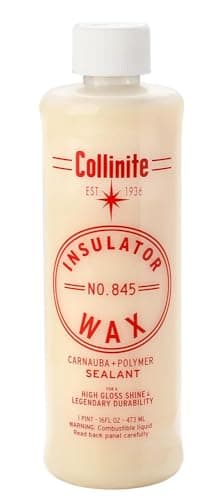
845 is a carnauba and polymer hybrid originally formulated for electrical insulators, and it is the most durable thing in this roundup that still calls itself a wax. Six months outdoors is realistic where a pure carnauba manages six weeks.
Durability
Exceptional
Gloss
Good
Ease of use
Good
Value
Exceptional
Why we picked it
Comfortably the longest-lasting wax here
Genuinely cheap per application
Excellent in winter and on cars that live outdoors
Good to know. Thin and runny — easy to over-apply on the first try
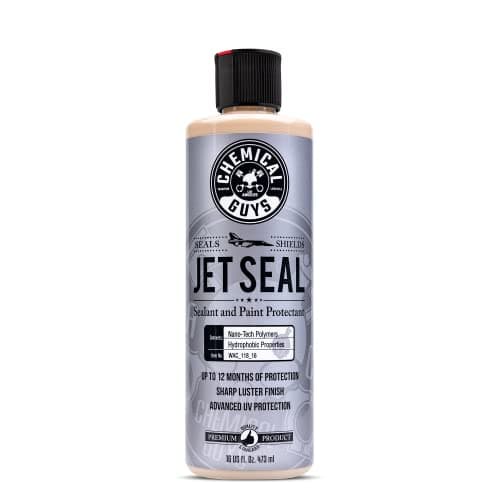
JetSeal was developed for aerospace surfaces and it tolerates heat better than most paint sealants, which makes it genuinely useful on wheels and exhaust trim as well as paint. Durable, straightforward, and nothing clever about applying it.
Durability
Exceptional
Gloss
Adequate
Ease of use
Strong
Value
Strong
Why we picked it
Tolerates heat, so it works on wheels and trim
Long durability claim backed by a long track record
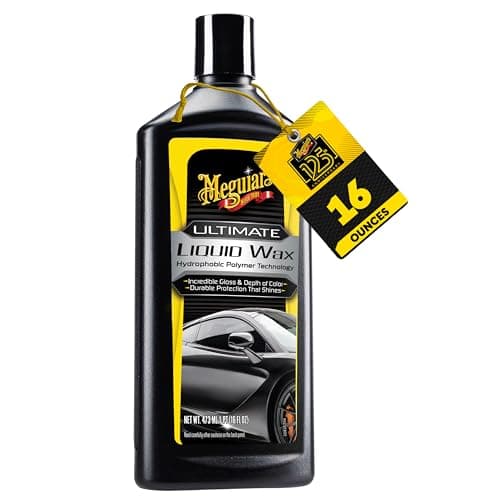
Ultimate Liquid Wax is a synthetic that can be applied in direct sun and wiped off whenever you get around to it, neither of which is true of most waxes. For anyone who has ever fought a hazed, half-dried panel, that alone is the reason to buy it.
Durability
Good
Gloss
Strong
Ease of use
Exceptional
Value
Strong
Why we picked it
Can be applied in direct sun without hazing
No panic about wiping it off in time
Widely available and cheap
Good to know. Synthetic look rather than carnauba depth
A hybrid sprayed on and wiped off, with enough sealant chemistry in it to last months rather than weeks. The reason to buy it is speed: this is the product that gets used, rather than the one that sits on the shelf waiting for a free Saturday.
Durability. A polymer sealant lasts months rather than weeks, so the paint is actually protected during the periods you are not thinking about it.
Slickness. Synthetics leave a lower-friction surface, so road film and bug residue release more easily in the next wash.
Chemical resistance. A sealant tolerates a stronger shampoo and a bug remover better than a soft wax does.
No staining risk. Soft natural waxes can pick up and hold contamination in a way that shows on white paint specifically.
Cost per month. A sealant costs more per bottle and far less per month of protection.
05
The decontamination step that matters more than the wax
Those small orange-brown dots on a white car's lower panels and behind the wheels are embedded iron particles from brake dust, oxidising in place. No wax prevents or hides them, and polishing only removes the ones that have not yet keyed in. The fix is chemical: an iron remover twice a year, followed by clay if the paint still feels rough.
The best iron removers covers the products, and do you need a clay bar answers whether the mechanical step is required afterwards. On white paint this one routine makes a bigger visible difference than any wax on this page.
06
Application and maintenance
01Wash, decontaminate and dry. A sealant bonds to clear coat, so anything in the way reduces its life.
02Apply thin with a foam applicator, one panel at a time.
03Let it haze for the time on the bottle — synthetics genuinely need their cure window.
04Remove with a plush microfiber towel, then do a second light pass with a clean one.
05Top with a detail spray between washes rather than re-applying the sealant. When to use detail spray covers the limits.
Twice a year is the realistic sealant schedule for a white daily driver, timed before and after winter. How often should you wax your car covers why the climate matters more than the calendar, and car wax vs sealant sets out the full comparison if you are still deciding between the two categories.
If you want the deepest possible look instead of the most practical one, that argument belongs to dark paint — and it is a genuinely different ranking: the best car wax for black cars.
07
Does white paint show swirl marks?
Far less than dark paint does, and this is the one real advantage of owning a white car. Swirl marks are visible because of the contrast between a scratch catching light and the dark background behind it. On white there is almost no dark background, so the same defects register as a very slight loss of sharpness rather than as a visible web.
That has a practical upside and a practical trap. The upside is that a white car tolerates a less-than-perfect wash routine without looking damaged. The trap is that the damage is still accumulating, and if the car is ever repainted or resold to someone with a torch, it is all still there. How often should you polish your car covers why the correct interval does not change with colour.
08
The three stains that specifically affect light paint
Rail dust and brake dust. Small orange-brown dots, worst on the lower doors and behind the wheels. Chemical, not mechanical — an iron remover is the answer.
Tar and bug residue on the nose. Dark against white and impossible to ignore. Remove promptly; the longer it sits in sun the more likely it etches.
Traffic film. A grey-brown haze along the rockers and the back of a hatchback, caused by road spray carrying diesel residue. A slick sealant plus a strong shampoo handles it; wax does not.
None of these are wax problems and none of them are solved by waxing more often. They are the reason the decontamination routine matters more on a white car than the protection product does, and they are also why a durable slick layer beats a soft natural one here — dirt that releases easily is dirt you never have to scrub off.
09
Our recommendation
Buy this one
Jescar Power Lock Plus Polymer Sealant
Power Lock Plus is the durability benchmark among consumer sealants, and it applies as easily as anything here — thin coat, short cure, wipe off.
845 is a carnauba and polymer hybrid originally formulated for electrical insulators, and it is the most durable thing in this roundup that still calls itself a wax.
Jescar Power Lock Plus, which is a polymer sealant rather than a wax. On white paint the depth a carnauba adds is invisible, so the useful qualities are durability, slickness and chemical resistance — all of which a synthetic does better.
Does wax make a white car look better?
Less than it does on a dark car. Most of what you notice on white paint is cleanliness rather than reflection, so the gain comes from a slick layer that keeps dirt from keying in, not from a warm carnauba glow.
How do you get rust spots off a white car?
With an iron remover. Those orange dots are embedded brake dust particles oxidising in the clear coat, and a dedicated iron remover dissolves them chemically. No wax prevents them and polishing only reaches the ones that have not keyed in yet.
Should you wax a pearl white car differently?
No — the layer you protect is the same clear coat. Be more cautious about correction, though: the pearl effect lives in a tinted mid-coat you cannot polish back, so heavy compounding on a tri-coat is a risk you cannot undo.
How often should you wax a white car?
Twice a year with a polymer sealant, timed before and after winter, with a detail spray between washes. That schedule suits white paint better than a monthly carnauba, because what white needs is continuous protection rather than peak gloss.
11
Sources
Every published figure on this page traces to one of these. Where a manufacturer does not publish a number, the page says so rather than estimating it.
Last reviewed October 11, 2026. Think a figure here is wrong? Tell us at contact@detailingandwax.com and we will check it, fix it and date the correction — see our editorial policy.