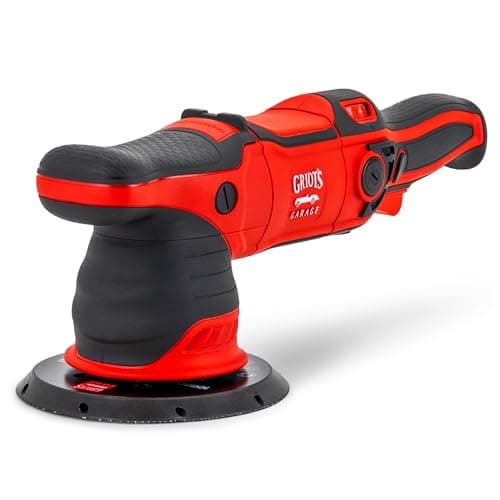
Featured here: the Griot's Garage Griot's Garage G9 Random Orbital Polisher.
How this is funded: we earn an Amazon commission when you buy through our links, at no extra cost to you. We sell nothing and stock nothing, so a pick is never a product we are trying to move. Prices are pulled live from Amazon and were last checked October 5, 2026; where we cannot verify a price we say so rather than print an old one. Full disclosure.
Research-basedPicked from published specifications and the pattern across verified-purchase reports. We have not used these ourselves and do not pretend otherwise.How we pick
The verdict
In nearly every modern listing, 'dual action' and 'random orbital' describe the same machine and you can treat the terms as synonyms. The one to avoid is a fixed-orbit waxer — it oscillates without rotating, and it cannot correct paint at any price.
02
Three terms, two machines
The confusion here is genuine and it is the manufacturers' fault. Here is what each term actually means:
What each term means in practice
Term
What it describes
Corrects paint?
Dual action (DA)
Pad spins and the spindle orbits — two motions
Yes
Random orbital
The same thing. The rotation is free rather than driven.
Yes
Forced rotation DA
Spin and orbit, but the spin is gear-driven and cannot stall
Yes, and faster
Orbital waxer
The pad oscillates only. No rotation at all.
No
The practically important distinction is the last row. A cheap orbital waxer — often sold as a 10 in machine with a bonnet — applies and removes wax very pleasantly and removes no defects whatsoever, because nothing abrades the surface. People buy these expecting swirl removal and are reliably disappointed.
03
Machines that do correct paint
All three of these are free-spinning dual action machines. Prices are live from Amazon.
Griot's GarageSpec-verified
Griot's Garage G9 Random Orbital Polisher
Best for: The default answer for a first serious machine
A 9mm throw and a 1000W motor put the G9 exactly where most home detailers should be: fast enough to finish a car in an afternoon, short enough in the throw to stay predictable near badges and body lines. It is the machine we would buy if we were buying one machine.
Who should skip it. If you already own a competent 8mm machine, this is not the upgrade you think it is — the extra millimeter of throw will not fix inconsistent results. Put the money into better pads and a second liquid instead. It is also heavier than the G8, and you notice that on vertical panels after an hour.
Correction speed
8.5
Control
9.0
Ergonomics
7.5
Build
9.0
Value
8.5
What works
9mm throw is the best general-purpose compromise on the market
1000W does not bog down under pressure on a cutting pad
Griot's lifetime warranty is the strongest in the category
Takes the same 5 in plate and 5.5 in pads as everything else
What does not
Heavier than the G8, which shows on doors and quarters
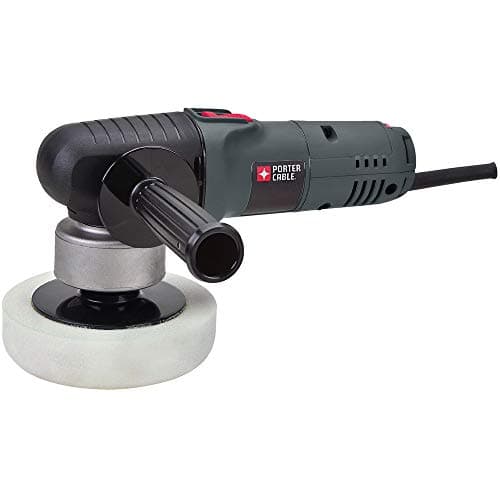
The 7424XP has been the default budget dual action for well over a decade, and the reason is simple: it is almost impossible to damage paint with one, and parts and backing plates are everywhere. It is slower than anything modern and it does not care.
Who should skip it. Anyone who wants to finish a correction in one session. It is genuinely slow by current standards, and the modern short-throw machines are more comfortable to hold. Buy it for the price and the parts ecosystem, not for performance.
Correction speed
6.0
Control
9.5
Ergonomics
6.5
Build
8.0
Value
8.5
What works
Enormous aftermarket of backing plates and parts
Extremely hard to damage paint with — the original safe machine
Routinely the cheapest genuinely reliable dual action available
What does not
Slow by modern standards, on every panel
Porter-Cable does not publish a throw figure we could verify
Ergonomics are dated next to a G8 or G9
Published specifications
Throw
Not published
Motor
Not published
Speed settings
Variable, 6 positions
Backing plate
6 in
In the box
Tool
AVID POWEROwner reports
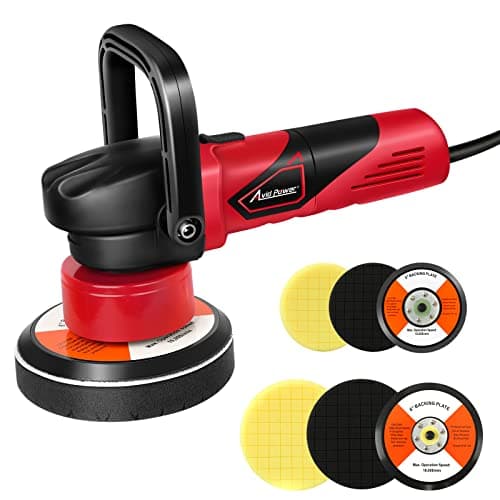
AVID POWER 5/6 in Dual Action Polisher Kit
Best for: Finding out whether you actually enjoy machine polishing
This is the machine to buy if you are not yet sure you will use one. It is a six-speed dual action at roughly a third of the price of the established names, it comes with pads, and it will remove light swirls from a daily driver perfectly well.
Who should skip it. Anyone who already knows they will correct more than one car a year. The build quality gap is real — bearing noise and backing plate wobble are the two complaints that recur in owner reports — and you will want a better machine within a season.
Correction speed
6.5
Control
7.5
Ergonomics
6.5
Build
5.5
Value
9.0
What works
The lowest-risk way to try machine polishing
Two backing plate sizes included, which is unusual at this price
Perfectly capable of removing light swirl marks
What does not
Bearing noise and plate wobble recur in owner reports
No published throw figure, which makes it hard to compare properly
Not a machine to do a full correction on a dark car with
Published specifications
Throw
Not published
Motor
Not published
Speed settings
6
Backing plate
5 in and 6 in
In the box
Kit with pads
04
Free spinning against forced rotation
Within real dual action machines there is one further distinction worth knowing. A free-spinning machine lets the pad stop rotating under pressure — the stall protection that makes a dual action safe. A forced-rotation machine gears the spin so it cannot stall, which cuts faster and gives up some of the safety margin.
For a home detailer, free spinning is almost always the right choice, and it is what every machine in our dual action roundup is. Forced rotation sits between a dual action and a rotary in both speed and risk, and it suits someone who has already outgrown a free-spinning machine.
05
What to check before you buy
A published throw figure in millimeters. Its absence is the clearest signal that a machine is not a correction tool.
Variable speed with at least five settings. Spreading product and working it need different speeds.
A standard backing plate size — 5 in or 6 in — so you can buy pads from anyone.
Whether it is sold as a tool only. Budget roughly the machine's price again for pads and liquids if so.
Is a random orbital polisher the same as a dual action?
In practice, yes — in modern listings the terms are used interchangeably for a machine whose pad both spins and orbits. The term that means something different is 'orbital waxer', which oscillates without rotating and cannot correct paint.
Can an orbital waxer remove swirl marks?
No. A fixed-orbit waxer oscillates the pad without rotating it, so there is no abrading action. It applies and removes wax well and removes no defects. If swirl removal is the goal you need a real dual action.
What does throw mean on a polisher?
The diameter of the orbit the spindle travels, in millimeters. A larger throw covers more paint per pass and cuts faster; a smaller throw is more forgiving near edges. 8 to 9mm suits a first machine, 15mm suits whole-car correction.
07
Sources
Every published figure on this page traces to one of these. Where a manufacturer does not publish a number, the page says so rather than estimating it.
Last reviewed October 5, 2026. Think a figure here is wrong? Tell us at contact@detailingandwax.com and we will check it, fix it and date the correction — see our editorial policy.