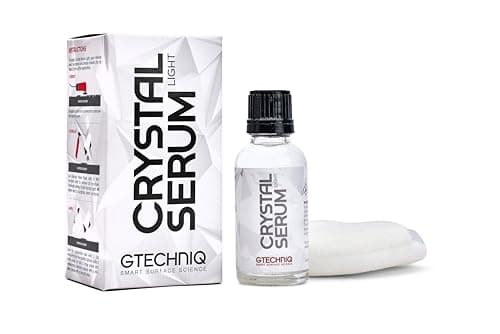
Featured here: the Gtechniq Gtechniq Crystal Serum Light.
How this is funded: we earn an Amazon commission when you buy through our links, at no extra cost to you. We sell nothing and stock nothing, so a pick is never a product we are trying to move. Prices are pulled live from Amazon and were last checked October 5, 2026; where we cannot verify a price we say so rather than print an old one. Full disclosure.
Research-basedPicked from published specifications and the pattern across verified-purchase reports. We have not used these ourselves and do not pretend otherwise.How we pick
There is no industry standard test behind the durability figure on a coating bottle. It is the manufacturer's own number, produced under their own conditions, and it assumes a level of prep and aftercare that most installations do not get. That is not an accusation of dishonesty — it is simply what an unregulated figure is worth.
02
The five things that genuinely move it
What determines how long a coating lasts
Factor
Effect on coating life
Within your control?
Prep quality
Largest single factor
Entirely
What you wash it with
Very large — wax-bearing soap mutes it quickly
Entirely
How you wash it
Very large — brush washes abrade it
Entirely
Where the car lives
Large — UV and heat degrade the film
Partly
Which coating you bought
Smaller than the four above
Entirely
The last row is the point. Which bottle you bought matters less than any of the four things above it, which is why two people with the same coating can report wildly different results and both be telling the truth.
03
Prep quality, specifically
A coating applied over polishing oils bonds to the oil and fails patchily within weeks. This is the single most common cause of early failure.
A coating applied over wax or sealant does the same thing, and shampoos with gloss agents in them leave exactly that film.
A coating applied over bonded contamination has less clear coat to bond to and fails first in those areas.
A coating that got wet during the first 12 hours has permanent marks and a compromised film.
Crystal Serum Light is the consumer version of the coating Gtechniq's accredited installers use, and it is the most durable thing on this page that does not require a trained applicator. It also punishes bad prep more than anything else here — whatever the paint looks like when you apply it is what you are sealing in.
Who should skip it. A first coating on an uncorrected car. The durability is the whole point, and locking swirl marks under a multi-year coating is an expensive way to regret skipping a polish.
Claimed durability
9.5
Ease of application
6.0
Gloss
9.0
Beading
9.0
Value
8.0
What works
The longest claimed life available without installer accreditation
Genuinely hard, slick finish that resists wash marring
Small bottle goes a long way — one car uses a fraction of it
What does not
Unforgiving of poor prep; high flash point for mistakes
Needs a dry, still, temperature-controlled space to cure
The most expensive per-application product in this roundup
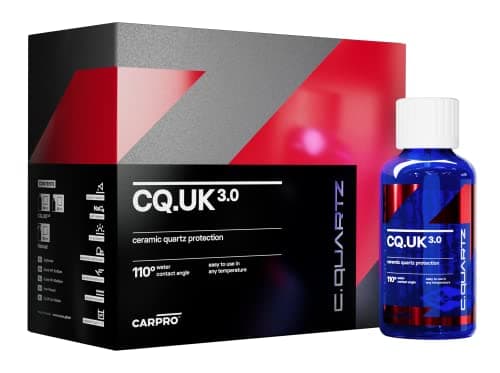
The UK formulation exists specifically because the original CQuartz was difficult to work with in cold, humid conditions — which describes most home garages for half the year. It flashes more predictably at lower temperatures, and that single property makes it the easier real coating to install well.
Who should skip it. Anyone expecting the outright durability of the top tier. UK 3.0 trades some claimed life for a far wider application window, and that is a deliberate and sensible trade for a driveway installation.
Claimed durability
8.0
Ease of application
8.5
Gloss
8.5
Beading
9.0
Value
8.5
What works
Formulated for cooler, damper conditions — the real-garage coating
Comes as a kit, so nothing essential is missing
Far more forgiving flash window than the top-tier coatings
What does not
Shorter claimed life than Crystal Serum Light
Still wants a corrected, panel-wiped surface
50 ml is enough for one car and little margin for error
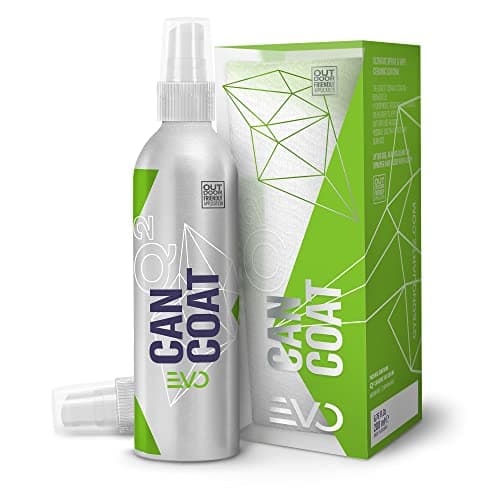
CanCoat sits between a spray and a real coating: it goes on like a spray wax but cures to something closer to a thin coating, and it lasts a season rather than a month. For a daily driver that gets washed regularly, this is the honest sweet spot of this whole category.
Who should skip it. Anyone expecting multi-year durability. It is not a replacement for a real coating and GYEON does not pretend it is — it is the product for people who would rather spend twenty minutes three times a year.
Claimed durability
7.0
Ease of application
9.5
Gloss
8.5
Beading
9.0
Value
8.0
What works
Genuinely close to coating behavior for a fraction of the work
Works on glass, trim and wheels as well as paint
Very hard to apply badly — levels easily
What does not
Six months, not years — this is the trade you are making
Costs more than a conventional spray coating
GYEON does not publish a bottle volume we could verify
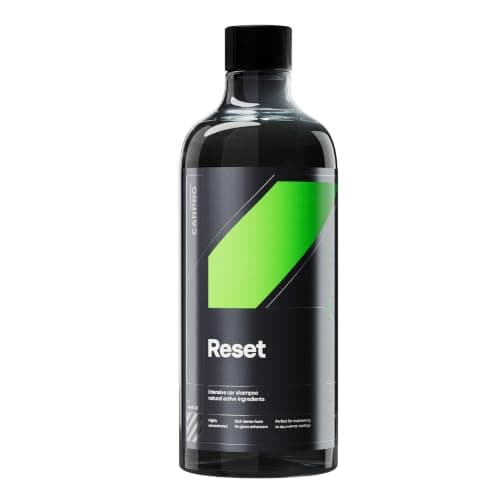
Reset is the maintenance shampoo for coated paint, and the name is the point: it strips the accumulated road film and wash residue that makes a coating look like it has failed, without touching the coating itself. A coated car that stops beading usually needs this, not a new coating.
Who should skip it. Weekly washing on waxed paint. It is more aggressive on surface contaminants than a gentle soap and will shorten the life of a carnauba layer.
Lubricity
8.5
Cleaning
9.5
Suds
9.0
Coating safe
9.5
Value
7.5
What works
Removes the film that makes a coating look failed
High foaming in a cannon
Safe on the coating while removing what sits on it
What does not
More aggressive than a carnauba layer wants weekly
Rinse a clean panel and watch the water. Tight beads that stand up and run off cleanly mean the coating is working. Water that spreads into a flat sheet and clings means the hydrophobic behavior has gone — whatever the calendar says and whatever the bottle claimed.
Importantly, the coating is often still physically there when the beading stops. What has usually happened is that road film, wax-bearing shampoo residue or bonded iron has covered it. That is a decontamination problem, not a failure, and it is fixable in an afternoon.
06
Realistic expectations by tier
Claimed against what the pattern across owner reports suggests
Tier
Claimed
Realistic, cared for
Realistic, neglected
Spray / SiO2 topper
6 to 12 months
3 to 6 months
Weeks
Consumer coating
2 to 5 years
1 to 2 years
6 to 12 months
Prosumer coating
5 to 9 years
2 to 4 years
1 year
These are not measurements — we have not installed and timed these coatings, and this table is built from the consistent pattern across verified owner reports rather than from testing. It is labeled that way deliberately; see how we pick.
07
Questions people actually ask
How long does a ceramic coating actually last?
One to two years for a consumer coating on a cared-for car, and six to twelve months on a neglected one. The claimed figures assume prep and aftercare most installs do not get, and there is no standardized durability test behind any of them.
Why has my ceramic coating stopped beading?
Usually because road film, shampoo residue or bonded iron is covering it rather than because it has worn away. Wash with a dedicated maintenance shampoo and decontaminate with an iron remover — a lot of coatings declared dead come back after that.
Can you make a ceramic coating last longer?
Yes, and it is mostly about washing. Use a pH-neutral, wax-free shampoo, never a brush automatic wash, decontaminate twice a year, and top with an SiO2 spray rather than a wax. Those four habits matter more than which coating you bought.
When should you reapply a ceramic coating?
When the beading does not return after a proper decontamination wash. At that point the film has genuinely worn, and reapplying means polishing the remaining coating off and starting from bare clear coat.
08
Sources
Every published figure on this page traces to one of these. Where a manufacturer does not publish a number, the page says so rather than estimating it.
Last reviewed October 5, 2026. Think a figure here is wrong? Tell us at contact@detailingandwax.com and we will check it, fix it and date the correction — see our editorial policy.